

Riding on the back of a motorcycle can feel magical.
The movement.
The closeness.
The scenery rushing past.
But sometimes — especially after longer rides — you begin to feel pain in your neck.
You might not notice it right after the ride.
But you do notice it later.
You might:
- take your helmet off and your neck feels stiff
- wake up the next morning wondering why your shoulders ache, and
- start to quietly hope the next ride might be shorter – or next season.
Many passengers assume pain and discomfort are part of motorcycling.
They’re not.
Neck pain is incredibly common for motorcycle passengers, especially in the early months of riding or when something about the setup isn’t quite right.
And the good news?
Most of the causes are fixable.
And many passengers are surprised by how quickly comfort improves once the right changes are made.
Neck pain as a motorcycle passenger is usually caused by wind pressure, helmet fit, posture, or tension — not a lack of strength or experience.
Small adjustments often make riding comfortable again surprisingly quickly.
Why Motorcycle Passengers Get Neck Pain
Passengers experience the ride very differently from riders.
Riders actively control the motorcycle.
Passengers react to it.
That difference matters more than people realise.
A rider braces through the handlebars and anticipates acceleration, braking, and cornering.
Passengers often don’t.
Your body is constantly making tiny corrections — sometimes without you even noticing — to stay balanced and comfortable.
Over time, those small efforts can strain your neck muscles.
Common causes include:
- Wind pressure pushing your helmet backwards.
- Holding tension because you feel nervous.
- Looking down or sideways too often.
- A helmet that is heavier than it needs to be.
- Sitting slightly out of alignment with the rider.
None of these mean you’re doing anything wrong.
They simply mean your body is working harder than it should.
It’s worth saying clearly that neck pain doesn’t mean you’re a poor passenger or doing something wrong.
Often it simply means the motorcycle, the airflow, or the equipment hasn’t quite been adjusted to suit you yet.
Quick Checklist: If Your Neck Hurts After Riding
Ask yourself:
- Does your helmet move in the wind?
- Are you sitting higher than the rider into airflow?
- Are your shoulders tense most of the ride?
- Do you look sideways often instead of ahead?
- Does the pain improve when speeds are slower?
If you answered yes to several of these, the solution is often simpler than you think.
The Biggest Cause: Wind Pressure
Many passengers underestimate how much wind affects them.
Unlike riders, passengers often sit slightly higher and more exposed.
Many riders never experience this themselves because they’re supported through the handlebars — which is why passenger discomfort can come as a surprise to them.
If your helmet catches wind like a sail, your neck muscles must constantly fight to hold your head steady.
After an hour or two, fatigue sets in.
Signs wind pressure may be the problem include:
- Pain at the base of your skull.
- Neck soreness mostly after highway riding.
- Relief when riding slower or behind a larger windscreen.
What helps:
- Sitting closer behind the rider where airflow is calmer.
- Avoiding sitting upright and rigid into the wind.
- Choosing helmets designed for stability rather than just style.
Even small changes here can make a huge difference.

Helmet Weight and Fit Matter More Than You Think
Passengers often inherit helmets.
A spare helmet.
An older helmet.
Something chosen because it “fits well enough.”
I can remember way back to 34 years ago when I started riding on the back of my husband’s motorcycle.
My neck often hurt – and it didn’t take long to narrow it down to the fact I was wearing one of his various old helmets.
It was too big, too loose, and banged around on my head over every speed bump and in every gust of wind.
Once I bought my own helmet – one that fitted my head properly – my neck felt a lot better.
This is because helmet comfort matters enormously.
A helmet that is slightly loose forces your neck muscles to stabilise it constantly.
A helmet that is too heavy becomes tiring surprisingly quickly.
Signs your helmet may be contributing to the problem include:
- Neck fatigue early in the ride.
- Helmet lifting or wobbling at speed.
- Pressure points around the forehead or jaw.
A well-fitted helmet should feel secure without squeezing your head or cheeks.
Many passengers notice dramatic improvement simply by upgrading to a lighter helmet or one designed with better aerodynamics.
Choosing the right helmet makes more difference than many passengers realise.
(You can read more about choosing a comfortable passenger helmet here.)
And if you’ve ever had previous neck or shoulder injuries, even small riding discomforts can feel amplified — another reason setup matters so much.

Tension: The Hidden Contributor
Sometimes neck pain has nothing to do with equipment at all.
It’s about anxiety.
New passengers especially tend to hold themselves very still.
Shoulders lifted.
Jaw tight.
Arms rigid.
You may not even realise you’re doing it.
Your body is instinctively trying to protect you.
Unfortunately, tense muscles tire quickly.
If you find yourself sore even on slower scenic rides, tension may be part of the picture.
Try:
- Taking slow breaths when the ride begins.
- Checking in with your shoulders every few minutes.
- Letting your hips move naturally with the motorcycle.
Passengers who relax into the motion of the bike often discover their discomfort disappears almost overnight.
That’s exactly what I experienced when I was learning to be comfortable on the back of the bike.
It took time to realise my body wasn’t failing — it was simply trying to compensate for a setup that wasn’t working for me.
Once I made some of the strategic changes we talk about here, my comfort levels went back to normal.
Where You Look Changes Everything
Many passengers develop neck pain simply because of where they focus their attention.
Looking down at scenery.
Watching the road beside you.
Turning your head repeatedly to talk.
Your neck muscles weren’t designed to hold a heavy helmet at awkward angles for long periods – especially in a strong cross wind.
A helpful habit is simple:
Look where the rider looks.
When the motorcycle enters a corner, allow your head to follow naturally.
This reduces strain and also helps your body move smoothly with the motorcycle.
It feels surprisingly natural once you try it.
Posture: Small Adjustments That Make a Big Difference
Riders rarely notice how much passengers compensate quietly during a ride, because from the front everything can look completely relaxed.
But passengers sometimes sit slightly twisted without noticing.
One hip forward.
Leaning away from the rider.
Or bracing against acceleration.
Over time, this uneven posture travels upward into the shoulders and neck.
Helpful adjustments include:
- Sitting squarely behind the rider rather than offset.
- Keeping your spine long but relaxed.
- Resting lightly against a backrest or luggage if available.
- Moving a few centimetres closer to the rider instead of sitting upright into the wind.
- Even lowering highway speed slightly can dramatically reduce fatigue over a full day’s riding.
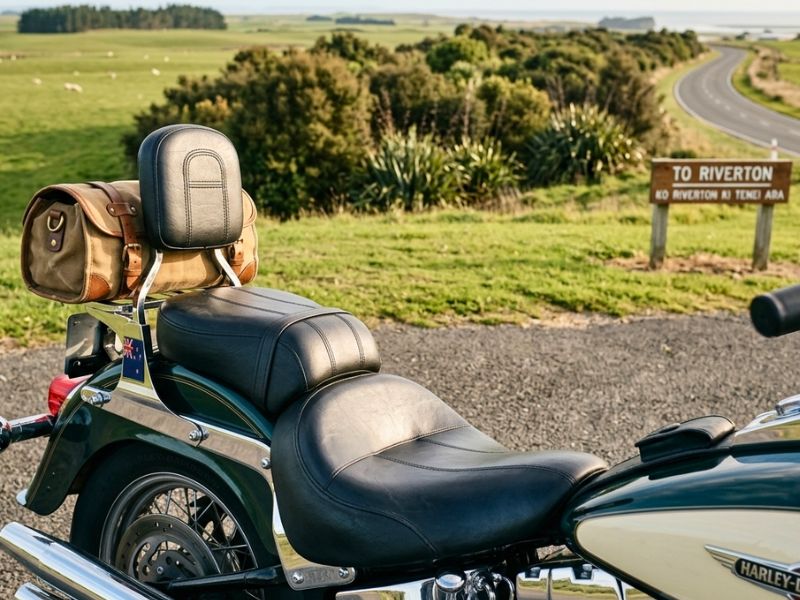
If your motorcycle allows it, a supportive passenger backrest can also dramatically reduce fatigue on longer rides.
A small luggage roll positioned thoughtfully can also help offer some back support.
Comfort doesn’t have to mean turning the bike into an armchair.
It just means giving your body support where it needs it.
Strength and Experience Matter Too
There’s something passengers rarely hear:
Your body adapts to riding on the back of a bike.
If you’re new to riding:
- Take breaks every hour or so.
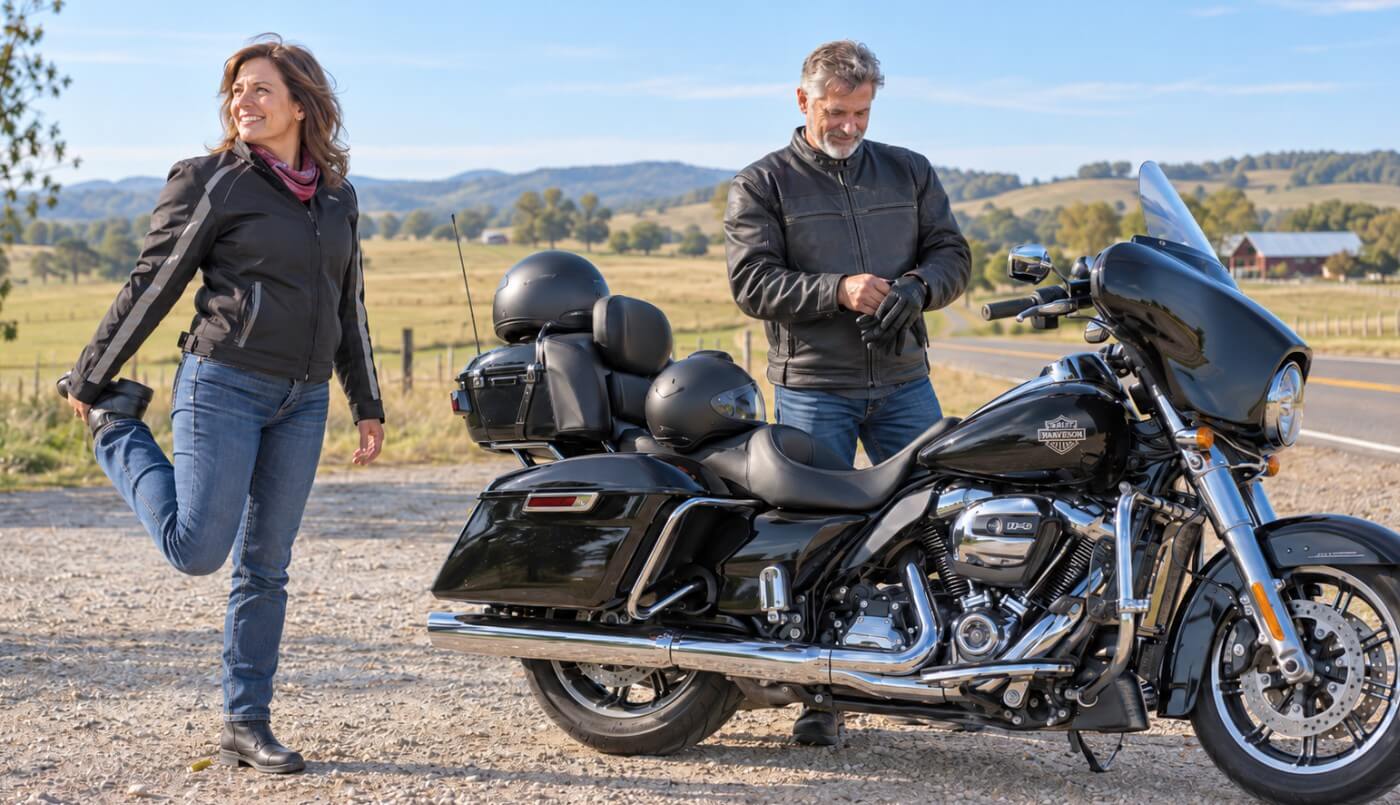
- Stretch gently when you stop – and before you get on.
- Avoid pushing through pain early on.
Confidence and comfort often grow together.
Or you may be returning to riding after a long break.
Life happened in the meantime, right?
Bodies change, flexibility changes, and what once felt effortless may need a little more support now — and that’s perfectly normal.
Simple Stretches That Help Before and After Riding
Stretching key parts of your body before you get onto the bike can make a big difference to your flexibility and comfort.
You don’t need a full exercise programme.
A few gentle movements can make a noticeable difference.
Before riding:
- Slowly roll your shoulders backwards.
- Turn your head side to side.
- Stretch your arms overhead.
After riding:
- Do a few shoulder blade squeezes.
- Tilt your neck gently from side to side.
- Try walking for a few minutes before sitting down again.
The goal isn’t yoga master flexibility.
It’s reminding tired muscles they can relax.
It can also help to use your breaks to move more than just your neck; these motorcycle stretches and movement breaks include simple ways to loosen your shoulders, hips and legs as well.

When Neck Pain Means Something Else
Occasional soreness is common.
Sharp or persistent pain isn’t.
Most passenger neck discomfort improves with small changes to posture, equipment, or riding habits.
Pay attention if you experience:
- Tingling in your arms or hands.
- Headaches after every ride.
- Pain lasting several days.
If pain is sharp, persistent, or affecting sleep or daily movement, it’s worth speaking with a physiotherapist or healthcare professional — especially if you already have neck or shoulder injuries.
Motorcycle riding shouldn’t aggravate existing problems, and a professional can often suggest simple adjustments that make riding comfortable again.
Seeking advice doesn’t mean motorcycling isn’t for you.
Often it’s the step that makes riding enjoyable again.
Motorcycling should add joy to your life — not injury.
Talking to The Rider About Comfort
Passengers sometimes hesitate to speak up.
Especially if the rider loves those long days in the saddle.
Many passengers push through discomfort because they don’t want to seem difficult or slow the day down.
But comfort isn’t indulgence.
It isn’t a form of weakness.
It’s part of the riding partnership.
And it’s what allows you to keep saying yes to the next ride.
Many riders genuinely want their passenger to be comfortable — they simply don’t always realise what the experience feels like from the back seat.
But most riders are happy to help once they understand.
Small adjustments often make a bigger difference than passengers expect, and many riders are surprisingly relieved to know exactly what helps.
For example:
- Slower highway speeds.
- More frequent breaks.
- Adjusting suspension preload.
- Adding wind protection.
Comfort on a motorcycle is rarely just about the passenger adapting.
It’s usually a combination of rider awareness, motorcycle setup, and learning together what works best.
The Truth About Passenger Comfort
If you finish rides rubbing your neck and wondering whether you’re just not cut out for motorcycling, you’re not alone.
But discomfort usually isn’t about toughness.
It’s about setup.
When helmet fit, posture, airflow, and confidence come together, passengers often discover something surprising.
The ride becomes effortless.
You stop thinking about your body.
And start noticing the road again.
Making changes that increase your comfort doesn’t make you a difficult passenger.
It makes you a passenger who gets to keep enjoying the ride.
When both rider and passenger are comfortable, riding together stops being something you endure — and becomes something you look forward to.
Riding together isn’t about endurance.
It’s about sharing something good — comfortably, confidently, and for as many years as possible.
FAQs
Is neck pain normal for motorcycle passengers?
Some soreness can happen when you’re new to riding, but ongoing pain usually means something about your setup or posture needs adjusting.
Does helmet weight really matter?
Yes.
Even small differences become noticeable over longer rides because passengers aren’t bracing through handlebars like riders do.
Will neck pain improve with experience?
Often yes.
Muscles strengthen and passengers learn to move naturally with the motorcycle.
Should I strengthen my neck muscles?
Strength can help over time, but most passenger neck pain improves faster when airflow, helmet fit, and posture are adjusted first.
Why does my neck hurt more as a passenger than it does for the rider?
Passengers experience airflow and movement differently from riders.
Riders brace through the handlebars and can anticipate braking and acceleration, while passengers rely more on balance and body position.
Sitting slightly higher or further back can also increase wind pressure on your helmet, which places extra strain on neck muscles over time.
Will a backrest or top box help reduce neck pain?
For many passengers, additional back support can reduce fatigue because it allows the body to relax instead of constantly stabilising during acceleration or wind pressure.
Even light support from a luggage roll or well-positioned top box can make longer rides noticeably more comfortable.
What can riders do to help reduce passenger neck pain?
Small changes from the rider can make a significant difference to passenger comfort.
Smooth acceleration and braking reduce the need for passengers to brace through their neck and shoulders, and even modest reductions in highway speed can noticeably reduce wind fatigue.
Checking suspension settings for passenger weight and allowing regular stretch breaks also helps many passengers stay comfortable for longer rides.
Most riders genuinely want their passenger to enjoy the ride as much as they do — sometimes they just need to know what helps.
Further Reading
If you’re working on making riding more comfortable and enjoyable as a motorcycle passenger, these guides may also help.
How to Choose a Comfortable Motorcycle Passenger Helmet
The right helmet makes more difference to passenger comfort than many people expect — especially on longer rides or at highway speeds.
What First-Time Motorcycle Passengers Are Afraid to Say Out Loud
Many passengers quietly carry worries or tension without realising it.
Understanding those feelings can make riding feel easier and more natural.
What Should Motorcycle Passengers Wear?
Clothing affects comfort as much as safety.
Small choices around fit, layers, and wind protection can reduce fatigue dramatically.
Comfort grows one small adjustment at a time.



If you’ve struggled with neck discomfort as a passenger, I’d genuinely be interested to hear what helped you most. Small changes often make the biggest difference — and other readers really appreciate shared experience.