

Updated for 2026 to reflect current motorcycle passenger safety advice and comfort recommendations.
Motorcycle passengers should wear a full-face helmet, an armoured riding jacket, long pants (ideally motorcycle jeans), over-the-ankle boots, and proper gloves.
Safety comes first — but comfort and confidence matter just as much if you want to actually enjoy the ride.
If you’re new to riding pillion, you might be wondering:
Do I really need all that?
Can’t I just wear what I normally would?
What if it’s hot?
What if I want to look good?
These aren’t silly questions.
What you wear as a motorcycle passenger directly affects your safety, your comfort, and how relaxed you feel once the bike starts moving.
And here’s the truth:
What you wear on a motorcycle matters.
A lot.
Climb onto a motorcycle with bare legs, open shoes, and a flimsy jacket, and you’re not just making a fashion choice — you’re reducing your protection to almost nothing.
But wear the right gear, and something shifts.
You feel steadier.
Calmer.
Less exposed.
And that changes the entire experience.
I’ve spent 30 years riding as a passenger on everything from short local rides to long-distance touring days.
I’ve found that what passengers wear is one of the biggest differences between a ride that feels joyful — and one that feels exhausting or frightening.
As a starting point, most experienced passengers focus on five essentials.
Motorcycle passengers should wear:
- A full-face helmet
- An armoured riding jacket
- Motorcycle jeans or reinforced long pants
- Over-the-ankle boots
- Protective gloves.
These items reduce injury risk, improve comfort, and help passengers feel more confident during rides.
Let’s walk through exactly what motorcycle passengers should wear — and why.
The Essential Motorcycle Gear for Passengers
There’s a difference between “nice to have” and “non-negotiable.”
This section covers the non-negotiables.
1. A Proper Motorcycle Helmet
If there’s only one item you absolutely should not skip, it’s the helmet.
It protects the most important part of you — your brain.
You’ll be needing that in working order.
It also keeps:
- Rain out of your eyes
- Insects off your face
- Sun off your scalp, and
- The wind can turn your eyes into waterfalls — which is not only uncomfortable, but can quickly undo your makeup if you’re not prepared.
If that’s a concern, these motorcycle passenger makeup tips can help.
And as a passenger, you experience wind differently from the rider.
You sit upright.
You can’t lean forward to reduce wind resistance.
You’re often exposed to more buffeting, and sustained noise.
That makes helmet choice even more important.

A full-face helmet offers:
- The best protection for your eyes, chin and jaw
- Better wind insulation, and
- Reduced noise.
Even in places where helmets aren’t legally required, riding without one is a risk most passengers regret eventually.
If choosing a helmet feels overwhelming, our guide to best motorcycle helmets for passengers explains what works specifically for pillions.
A helmet should feel snug, not crushing.
Secure, not loose.
And comfortable immediately — don’t wait for it to “loosen up eventually.”
2. A Protective Jacket (With Armour)
A motorcycle jacket isn’t about looking like a biker.
It’s about protecting your upper body.
The right jacket includes armour in:
- Shoulders
- Elbows, and
- Back.
That armour is what protects your joints and spine if you ever come off the bike.
Leather is classic for a reason.
It’s abrasion-resistant and wind-blocking.
But modern textile jackets are excellent too — often lighter, more breathable, and more affordable.
The key is not the material alone, but whether it’s designed for riding.
A thin fashion leather jacket won’t hold up in a slide down the road.
A proper motorcycle jacket is thicker, reinforced, and built for impact.
And there’s another reason passengers benefit from a good jacket:
Wind fatigue.
Sitting upright means wind constantly presses against your chest and shoulders.
A solid jacket reduces that pressure, and helps you stay relaxed.
Comfort isn’t indulgent.
It’s what allows you to enjoy the ride instead of enduring it.
A relaxed passenger also makes riding easier for the person at the handlebars.
When you feel steady and comfortable, the entire motorcycle moves more smoothly.

3. Long Pants (Ideally Motorcycle Jeans)
Bare legs and motorcycles do not mix — because asphalt is far less forgiving than it looks from a photograph.
It might look carefree in summer photos, but exposed skin offers no protection against:
- Getting road gravel in your skin
- Hot exhaust pipes, and
- Flying debris.
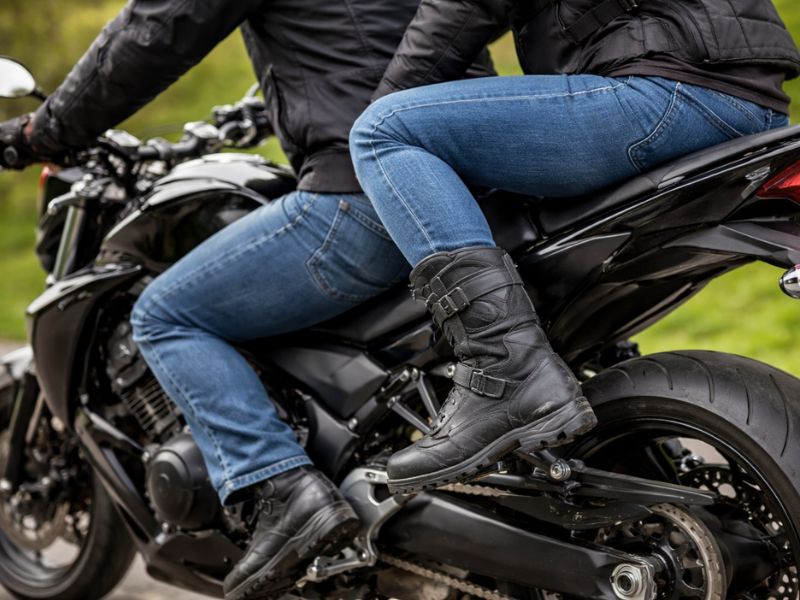
Motorcycle jeans look like regular denim — but they contain reinforced panels (often Kevlar or similar materials) in high-impact zones like knees and hips.
They provide:
- Abrasion resistance
- Impact protection, and
- Better durability.
If you don’t yet own motorcycle jeans, thick standard denim is a temporary compromise — and better than nothing.
But regular jeans simply don’t offer as effective protection as motorcycle jeans for passengers.
And if you’re wondering about dresses or skirts?
Yes, you can physically sit on a motorcycle in one.
But protection, stability, and modesty become real concerns at speed.
You can wear a dress on a motorcycle safely – if you combine it with proper safety gear.

4. Over-the-Ankle Boots
Your ankles are vulnerable on a motorcycle.
A good boot should:
- Cover the ankle
- Have a sturdy sole
- Offer grip, and
- Stay secure on your feet.
Sandals, ballet flats, and high heels are not safe options.
If anything happens — even a minor tip-over — your feet are among the first things exposed.
Motorcycle boots are built to protect your:
- Toes
- Ankles, and
- Lower legs.
They’re not usually runway-ready.
But they are functional.
And when you’re riding, function wins every time.
5. Motorcycle Gloves
Passengers need gloves too.
Your hands are exposed to:
- Wind chill
- Sunburn
- Rain, and
- Flying debris.
I was once wearing fingerless gloves on the back of a motorcycle, and a wasp managed to burrow in between my fingers, stinging me again and again.
We were on a busy road with no place to stop, and by the time we pulled over, my hand was swollen to three times its usual size.
It hurt for days!
Never again have I ridden without proper full gloves.
And in any fall, instinct causes people to put their hands out first.
You want to make sure they’re protected in any kind of impact.
Proper motorcycle gloves are:
- Reinforced
- Durable
- Snug, and
- Designed to withstand abrasion (and wasps).
They also help keep you warm — which reduces tension and stiffness on longer rides.
They may not be delicate or decorative.
But they’re part of your outer shell.
Comfort Matters More Than People Realise
Once you’ve covered safety basics, comfort is the next thing to think about.
Because being comfortable becomes the difference between “I endured it” and “I loved that ride.”
Passengers often discover this the hard way.
Underlayers and Underwear
If you’re riding for more than a few minutes, uncomfortable underlayers become surprisingly distracting.
When getting ready for a motorcycle ride, make sure your underwear:
- Is made from breathable fabrics
- Is soft and flexible (ditch the underwire bra), and
- Has seam placements that don’t dig into your skin.
You don’t need anything glamorous here.
You need your underwear to be practical.
Tight lace, rigid underwire, and scratchy seams become noticeable very quickly once wind and vibration enter the picture.
Comfort at this level isn’t visible — but you will feel it.
Layers and Weather Planning
Motorcycle passengers quickly become very interested in the weather forecast.
Conditions change quickly.
Sunshine can become cold wind in minutes.
A mild morning can turn into a freezing afternoon.
Layering is your best strategy.
A few wise choices seriously improve your comfort.
Think:
- Thermals for colder days
- Light cotton or merino layers
- Removable liners in jackets and pants, and
- Compact rain protection for when the skies open up.
Layering allows you to adapt to different weather moments without sacrificing protection.
Here in New Zealand, weather can shift dramatically between towns.
Riding means preparing for that — not hoping for the best.

Fit Changes With Age
If you’re over 40, you already know this.
Pressure points matter more.
Neck strain feels sharper.
Tight waistbands are less tolerable.
The right gear should:
- Distribute weight comfortably
- Avoid digging into your shoulders or hips, and
- Be comfortable while you’re sitting upright.
A slightly wrong helmet at 25 might just be annoying.
At 55? It can mean a headache before lunchtime.
Gear that fits well allows your body to relax.
And relaxation is what leads to confidence.
If early nerves still linger, you might also find this helpful:
What First-Time Motorcycle Passengers Are Afraid to Say Out Loud.
Can You Still Look Good on a Motorcycle?
All these layers of gear will not get you noticed at Paris Fashion Week.
This is not about catwalk-ready style.
But even so, it’s important to understand that it IS definitely possible to protect your safety – and still look feminine.
You can absolutely look good — but the priority order changes.
Protection first.
Style underneath.
Let’s quickly look at some of the main challenges you face if you’re worried about not looking like a shapeless padded crash test dummy.
Helmet Hair
Helmets are non-negotiable.
But yes — they mess up your hair.
That’s just how it is.
The only place this never happens is in the movies.
Every single movie that features a woman on a motorcycle suggests you can whip off a helmet after a high-speed chase and reveal perfect waves.
In reality, if you leave long hair loose and then get on a motorcycle, by the end of a ride, your hair will not be falling around your shoulders in soft waves.
It’s more likely to closely resemble a bird’s nest.
Secure hairstyles work best:
- Low braids
- Low ponytails
- Soft buns, and
- Styles you can secure and tuck into your jacket.
There are practical ways to manage helmet hair without pretending physics doesn’t exist.
Here’s how to manage helmet hair as a motorcycle passenger.
Makeup
The wrong makeup will not stand up to wind, heat, rain, and insects.
Keep it simple:
- Lightweight foundation
- Waterproof mascara
- Minimal gloss
You’re not heading into a studio shoot.
You’re going riding.
Try these tips on how to keep makeup looking fresh on a motorcycle.
Jewellery and Nails
What about accessories?
It’s fine to add a little colour and style to all those layers of black safety gear.
But again, you need to be strategic.
Big dangling earrings can get caught in your helmet straps.
Long nails can make gloves awkward.
A minimal approach works beautifully here.
Small studs. Simple rings. Practical shapes.
You can still express yourself, and look like a woman — just with awareness of the environment you’re stepping into.

What NOT to Wear as a Motorcycle Passenger
Everywhere you look online, there are pictures of motorcycle passengers in tiny little outfits.
Their hair is loose, and flying in the wind.
They’re wearing shorts, strappy sandals, and short dresses that expose their arms, hands, and legs.
That’s flat-out dangerous, and just doesn’t work in the real world.
In a nutshell, you should always avoid:
- Sandals or high heels
- Mini-skirts or shorts
- Flimsy fashion jackets
- Loose scarves that aren’t secured properly
- Bare midriffs, and
- Lightweight synthetic fabrics.
This isn’t about judging anyone’s style.
It’s about using your head and protecting yourself from potential injury.

If you want a more detailed look at common mistakes (and why they matter), see:
What Not to Wear on a Motorcycle.
What If You Don’t Own All This Gear Yet?
If you’re a new motorcycle passenger, of course you won’t have a full wardrobe of motorcycle safety gear.
So start with the basics.
Helmet first.
Then jacket and boots.
And then build from there.
You don’t need a wardrobe overhaul overnight.
You need gradual, intentional upgrades.
Borrow wisely if necessary.
Don’t expect to look catwalk ready.
Focus on protection and comfort first.
There will be time to increase the glamour element once you feel secure.
You don’t have to get everything perfect straight away.
Most passengers build their gear gradually as they discover what works best for them.
Final Thoughts
What you wear as a motorcycle passenger shapes your entire experience.
The right gear doesn’t make you less feminine. It makes you protected.
It allows you to relax.
And when you’re relaxed, you enjoy the ride instead of bracing through it.
Safety isn’t about fear.
It’s about freedom — the freedom to ride without feeling exposed.
Every confident passenger starts somewhere.
Choosing the right gear is simply the first step toward discovering how enjoyable riding together can become.
FAQs
Can a motorcycle passenger wear normal jeans?
Yes, as a short-term measure.
Thick denim is better than thin.
But motorcycle jeans offer significantly more protection and are worth investing in over time.
Do motorcycle passengers legally have to wear protective gear?
Helmet laws vary by country, but jackets, gloves, and boots are often strongly recommended rather than legally required.
Legal minimum doesn’t equal safe minimum.
What should a passenger wear in summer?
Lightweight protective gear, breathable layers, full coverage, and proper boots.
Heat doesn’t eliminate risk.
Is leather necessary?
No. High-quality textile gear with armour can offer excellent protection and comfort.
Can I wear a dress if I sit sideways?
Even sitting sideways doesn’t provide protection.
Stability and modesty become concerns, especially at speed.
Only wear a dress if you can fit it over the basics of safety gear.
Is riding as a motorcycle passenger safe?
Riding on a motorcycle always carries risk, but passengers who wear proper protective gear, ride with an experienced rider, and communicate openly about comfort and pace can dramatically improve both safety and confidence.
Preparation makes a significant difference.
Where to Go Next as a Motorcycle Passenger
If you’re building confidence and comfort on the back seat, these may help:
Best Motorcycle Helmets for Passengers
Because helmet choice affects noise, fatigue, and long-ride comfort more than most people realise.
How to Make a Motorcycle Passenger Seat More Comfortable
Even the best gear can’t compensate for a seat that leaves you tense or sore.
What First-Time Motorcycle Passengers Are Afraid to Say Out Loud
Understanding early nerves is often the first step toward confidence.
What Not to Wear on a Motorcycle
A closer look at common outfit mistakes and why they matter.
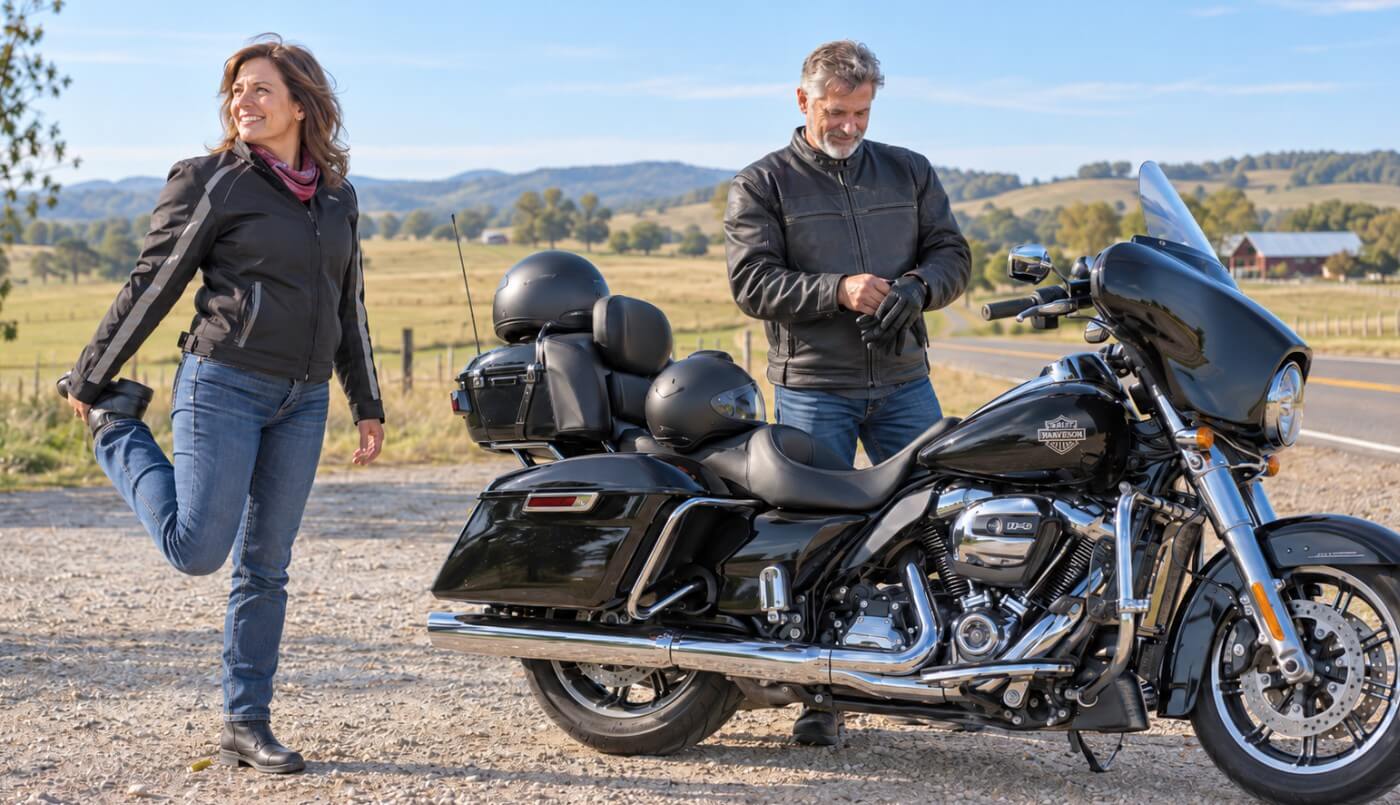
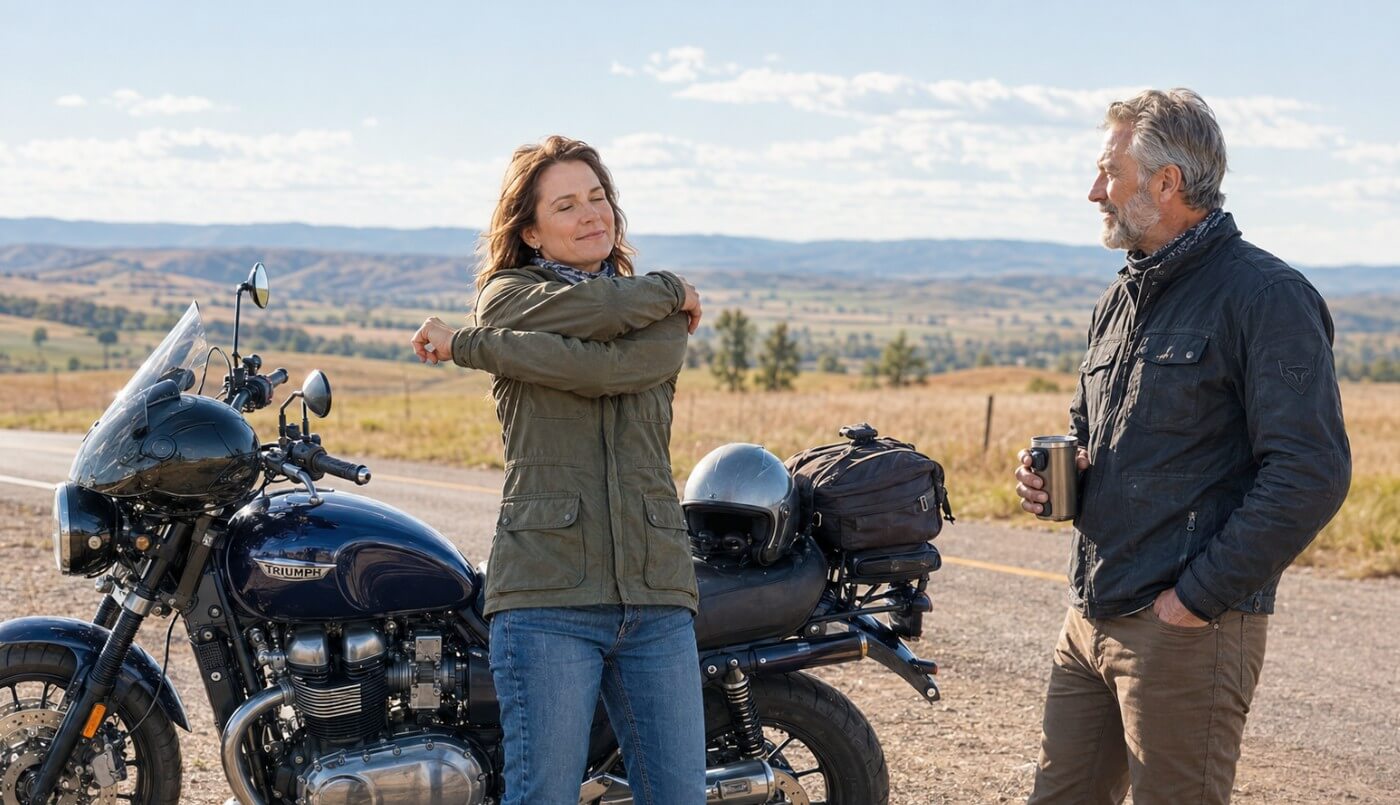
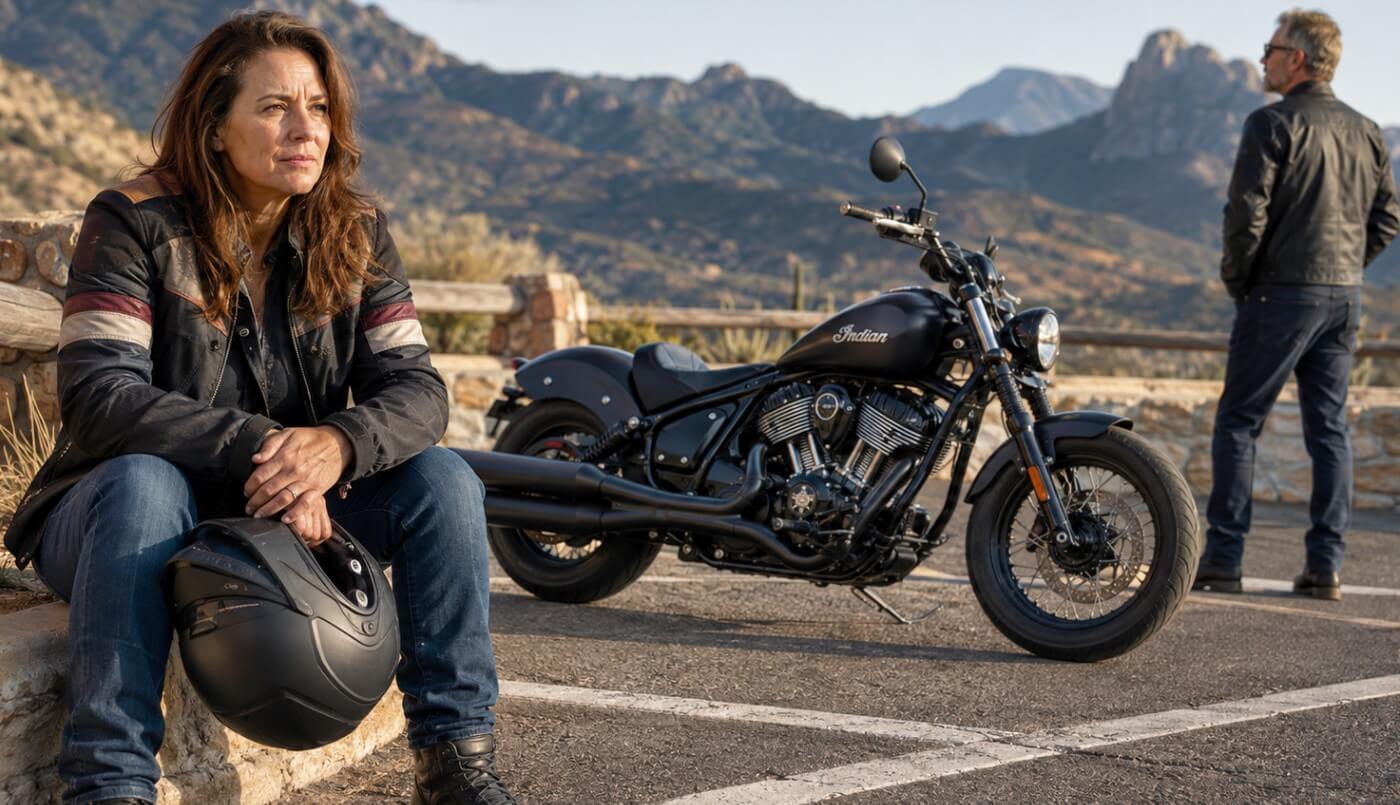
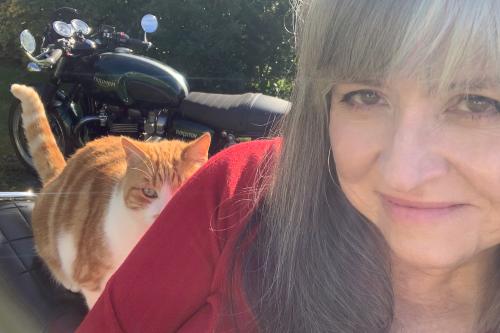
One of the things people don’t always say out loud is that the wrong gear can make you feel self-conscious before the ride has even started.
The right gear doesn’t just protect you — it helps you relax, settle in, and enjoy the experience more.
If choosing a helmet still feels like the hardest part, start here: Best Helmets for Motorcycle Passengers.