
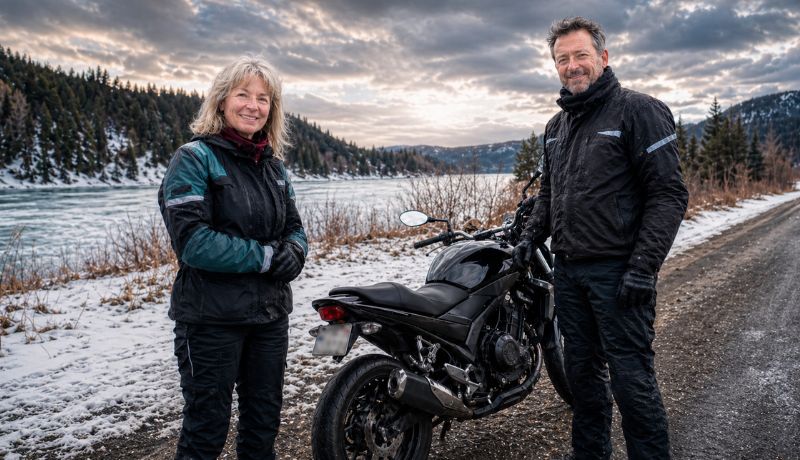
There’s no single magic temperature that means you absolutely should not ride a motorcycle.
That may not be the neat answer people want, but it’s the honest one.
Cold riding decisions are rarely about one number alone.
It depends on wind, rain, road conditions, how long you’ll be out, what you’re wearing, and how your body handles cold once the ride is actually underway.
Cold weather riding is not just about toughness.
It is about judgment.
And for motorcycle passengers, that judgment often matters even more.
Passengers usually have less control over the pace, the route, and when to stop.
They often sit still for longer, have fewer ways to manage their comfort once the ride begins, and may get cold long before the rider realises there’s a problem.
Sometimes a cold ride is manageable.
Sometimes it is a little uncomfortable, but still OK.
And sometimes the smartest decision is simply not to go.
That doesn’t mean you’re soft.
It just means you’re sensible — and exercising your right to an opinion.
The short answer
There is no specific temperature that means it’s too cold to ride a motorcycle. The real issue is whether wind, rain, road conditions, ride length, and clothing will leave you warm, clear-headed, and comfortable enough to ride safely. Passengers often reach their limit sooner than riders, so if either of you is likely to become cold, tense, numb, or distracted, it may simply be too cold for that ride.
There’s no exact temperature that’s “too cold”
A lot of people want a number.
They want someone to say: below this temperature, do not ride.
But real life doesn’t work that way.
A dry, sunny, short ride on a still but chilly day can feel very different from a longer ride in damp air with wind cutting through your jacket.
A rider with excellent winter gear may cope well in conditions that would make someone else miserable within minutes.
And a passenger who feels underdressed, nervous, or already chilled before leaving may reach their limit very quickly.
In other words, cold is not just about temperature.
It’s about exposure.
And for passengers, exposure can feel very different from the back seat than it does from the front.
What seems brisk but manageable to a rider may feel draining, exposed, and much harder to tolerate as a pillion.
A better question to ask
Instead of asking:
“Is this temperature technically rideable?”
Ask this instead:
“Will I still be warm enough, clear-headed enough, and physically comfortable enough to ride safely?”
That’s the more useful question.
And for the rider, there’s a second question worth asking too:
“Will the person on the back still feel warm enough, secure enough, and comfortable enough once the ride is underway?”
That matters.
A passenger who becomes cold, tense, or quietly miserable is not just having less fun — it can affect overall motorcycle passenger safety too.
If the cold is likely to leave either of you tense, numb, distracted, or exhausted, then the ride is no longer just uncomfortable.
It’s becoming a poor decision.
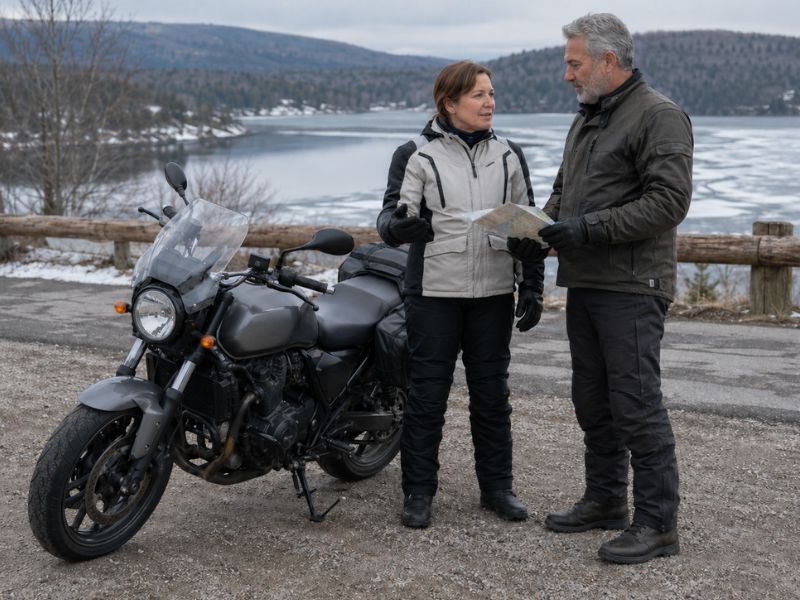
Signs it may be too cold to ride
Cold-weather risk usually shows up in the body before it shows up in the forecast.
Sometimes the first clue is not the temperature itself, but how your body is already responding to it.
A good cold-weather decision usually starts with noticing these warning signs before they turn into a miserable ride.
1. You already feel cold before you leave
If you’re chilled before the bike’s even started moving, take that seriously.
Cold usually builds on a ride.
Wind exposure, inactivity, and changing weather rarely make you feel better once you’re out on the road.
And if you’re the passenger, this matters even more.
You may have fewer ways to warm up once the ride begins, so if you’re already cold, that’s a potential red flag.
2. Your hands, feet, or knees tend to go numb quickly
Once numbness sets in, cold stops being a minor annoyance.
If your fingers stiffen, your feet become painfully cold, or your knees start aching in low temperatures, the cold is affecting how well you function.
For passengers, cold lower legs, hips, hands, and neck are especially common.
Once your body starts tensing against discomfort, the whole ride often becomes harder.
3. The ride will be long enough for cold to build
A short local ride is one thing.
A longer highway or country ride is another.
Exposure to the cold creeps up on you.
Even if the first 10 minutes feel manageable, that doesn’t guarantee the next 40 will.
Many people judge conditions by how they feel at departure rather than how they’re likely to feel halfway through.
This matters even more for passengers, because they’re often sitting with the discomfort rather than actively riding through it.
4. It’s wet as well as cold
Cold alone is one challenge.
Cold and wet together are a different category.
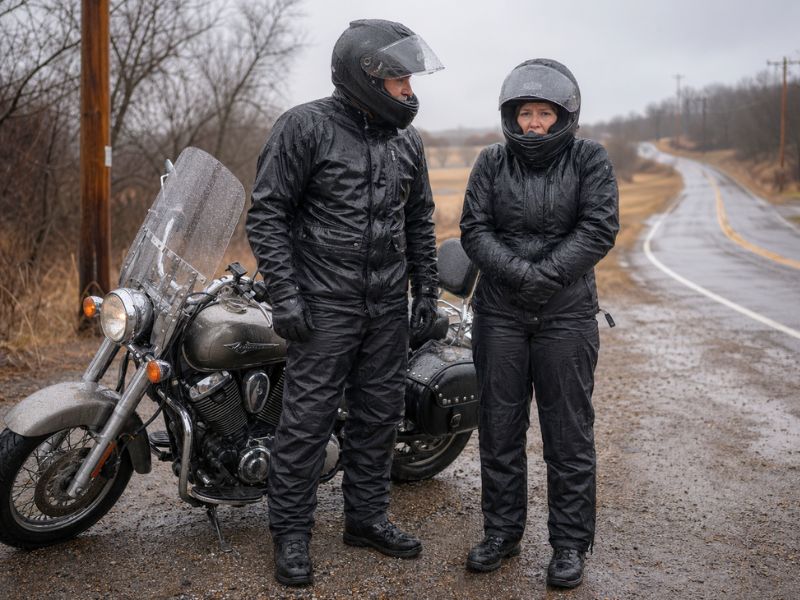
Rain, damp air, wet roads, and water working its way into gloves, boots, or outer layers can strip away comfort quickly.
Once you’re wet, it becomes much harder to stay warm.
For passengers, cold rain can feel especially demoralising.
You’re not just cold.
You’re quickly starting to feel frozen.
If you’re thinking about riding in the rain, cold weather becomes even harder to judge well.
5. The roads may be frosty, icy, or unpredictable
This is where the decision becomes much easier.
If there’s a realistic chance of frost, ice, frozen patches, or slick shaded corners, the question is no longer whether the ride will be pleasant.
It’s whether the road can still be trusted.
Even a route that seems fine in the sun can hold colder, slipperier patches in shade, on bridges, in rural areas, or early in the day.
And when riding as a couple, caution matters even more.
This is not the day to talk yourselves into riding in conditions you don’t really trust.
6. You’re dressing for survival, not for comfort
There’s a big difference between layering sensibly, and gearing up like you’re preparing for an endurance trial.
If it takes a ridiculous number of layers just to make the ride barely tolerable, that’s a sign the conditions are not really in your favour.
I know this from personal experience.
Here in New Zealand, the next stop south from us is Antarctica.
And so the wind is as bitter as you might expect.
Sometimes layer on layer is simply not enough to keep that freezing wind out.
To me, that means it’s time to light the fire and stay cosy instead.
The goal is never to prove that a ride can be survived.
The goal is to ride in a way that still allows comfort, awareness, and enjoyment.
And if you have so many layers on that even getting onto the motorcycle feels awkward, it may be time to reschedule the ride.
7. You feel tense about the ride before it starts
Sometimes the body knows before the brain catches up.
If you feel reluctant, guarded, heavy, or quietly resistant before you leave, listen to your instincts.
Looking up at a leaden sky, you may decide self-protection takes priority.
And that’s perfectly fine.
Passengers especially are allowed to say: not today.
Many passengers talk themselves into ignoring their own instincts because they don’t want to seem weak, fussy, inexperienced, or inconvenient.
That hesitation can keep someone quiet long after the ride has already stopped feeling OK.
8. The passenger is not properly equipped
This is one of the clearest reasons to postpone a ride.
A passenger who doesn’t have proper layers, good gloves, solid footwear, weather protection, or enough confidence to speak up is much more likely to become cold, tense, and unhappy quickly.
If one person is adequately prepared and the other is not, that’s not a small issue.
The decision is already made.
9. You know you’ll push through misery instead of stopping early
Some people have a high pain threshold.
These people are very good at enduring an uncomfortable ride.
But that’s not always a strength.
If you already know you’re likely to minimise discomfort, ignore warning signs, or keep going because turning back feels annoying or embarrassing, factor that into the decision.
This is especially important on two-up rides.
A passenger may not always speak up the moment things start going wrong.
If the rider is also the type to push on regardless, that combination can make a poor cold-weather decision last far too long.
Why cold riding can become risky
Not every cold ride is dangerous.
But cold has a way of quietly affecting the things that matter.
You may become more tense through your shoulders, neck, or hips.
Your concentration may narrow.
Your reactions may feel slower.
You may stop enjoying the ride and start counting the minutes until it is over.
Motorcycle riding is fun when the body is reasonably relaxed, mobile, and responsive.
Once you’re cold enough to be bracing, shrinking inward, or you’re becoming distracted by discomfort, the quality of the ride changes.
For passengers, this often shows up as tightening through the body, awkward posture, increased fatigue, and less ability to maintain real motorcycle passenger comfort or move naturally with the motorcycle.
As a passenger, you may become rigid without even meaning to, and feel your confidence being replaced by anxiety.
For riders, it can mean reduced comfort, poorer focus, and more tiredness than expected.
None of that makes either of you weak.
It just means that cold has consequences.
Motorcycle passengers often hit the limit first
Passengers are often expected to quietly cope.
But passengers usually have fewer ways to manage the cold once a ride is underway.
They may sit still for longer, and may not realise how fast discomfort is escalating until they’re already tense and miserable.
There’s also an emotional side at work here.
Some passengers worry about seeming high-maintenance.
Some don’t want to seem dramatic.
Some tell themselves they should just put up with it because the rider is obviously fine.
But the rider being fine doesn’t mean that the passenger is fine.
If you’re the passenger, you’re allowed to have limits.
If you’re the rider, it’s worth remembering that the person on the back may be colder than you are — and may say so later than they should.
I’m pretty vocal about my limits when I’m riding on the back.
If I’m getting too chilled, believe me, I WILL speak up.
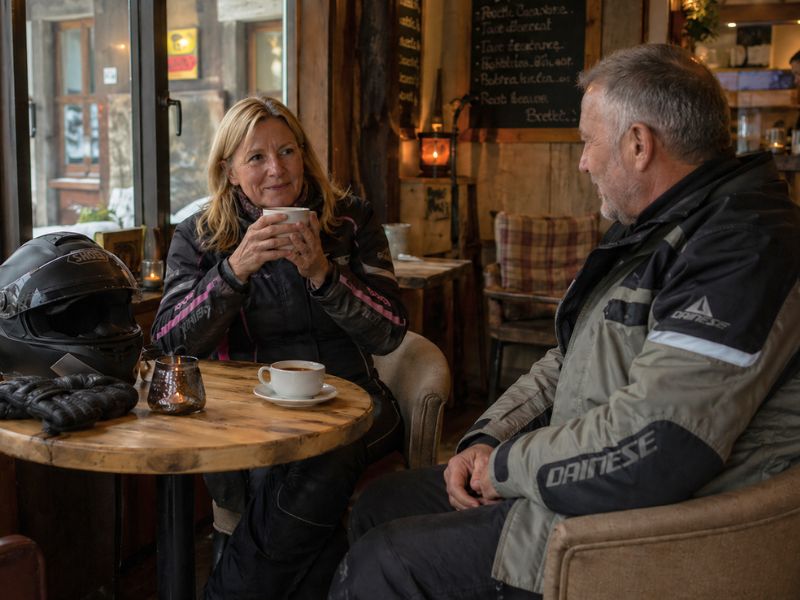
An hour in a warm café with a hot chocolate can change everything – and warm both of you enough to want to keep going.
When it probably makes sense not to ride
Sometimes the best choice is simply to stay off the bike.
That choice is especially reasonable when:
- the ride will be cold AND wet
- there’s a chance of frost or ice
- the passenger is underdressed or unsure
- the ride is long enough for discomfort to build
- you already feel resistance in your gut
- staying warm will require too much effort, or
- the day feels like something to be endured rather than enjoyed.
This is not defeat.
It’s common sense.
And if the passenger is reluctant, underprepared, already cold, or trying to sound braver than they feel, that is enough reason to reconsider the ride too.
Many times I’ve looked at the weather forecast, glanced at the blackening sky and said,
Not today, honey.
Let’s do something else.
Most of the time, he’s on the same page and totally agrees.
But you absolutely have to speak up.
The real skill is knowing when not to go
Many people imagine maturity on a motorcycle means bravery, endurance, and pushing through.
Sometimes it means the opposite.
Sometimes the real skill is recognising that today’s ride is not worth the risk.
A ride you postpone is still there for another day.
And choosing comfort, function, and safety over stubbornness is not a betrayal of motorcycle culture.
It’s simply grown-up riding.
And for passengers, it can also be an act of self-trust.
You don’t have to earn your place on the back of a motorcycle by tolerating conditions that make you cold, tense, and unhappy.
You don’t need to prove you’re tougher than everyone else.
I don’t even pretend to be tough.
I freely admit to being a princess.
So if I’m not feeling it, I say so.
And that means that the next ride will be in conditions I’m happy to ride in.
If you decide not to ride today
If you’ve already made the call that it’s simply too cold, too wet, or too uncomfortable to head out, that doesn’t mean the whole day has to feel flat.
There are still motorcycle-related ways to stay connected to your bike, and make winter feel a little less bleak.
You can read those here:
Too Cold to Ride Your Motorcycle? 12 Things to Do Instead
If you do decide to ride anyway
There WILL be times when a cold ride is still manageable and worth doing.
If that’s the decision, make it easier on yourself.
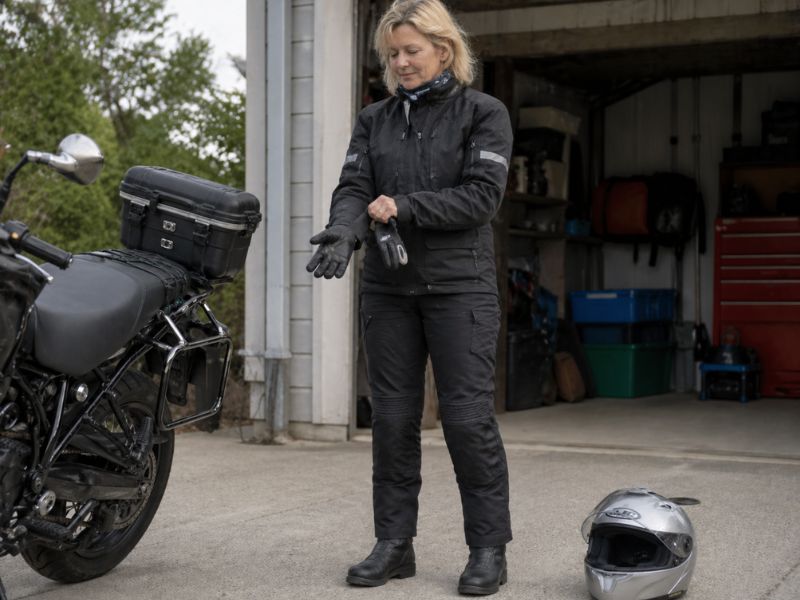
Start warmer than you think you need to, and make sure your motorcycle passenger gear is actually suited to the conditions.
Protect your core, neck, hands, and feet properly.
Keep the ride shorter if possible.
Be realistic about how conditions may change.
And treat an early stop or change of plan as good judgment, not failure.
If you’re the rider, check in properly with your passenger before leaving and during the ride.
Not with a casual “You OK?” that invites a brave little lie, but with real attention to how they’re coping.
Don’t wait until someone is miserable enough to admit the conditions are not working.
Final thoughts
There’s no universal temperature that makes riding automatically sensible or automatically foolish.
But there is a point where cold stops being a minor inconvenience and starts affecting comfort, clarity, confidence, and safety.
For passengers especially, cold can turn a ride sour faster, and more quietly, than many riders realise.
What begins as “I’ll probably be fine” can turn into stiffness, silence, fatigue, and a ride that no longer feels enjoyable or secure.
If the conditions leave you physically limited, mentally distracted, or quietly dreading the ride, it may simply be too cold for today.
And sometimes the smartest motorcycle decision you make is the one that leaves the bike in the garage.
FAQs
What temperature is too cold to ride a motorcycle?
There’s no single temperature that is automatically too cold for every rider or passenger.
What matters more is the combination of temperature, wind, rain, road conditions, ride length, and how well you’re equipped.
A short dry ride in proper gear may be manageable, while a damp, windy ride at the same temperature may feel miserable or unsafe.
Is riding a motorcycle in cold weather dangerous?
It can be.
Cold weather can increase tension, reduce comfort, slow reactions, and make both riders and passengers more fatigued and distracted.
If frost, ice, or slippery road surfaces are possible, the risk rises quickly.
Do motorcycle passengers get colder than riders?
Very often, yes.
Passengers usually sit more still, have less control over speed and stopping points, and may be more exposed to wind and discomfort.
They may also stay quiet for too long because they don’t want to spoil the ride.
How do I know if it is too cold for me personally to ride?
A better question than “What is the temperature?” is: “Will I still be warm, clear-headed, and physically comfortable enough once the ride is underway?”
If you already feel cold before leaving, expect numb hands or feet, or know the ride will become something to endure rather than enjoy, it may be too cold for you that day.
Is it OK to cancel a motorcycle ride because of the cold?
Yes.
Deciding not to ride in cold, wet, icy, or deeply uncomfortable conditions is not weakness.
It’s good judgment.
Postponing a ride is often the smarter choice than forcing one that leaves you tense, miserable, or less safe.
What should motorcycle passengers wear in cold weather?
Passengers should wear proper riding gear with effective layers, weather protection, warm gloves, sturdy footwear, and good coverage around the neck and core.
If the passenger is underdressed or lacks confidence in the conditions, that alone may be a good reason to postpone the ride.
Further Reading
If you’re deciding whether to ride, what to wear, or what to do instead, these may help too:
What to Wear as a Motorcycle Passenger: Safety, Comfort & Confidence Guide
If cold weather is part of the problem, the right gear can make a much bigger difference than many passengers expect.
This guide covers the basics of staying safer, warmer, and more comfortable on the bike.
Riding on the Back of a Motorcycle in the Rain: Safety, Comfort & Confidence
Cold is one thing. Cold and wet is another.
If rain is part of the decision, this article helps you think more clearly about comfort, confidence, and when conditions stop being enjoyable.
Too Cold to Ride Your Motorcycle? 12 Things to Do Instead
If you’ve already decided the bike is staying put today, this lighter companion piece offers motorcycle-related ways to stay connected to the world you love until conditions improve.
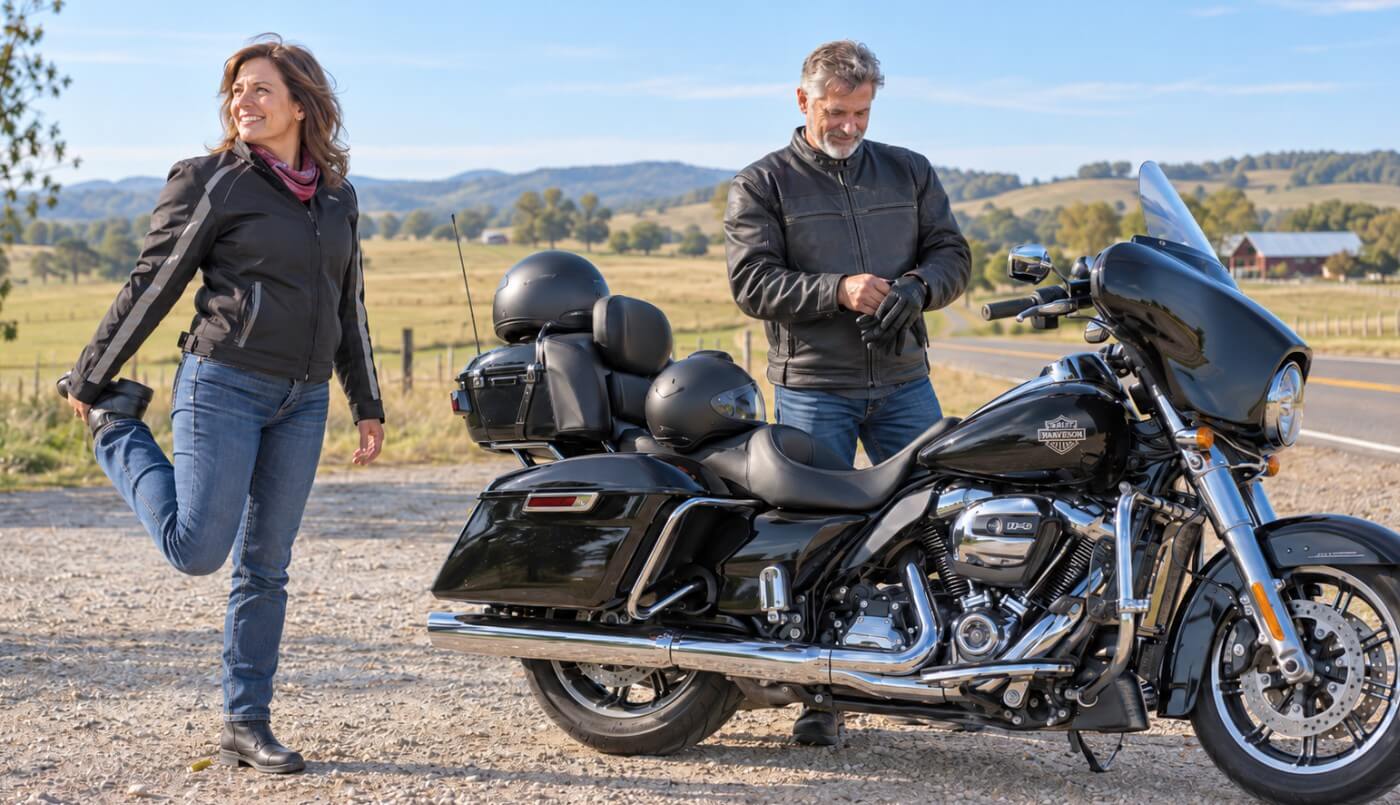
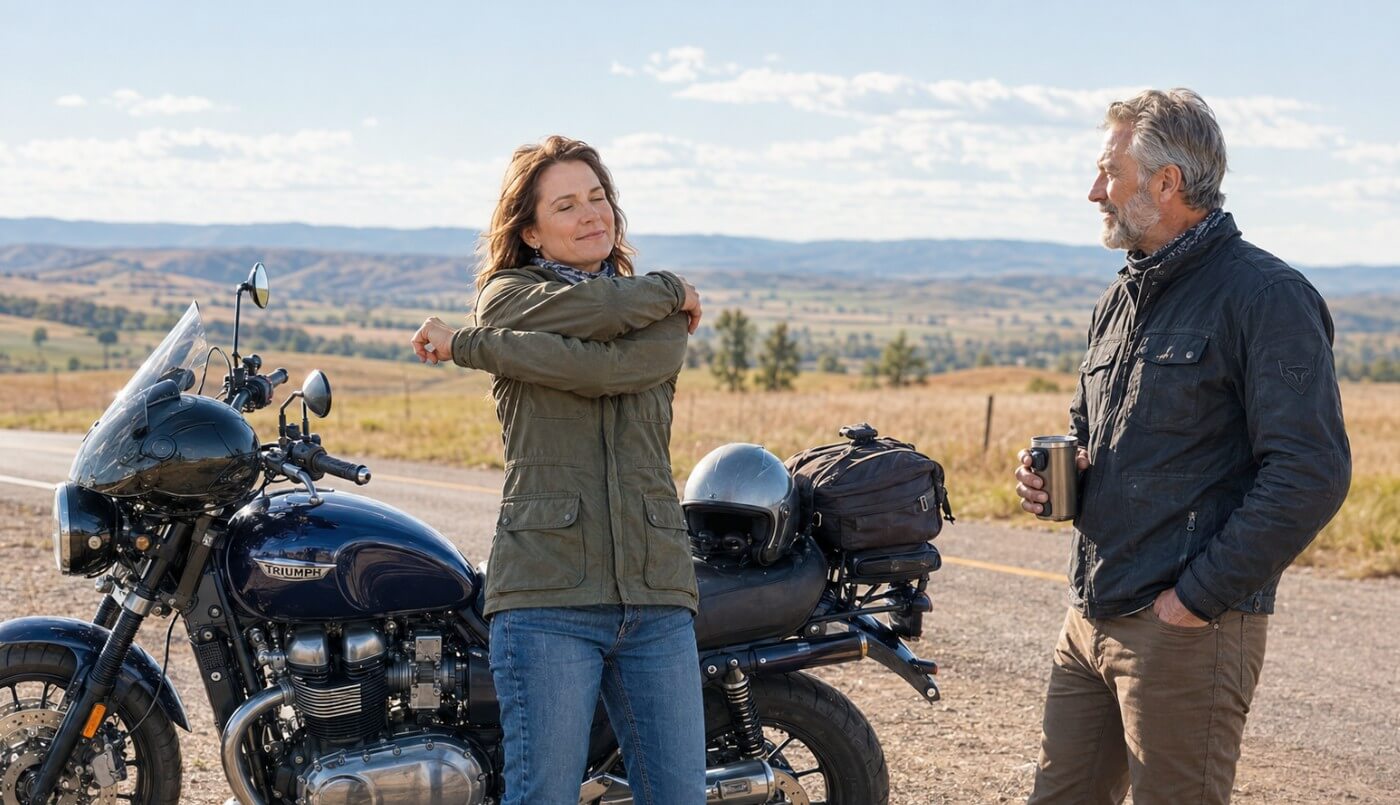
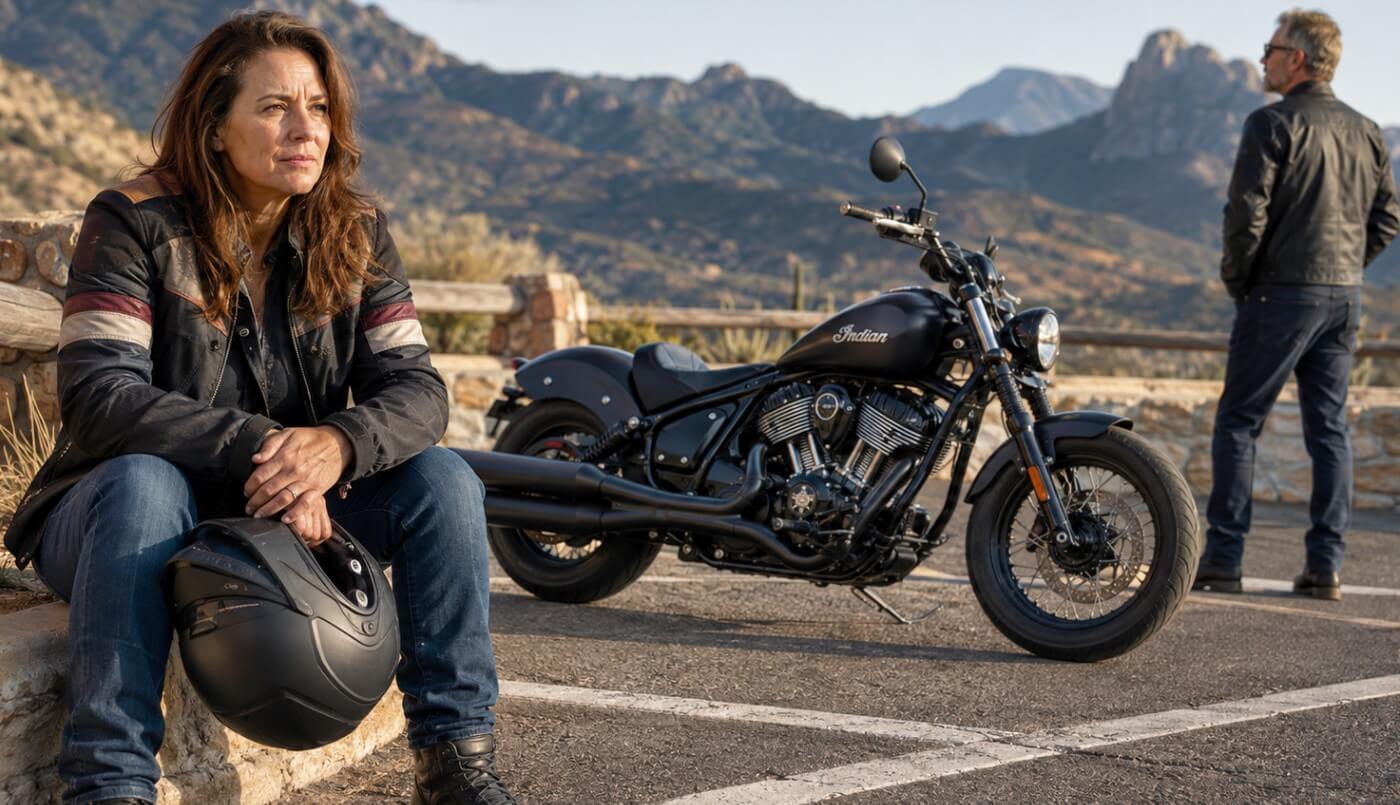
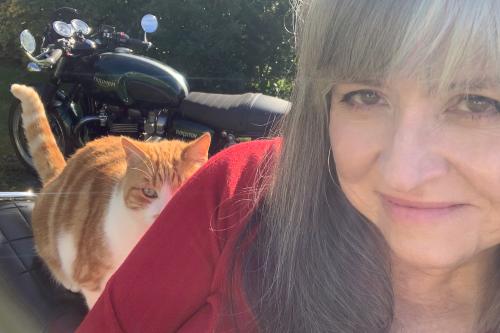
Cold can make a ride feel miserable surprisingly fast — especially for passengers. And sometimes the difference between “absolutely not” and “actually OK” comes down to what you’re wearing. If you want a calmer, more practical guide to dressing for comfort and safety, read What to Wear as a Motorcycle Passenger: Safety, Comfort & Confidence Guide.