
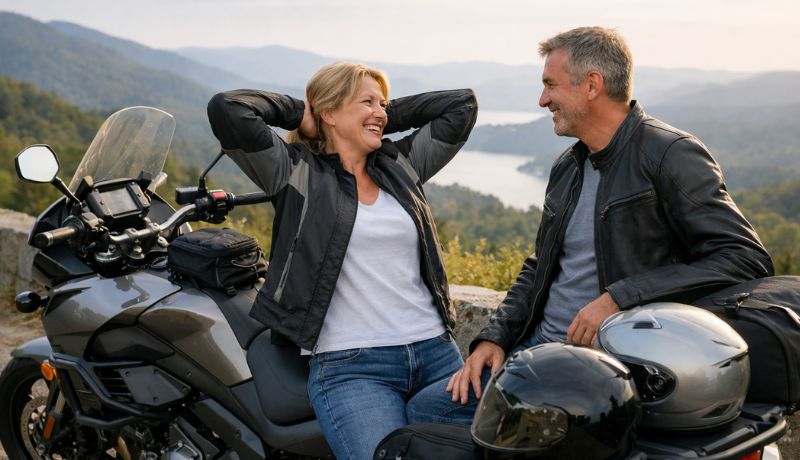
Updated for 2026 to reflect real-world motorcycle passenger comfort, fatigue management, and long-ride wellbeing.
Motorcycle road trips look effortless in photographs.
Blue sky.
Endless roads.
Happy couples leaning against fuel pumps with coffee in hand.
What those photos don’t show is what happens after the third long riding day.
Because that’s when the real road trip begins.
The stiff hips when you climb off the bike.
The motel room where sleep refuses to arrive.
The moment somewhere mid-afternoon when your energy quietly disappears and you realise you’re no longer enjoying yourself — even though you desperately want to.
If you’re a motorcycle passenger over 40, none of this means something has gone wrong.
It simply means your body has opinions now.
And honestly?
That’s not a disadvantage.
Because passengers over 40 bring something extraordinary to motorcycle travel:
experience, self-knowledge, and the confidence to make the ride work for them.
Here’s how to enjoy motorcycle road trips after 40 — with comfort, good sleep, and enough energy left to actually love the adventure.
Motorcycle road trips after 40 are less about endurance and more about comfort, communication, and sleep — and small adjustments can completely transform the experience.
This guide explains how to stay comfortable, sleep well, and manage energy on long motorcycle road trips after 40 — without turning the adventure into an endurance test.
Why Motorcycle Road Trips Feel Different After 40
In your twenties, you’re too busy to focus too much on discomfort.
So you ignore it.
You push through.
Skip meals.
Ignore aches.
Sleep badly and somehow keep going.
But after 40, your body demands a different strategy.
Somewhere around the third morning of one road trip, I realised I couldn’t turn my head properly to admire the scenery — and suddenly understood comfort wasn’t optional anymore.
Long hours sitting still affect your circulation.
Your neck muscles tighten more quickly after decades in the workforce — and for many passengers, neck pain as a motorcycle passenger becomes one of the first real road-trip challenges.
Hydration suddenly matters more than you expected.
And sleep — glorious, reliable sleep — becomes the single biggest factor in whether a road trip feels magical or exhausting.
The good news?
You don’t need to toughen up to enjoy motorcycle travel.
You just need a strategy that works.
Motorcycle Road Trip Comfort After 40: Why It Matters
Motorcycle passengers sometimes feel guilty prioritising their comfort.
It can feel that asking to stop for a break, or not riding hundreds of miles at a time somehow makes you difficult.
It doesn’t.
It’s simply that comfort makes the experience more enjoyable.
Not only that – if you’re comfortable, the ride is safer, too.
Think about it.
If your back hurts, your legs are stiff and your shoulders are aching, you’ll be wriggling around on the passenger seat, trying to get more comfortable.
That means the rider has to compensate for your restlessness.
And if you’re focused on trying to stretch your legs out or the fact that the wind roaring in your ears is giving you a headache — and if you’ve ever found yourself riding with a headache on a motorcycle, you’ll know how quickly enjoyment can disappear.
You won’t be able to pay attention to what’s happening on the road.
So you won’t be ready to lean with the rider, or brace for sudden stops and starts.
Comfort and safety are part of the same deal.
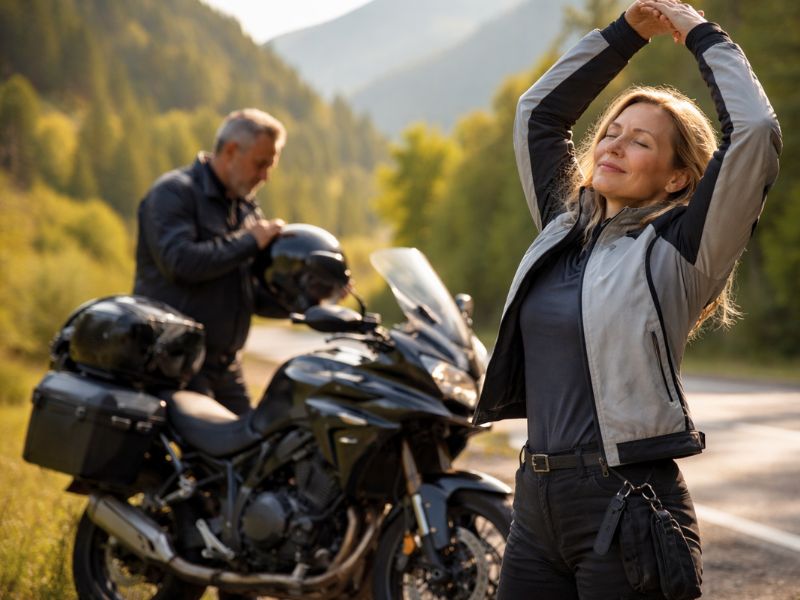
Happily, a few simple habits make an enormous difference to comfort and safety…
Dress for changing motorcycle weather
If you’re too hot or too cold, the ride to your destination will seem endless.
Layering natural fabrics like cotton or wool helps regulate temperature throughout the day.
Weather can change quickly, and you definitely notice it more on a motorcycle.
Sunshine can suddenly go behind a cloud, and be replaced by a brisk wind.
And that wind may be way colder than you expect.
But if you have layers, you can add and subtract clothes easily on a quick stop.
Being comfortable helps to prevent fatigue before it starts.
If you’re unsure what actually works for long rides, here’s a practical guide to what to wear as a motorcycle passenger.
Upgrade the passenger seat
A sheepskin or comfort layer can transform long-distance riding.
It sounds simple.
But works astonishingly well.
Pressure relief reduces stiffness and improves circulation, especially on consecutive riding days.
(If seat discomfort has ever ruined a ride for you, you may also find help in How to Make a Motorcycle Passenger Seat More Comfortable.)
Take breaks before fatigue sets in
A road trip isn’t an endurance challenge.
Even though I know plenty of riders who want to make it into one – by taking the most challenging roads and going the long way just to prove they can.
You don’t have to do it that way.
Many passengers discover fatigue arrives quietly.
One minute you’re enjoying the scenery.
The next, every bump feels sharper and your patience is rapidly evaporating.
Stopping early keeps the ride enjoyable.
A quick snack, a drink and a chat with the rider in beautiful surroundings resets your enjoyment factor.
Small comfort upgrades — from seat covers to hydration packs — can completely change long-distance riding.
Speak Up — Communication Makes Better Road Trips
One of the hidden advantages of getting older is you get much better at speaking up about what you need.
You’re no longer so worried about seeming demanding.
I’ve gotten way better at this myself.
But it took years of practice.
Way back when I started riding pillion – well over 30 years now – I used to just try to grin and bear it when things started getting tougher in the saddle.
We did thousands of miles on dry, country roads in remote Australia.
We rode day after day through flat, brown, empty countryside at temperatures that made you sweat from first thing in the morning.
When every day is over 100 degrees, comfort seems like a luxury.
And you’ll need to be off the road by sundown, as the kangaroos come out then, and hitting one would be fatal – for everyone.
The older I got, the better I’ve gotten at being honest about what I want.
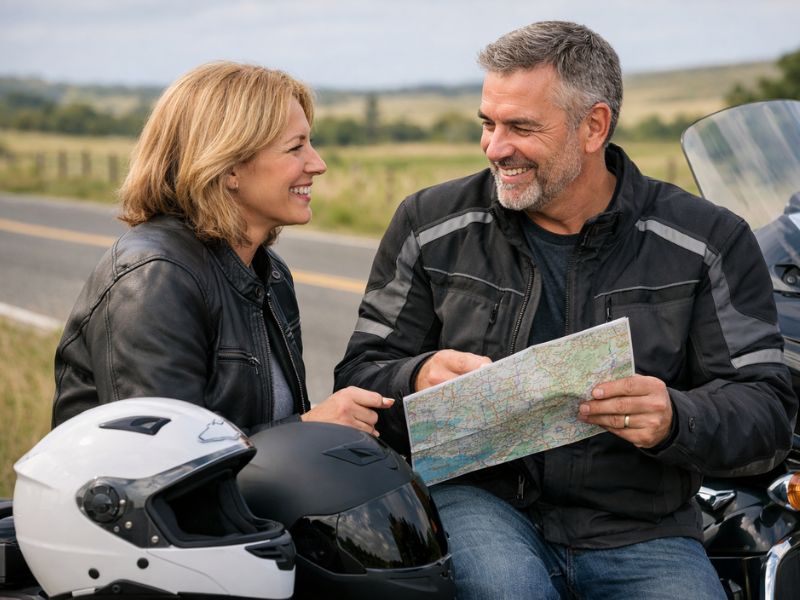
And the ability to communicate about your needs matters enormously on a motorcycle.
Even if you’re not riding all day in 100 degrees (and dodging kangaroos).
Wherever you’re riding, conditions change quickly.
You might suddenly feel cold.
Hungry.
Tired.
Or simply overwhelmed by traffic or weather.
And here’s what you may not realise: the rider won’t realise you might need a break.
He’s having an entirely different experience.
So let him know.
Ask for what you need to make the ride enjoyable again.
That might be:
- a slower pace
- a quick stop to add or remove a layer of clothing
- a bathroom break
- or lunch slightly earlier than planned.
Motorcycle road trips are shared adventures.
Many couples discover road trips become easier once the passenger feels able to ask for what they need.
When both people are comfortable, the relationship thrives along with the ride.
That kind of clarity often comes from building real confidence on the back seat — and if that’s something you’re still working on, this guide on how to feel more confident on a motorcycle as a passenger can help.
Sleep: The Thing Nobody Talks About (But Everyone Needs)
Many motorcycle blogs talk endlessly about mileage and destinations.
Very few talk about sleep.
Yet insomnia can quickly and quietly destroy a road trip.
You arrive at a motel exhausted.
You wipe your face, fix the helmet hair, and head out for dinner.
You’ve worked up quite an appetite, and the meal is delicious.
You chat happily about the day’s adventures, and the plans for the next morning.
You collapse into bed expecting instant sleep.
But there’s no sign of it.
Instead you lie awake in a strange room while unfamiliar noises echo through the walls and your happily snoring partner drifts deeper into dreams.
And then you start to worry about how you’ll face the ride tomorrow on three hours’ sleep.
The more you worry about tomorrow, the harder sleep becomes.
This has happened to me hundreds of times.
Sleep changes as we age.
And unfamiliar environments make it harder again.
Many passengers never admit this out loud because they don’t want to spoil the adventure for the rider.
Fortunately, small decisions (and being honest about some of your challenges) make a huge difference.
Choose accommodation honestly
Camping works beautifully for some riders.
If you love it, wonderful.
If you don’t?
Don’t even think about it.
A motel is non-negotiable for me on a motorcycle road trip.
I’m just not spending all day on the bike and then trying to set up a tent and sleep on the ground.
Call me Princess if you like (my husband already does), but that’s the reality for me.
And if it is for you too, just smile and own it.
Trying to prove toughness while sleeping badly helps no one.
It certainly does nothing for your relationship (believe me).
After a full day riding, a comfortable bed and hot shower can at least make sleep a possibility.
Create a familiar bedtime routine
Simple routines signal safety to your brain.
A warm shower.
Gentle skincare — especially after hours of sun and wind exposure — makes a surprising difference. Here’s what I pack in my motorcycle road trip toiletry kit.
These aren’t indulgences.
They’re reset buttons.
Familiar self-care rituals calm the nervous system and help sleep arrive faster.
Control noise and light
Earplugs and a sleep mask are must-haves.
They take up almost no luggage space.
But they can save an entire trip.
Because motel reviews can promise quiet — and still deliver traffic noise, shouting neighbours, or bright streetlights shining directly through thin curtains.
Small preparation equals peaceful sleep.
Watch alcohol and heavy meals
Celebration dinners are part of the joy of travelling.
A steak, fries and a good bottle of wine used to be part of our regular road trip celebrations.
We don’t do that now.
We still go out for dinner at our destination.
We still celebrate another joyful day on the road.
But these days, I’m way more strategic about what I order.
I avoid the deep fried extravaganzas and heavy dishes I just know I won’t be able to digest easily.
Lying awake with indigestion can be avoided by pausing, and looking at the menu again.
A lighter dinner and moderate drinks almost always mean better energy the next day.
Bring sleep aids you already trust
If supplements or medication help you sleep at home, DO NOT leave them behind.
Road trips throw your routine out of whack.
So take your usual meds at the usual time.
Planning ahead helps avoid desperation at 2am.
Lavender oil (yes, really)
A tiny bottle of lavender oil weighs almost nothing.
A few drops on wrists or pillow can create familiarity in unfamiliar rooms.
I love the natural therapy options myself, and just snort in return when the husband teases me gently about them.
Lavender triggers a relaxation response which often works for me.
I don’t mind if people laugh at that if it helps me get to sleep.
Sometimes the smallest comforts matter most.
Packing Smarter (Not More)
After 40, many passengers discover they pack differently.
There’s less panic.
More intention.
You stop bringing things you never use.
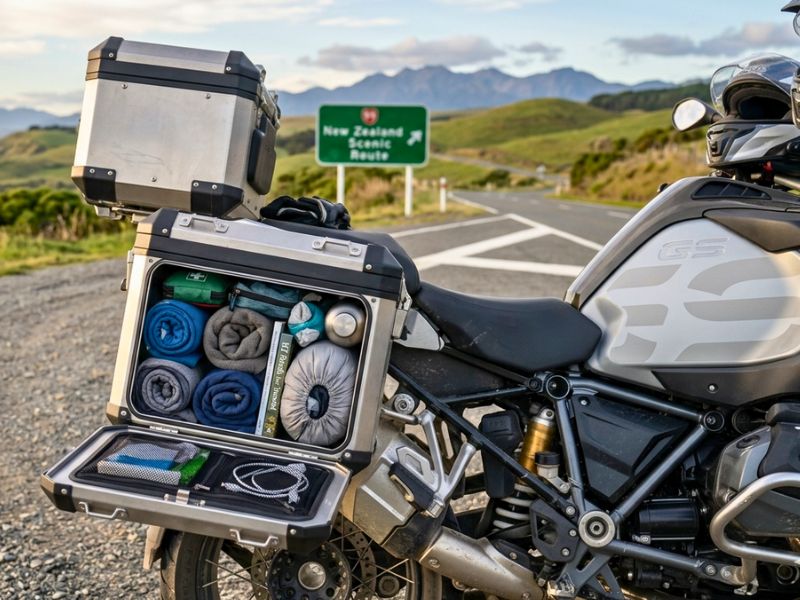
After taking three pretty sweaters on road trips around New Zealand – and never needing them – I’ve started being more brutal about what I pack.
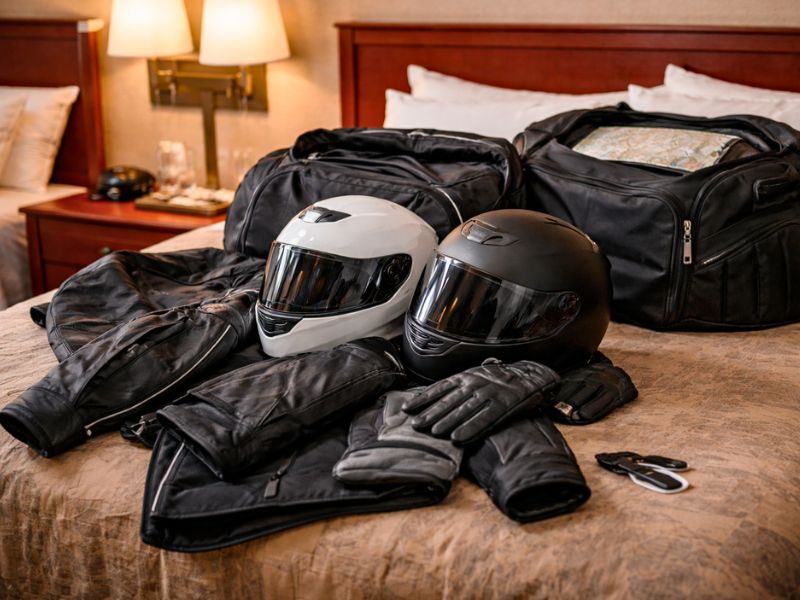
I lay it all out on the spare bed the night before.
And in the morning I take a second look at what I thought I needed.
Then, when I’m trying to wedge that third pair of jeans (“just in case”) into my side of the saddlebags, I realise I don’t need to take half my wardrobe.
Like me, you might start prioritising comfort over clothes you’ll probably never get the chance to wear.
Instead I focus on some of the core things I KNOW I’ll need on the road trip.
For example:
- proper skincare for sun and wind exposure
- layers instead of bulky clothing (and 20 different outfits)
- earplugs and eye mask
- medications or supplements I rely on at home.
As you will have found, too, motorcycle luggage space is limited.
It’s not like you have three full suitcases to fill.
Every item needs to earn its place – and if it increases your comfort, it’s more likely to be included.
Stay Involved in the Ride
Passengers sometimes feel they should simply go along with whatever the rider plans.
But you don’t have to.
You’re aboard the bike, too.
You’re on the same journey.
And you’re the co-pilot, remember.
So talk about routes – and be honest if you have a road you don’t like or a preferred way to take.
Suggest possible rest stops – maybe a favourite café that will tempt the rider with a stunning bacon sandwich.
Point out road hazards when you spot them from the back seat.
Or propose a shorter day when needed.
Being involved makes riding more enjoyable — and often safer.
Another set of eyes helps everyone.
Make Time for Joy
Life after 40 tends to fill quickly with responsibilities.
Work.
Family.
Obligations.
Laundry that somehow multiplies overnight.
But motorcycle travel signals a break from the daily routine.
It offers rare uninterrupted time together as a couple.
A fun road trip is a bonding experience that will strengthen your relationship, and help create shared memories.
It reminds you the world is bigger than your to-do list.
Let’s face it, sometimes the housework really can wait.
Ride With Other Couples Sometimes
Motorcycle culture tends to be male-dominated.
That used to make me uncomfortable – like I was trying to sneak in the back door of an exclusive men-only club.
Over time, I’ve stopped feeling like that.
Yes, motorcycle culture usually involves more men than women.
But that’s not necessarily a problem.
I’ve made some great men friends that we ride with often, and most of the male bikers we know are great company.
And sometimes we ride with other couples we know.
That changes the vibe a little by adding some female energy, and it’s still relaxed and fun.
Lunch conversations change when other women are present.
You can now have a parallel chat with a woman that doesn’t involve dissecting the latest mechanical achievements in the garage.
Instead you can exchange comfort ideas and tips.
You can compare gear.
Laugh about helmet hair disasters.
And come home with new confidence that other passengers are facing similar challenges and also enjoy riding on the back seat of a motorcycle.
Motorcycle Passengers Can Love Road Trips at Any Age
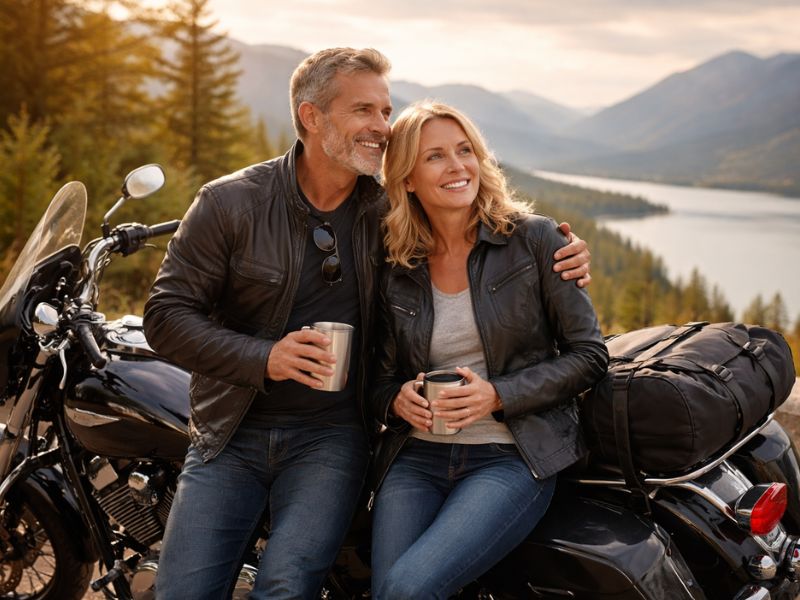
There’s something wonderful about riding through the world with someone you love.
After 40, you’re no longer chasing adventure to prove something.
You’re choosing it because you finally know what matters.
You know experiences matter.
Comfort matters.
Connection matters.
You’re no longer trying to prove anything.
You’re simply trying to enjoy the ride.
And with the right balance of rest, communication, and preparation?
Motorcycle road trips can become some of the happiest adventures you ever share.
FAQs
Are motorcycle road trips harder after 40?
Not harder — just different.
Comfort planning, hydration, and sleep matter more.
With preparation, many passengers enjoy riding more than ever.
How many hours should a passenger ride each day?
There’s no single rule.
Many couples find shorter riding days with meaningful stops create better memories than pushing mileage.
Is it normal to feel more tired than the rider?
Yes.
Passengers remain still for long periods without control over posture or movement.
Regular breaks help enormously.
What should a motorcycle passenger pack for a long road trip?
Packing for a motorcycle road trip after 40 is less about extra outfits and more about comfort and recovery.
Focus on practical essentials that help you feel good day after day: weather layers, proper riding gear, skincare for sun and wind exposure, hydration, earplugs or a sleep mask, and any medication or supplements you rely on at home.
Motorcycle luggage space is limited, so every item should earn its place — and comfort almost always wins over “just in case” clothing.
If you’re unsure where to start, guides on what to wear as a motorcycle passenger and building a simple road trip toiletry kit can make packing much easier.
Further Reading for Motorcycle Passengers
Long road trips become much easier when the foundations are strong.
If you’d like to explore a few of the challenges that often show up on extended rides, these guides go deeper:
Neck Pain as a Motorcycle Passenger (And What Helps)
If your shoulders tighten and your neck stiffens after a few hours on the road, this guide explains why it happens — and what actually makes a difference.
Riding With a Headache (What Actually Works)
Wind noise, dehydration, tension and fatigue can all trigger headaches on long rides. Here’s how to manage them without giving up the adventure.
How to Feel More Confident on a Motorcycle (For Passengers)
Confidence changes everything on a road trip. If you’re still finding your rhythm on the back seat, this article will help you ride more calmly and speak up when you need to.
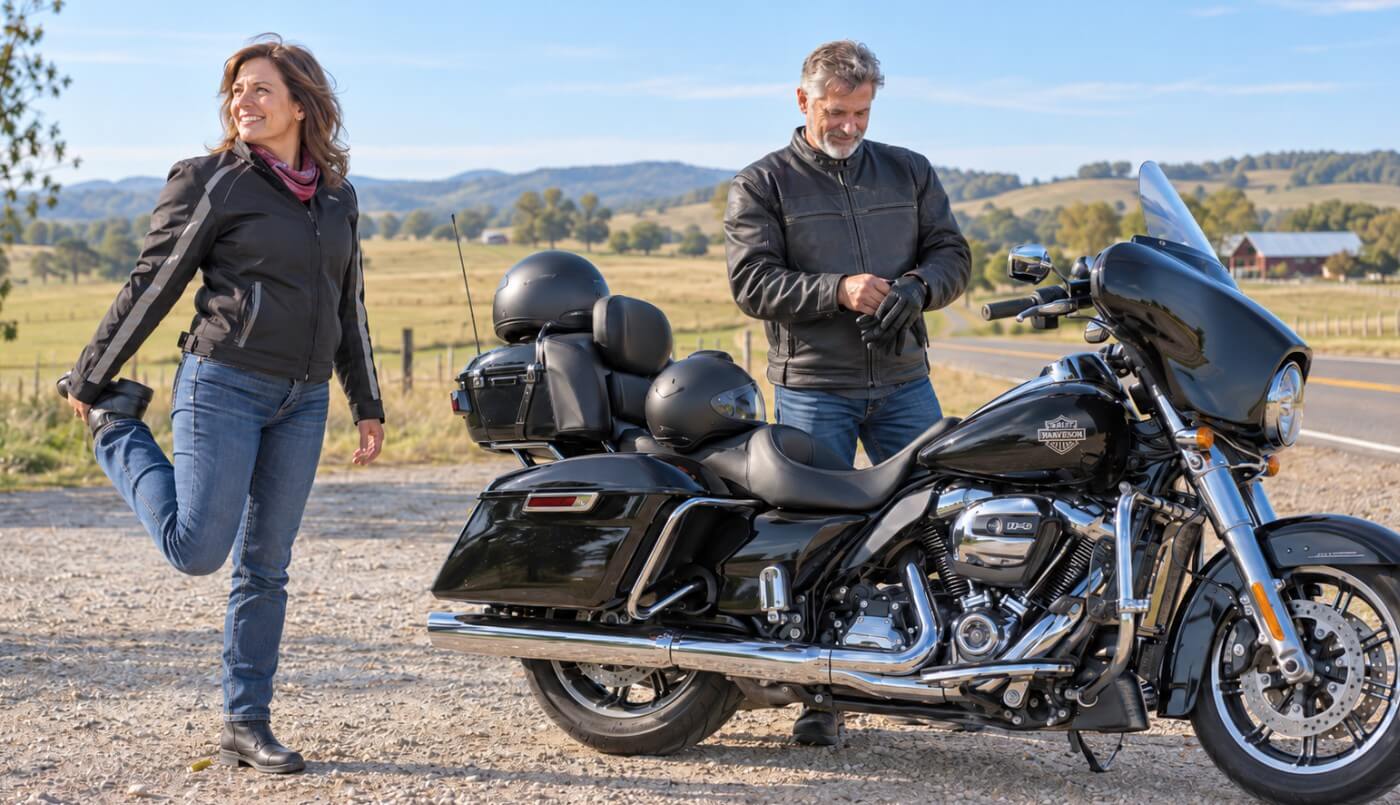
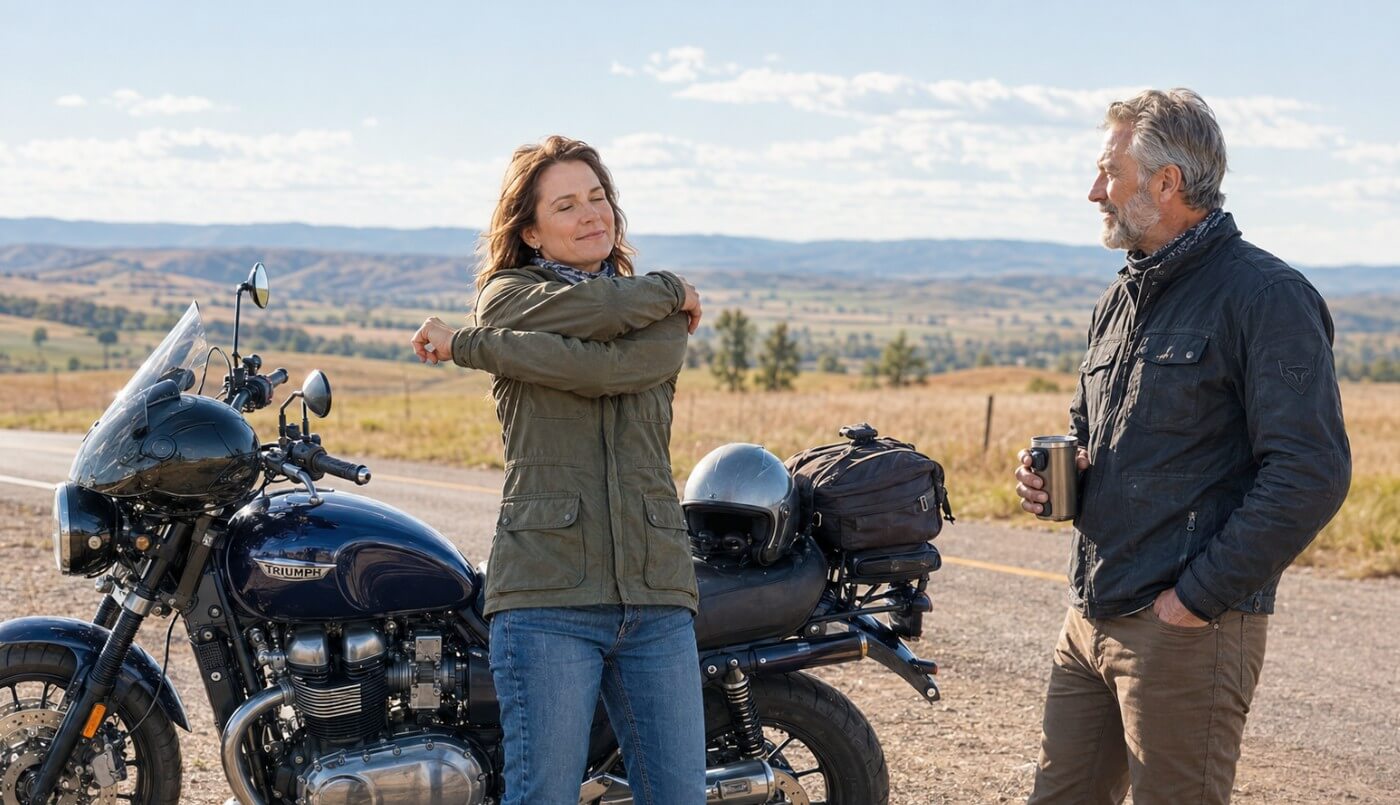
Road trips after 40 can still be wonderful — they just feel better when comfort gets taken seriously. If your seat is part of what’s wearing you down on longer rides, How to Make a Motorcycle Passenger Seat WAY More Comfortable may help more than you think.