
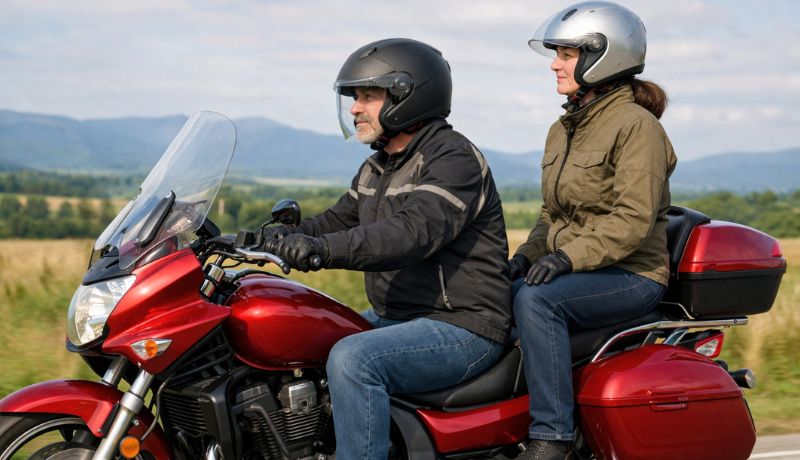
Updated for 2026 to reflect modern motorcycle ergonomics and passenger comfort realities.
Motorcycles are designed to move people.
And sure, a beautiful bike can move you emotionally.
I’ve seen many a grown man moved to tears by a vintage motorcycle he’s always wanted.
But motorcycles are built to move you physically, too.
Ideally without causing backache, shoulder pain, or leg cramping.
If you spend enough time sitting on the back seat, you may begin to wonder who they were really designed for.
Especially when you find yourself subtly shifting your weight every few minutes — trying to look relaxed while your hips, knees, or shoulders quietly start protesting.
And so it’s fairly obvious who motorcycles were designed for.
Motorcycles were designed with riders in mind, first and foremost.
Riders get adjustable suspension, sculpted seats, wind protection, heated grips, and ergonomic handlebars carefully positioned for comfort and control.
That’s fair enough.
The person riding the motorcycle needs to be comfortable and securely positioned on the bike.
But what about motorcycle passengers?
With many motorcycles, passenger comfort seems to be an add-on afterthought.
You may have noticed that for passengers:
- The seat is usually smaller.
- The seat is also often thinner, with less padding.
- The footpegs are higher, and
- There might or might not be a grab rail to hold on to.
If you’ve ever climbed off the motorcycle after a long ride feeling stiff, numb, or oddly exhausted while the rider cheerfully suggests another hundred miles, you’re not imagining things.
Passenger comfort has rarely been the first priority in motorcycle design.
But that doesn’t mean long rides have to hurt.
The Short Answer
Motorcycle passenger discomfort on longer rides isn’t usually caused by a single design flaw.
It’s the result of seat shape, higher footpegs, suspension setup, and styling compromises that prioritise rider control.
When these factors combine, tension builds in the passenger’s hips, shoulders, and neck — especially on longer rides.
The good news is that small adjustments to suspension, seating, gear, and communication can dramatically improve two-up comfort.
Why Passenger Comfort Often Feels Like an Afterthought
Motorcycle engineering revolves around one central goal:
control.
Manufacturers design bikes based on how the rider interacts with:
- steering
- braking
- acceleration, and
- weight distribution.
Everything flows outward from that.
Designers must also consider:
- styling
- weight balance
- suspension geometry
- exhaust placement, and
- luggage systems.
Passenger space is often what’s left once those priorities are solved — which explains why the back seat sometimes feels like a polite afterthought.
That doesn’t mean manufacturers don’t care.
It simply means passenger comfort competes with many other engineering demands.
The Shape of Modern Motorcycle Seats
If you look closely at many modern motorcycles, you’ll notice a pattern.
The rider seat tends to be:
- wider
- lower, and definitely
- better padded.
While passenger seats are often:
- narrower
- higher, and
- slightly angled forward or backward.
That forward slope alone can create problems.
Passengers may feel pushed toward the rider during braking.
And a backward sloping passenger seat means you need to hold on tighter to avoid feeling like you’ll slide off the back, and be left sitting in the middle of the road.
You won’t, of course, once you know how to hold on properly.
But even so, your muscles tighten automatically to compensate.
Over time that tension travels upward into shoulders and neck muscles.
Many passengers who experience recurring discomfort discover it’s connected directly to seating position rather than fitness or resilience.
(If neck stiffness sounds familiar, you may also find help in Neck Pain as a Motorcycle Passenger (And What Helps).)
Why Passenger Footpeg Position Matters More Than You Think
Footpegs are another piece of the passenger comfort puzzle.
Their placement makes more of a difference than most people realise.
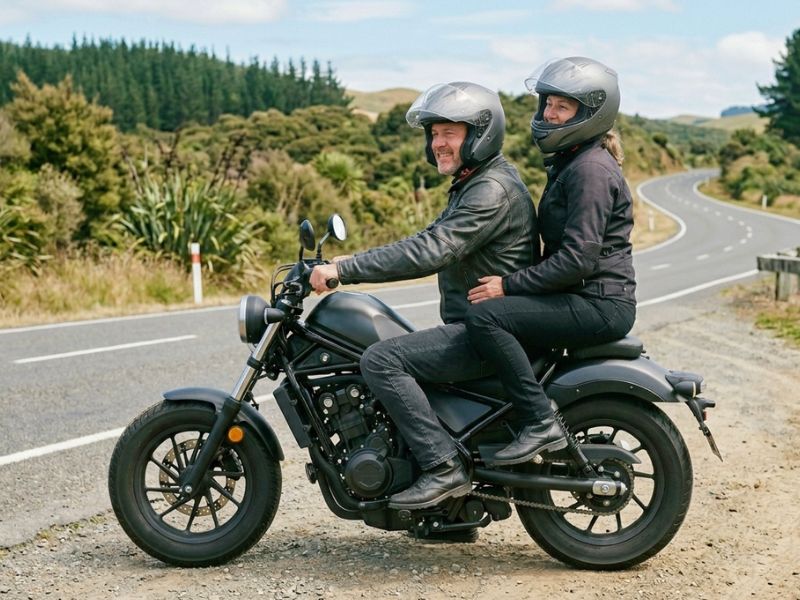
You may have noticed that passenger pegs are frequently higher than rider pegs.
Why is that?
It’s largely about ground clearance.
Designers need motorcycles to lean safely through corners.
And higher pegs prevent scraping.
But higher pegs also have consequences for the passenger.
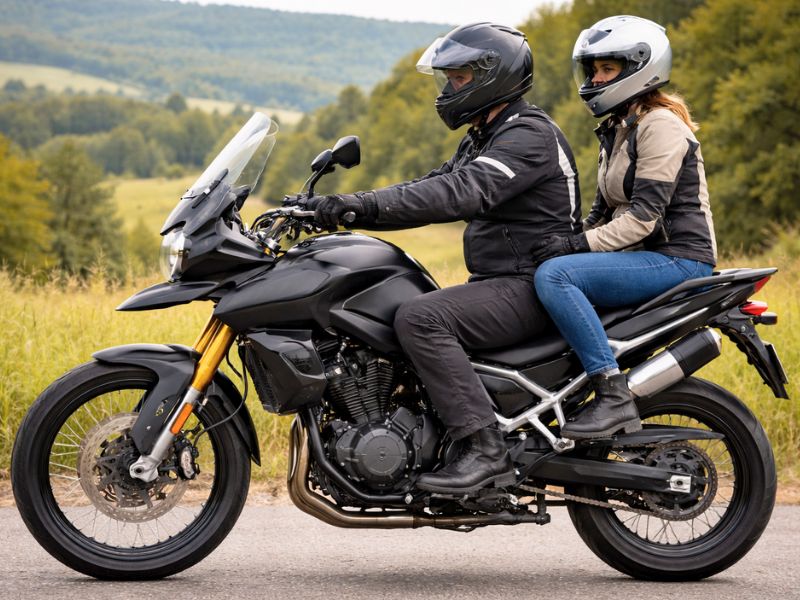
The tighter knee angle created by higher passenger pegs is one of the most common hidden causes of fatigue on longer rides.
Higher footpegs mean that you’ll need to work with:
- tighter knee angles
- reduced circulation, and
- increased hip tension.
On shorter rides you may barely notice.
But across several hours — or consecutive riding days on a road trip — fatigue builds quickly.
Many passengers assume discomfort means they simply need to “toughen up.”
That’s not true.
You’re probably not too “soft” for motorcycles.
It’s more likely that you’re sitting in a position designed around someone else’s control needs.
Suspension Isn’t Always Set Up for Two People
Another hidden factor is the suspension setup.
Many motorcycles leave dealerships with their suspension set up for solo riding.
But everything changes when you add a passenger, some luggage, and touring gear to the mix.
If the rear suspension preload isn’t adjusted to suit the actual load on the bike, passengers may experience:
- sharper bumps
- excessive bouncing, and
- constant micro-impacts.
That vibration and bumping can contribute directly to fatigue and headaches.
(Some passengers notice these symptoms appearing alongside riding with a headache on a motorcycle, especially on longer rides.)
A small suspension adjustment can transform comfort dramatically.
Comfort is rarely one dramatic change — it’s usually several small ones working together.
Passenger comfort improves fastest when small adjustments happen together rather than one at a time.
Suspension setup for two riders changes how weight transfers across bumps and braking — which passengers feel far more directly than riders.
Styling vs Comfort
Motorcycles are emotional machines.
Riders choose them at least partly (and often mainly) because they’re so beautiful.
They don’t choose them because the pillion seat looks extra comfortable.
Let’s face it:
Slim rear seats create sleek silhouettes.
Short tails look sporty.
Minimal grab rails keep lines clean.
Unfortunately, those same styling choices can directly impact passenger support.
Those tiny seats may look incredible parked outside a café.
But after three hours on uneven roads, a passenger won’t be quite so impressed.
I once spent an entire afternoon trying to discreetly shift my weight every ten minutes on a beautifully styled bike, convinced I must be doing something wrong — until we stopped and another passenger quietly admitted she’d been suffering exactly the same way.
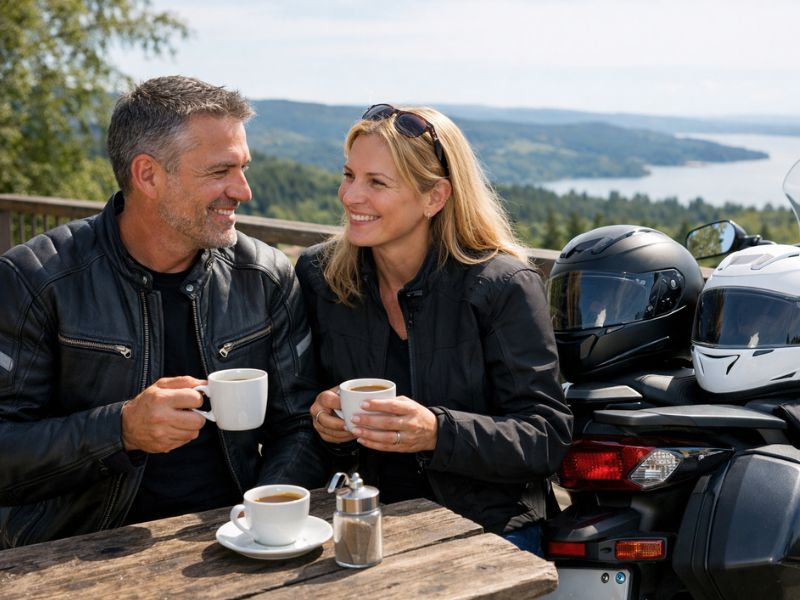
Touring motorcycles tend to prioritise passenger comfort more generously — but even then, not every design suits every body.
Passenger comfort rarely comes down to a single design choice.
Seat design, suspension setup, helmet fit, and even riding confidence all work together.
A seat that tips you forward increases neck tension.
Extra vibration makes helmet pressure feel worse.
And fatigue builds faster when several small discomforts stack on top of each other.
If you’ve ever wondered why headaches or neck pain seem to appear together on longer rides, small adjustments across gear, posture, and communication often change far more than replacing a single piece of equipment.
Are Manufacturers Ignoring Passengers?
Not exactly.
In recent years, many brands have improved passenger features significantly.
You’ll see:
- heated passenger seats
- integrated backrests
- adjustable suspension modes, and
- passenger footboards.
But motorcycles still sell primarily to riders.
Passenger comfort rarely drives purchasing decisions at the showroom – especially for sport-focused motorcycles.
And when that beautiful new bike arrives home and has a tiny pillion seat, you realise you should have said something BEFORE he picked up the new bike.
This is why if you’re riding as a couple, you have to talk about comfort.
I’ve had to actually ask my husband to stop a bike he’d just bought because my seat was actually painful.
It was tiny, thin, with sharp edges that dug into the back of my thighs like nasty little knives.
I learned the hard way that it’s way smarter to talk about this issue BEFORE you’re halfway through a long ride through the countryside.
Because it would be a long walk back to our place.
Especially in full motorcycle gear.
So if you’re dreading longer rides as the passenger, that’s important information.
And the rider needs to know why.
Motorcycling works best when both people enjoy the journey.
Small Changes That Make a Big Difference
The encouraging news?
Many comfort problems are surprisingly fixable.
Here are some simple ways to make the passenger experience more comfortable.
Seat Upgrades
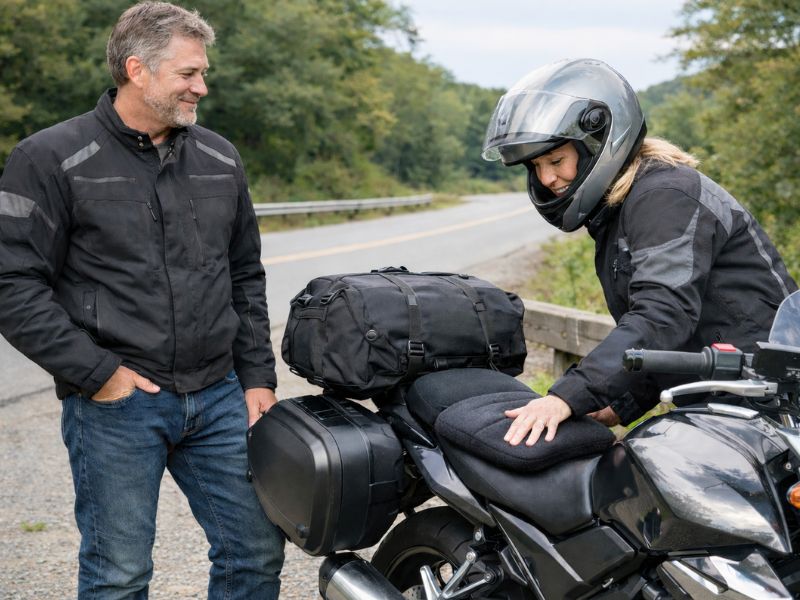
Sheepskin covers, gel pads, or aftermarket seats redistribute pressure.
Many passengers discover that improving the seat alone changes everything.
(If you’re exploring options, How to Make a Motorcycle Passenger Seat More Comfortable looks at practical upgrades.)
Adjust Suspension
Even a small preload adjustment can reduce harsh impacts.
Many riders simply don’t realise adjustment is needed when carrying a passenger.
Talk about it in the garage – before you start the next ride.
Clothing Matters
Layers that restrict movement trap heat and increase fatigue.
Proper riding gear designed for flexibility helps muscles relax naturally.
If you’re unsure where to start, this guide explains what motorcycle passengers should wear for safety and comfort.
Take Breaks Before Fatigue Starts
Passenger fatigue often arrives quietly.
One moment you’re enjoying the scenery.
The next, every bump feels sharper.
Stopping earlier keeps rides enjoyable for both people.
Long motorcycle road trips especially benefit from pacing and recovery time.
(You may also find Motorcycle Road Trips After 40 helpful if longer journeys have started feeling harder than they used to.)
Confidence Changes Posture More Than You Expect
Something surprising happens as passengers gain confidence.
You start to relax.
You don’t hold on so tight your arms ache.
You move more naturally with the motorcycle.
And your muscles stop bracing in panic when you see a corner coming.
Many comfort problems soften dramatically once passengers feel secure communicating their needs.
If speaking up still feels difficult, this guide on how to feel more confident on a motorcycle as a passenger may help.
Choosing the Right Motorcycle for Two People
Not every motorcycle suits two-up riding.
Some motorcycles are just not going to work for a couples road trip.
As I’m married to a shameless motorcycle collector, we have the luxury of matching the bike to the journey.
If he wants to take the sporty motorcycle with the tiny, sky-high pillion seat, I’ll be doing something else with my afternoon.
Remember, you don’t have to go on every single ride.
But if longer touring is part of your plans, make sure you consider the basics that directly affect your comfort:
- seat width and foam quality
- grab handle placement
- suspension adjustability
- legroom, and
- luggage options.
Comfort doesn’t mean sacrificing enjoyment.
It simply means choosing a machine suited to shared travel.
Motorcycle Seats Aren’t Biased — But They Are Compromised
Motorcycle seats aren’t deliberately designed to punish passengers.
They’re compromises.
Designers are doing a juggling act that needs to balance:
- engineering limits
- aesthetics
- performance, and of course
- cost.
Understanding some of those compromises helps to reduce passenger frustration.
Because once you understand why discomfort happens, solutions become easier to find.
Motorcycle Travel Should Feel Shared
The best motorcycle journeys don’t belong only to the rider.
Passengers bring awareness, conversation, navigation help, and emotional balance to long rides.
Comfort isn’t indulgence.
It’s partnership.
And you’re not difficult for noticing discomfort.
You’re observant.
And observant passengers often make the safest, most enjoyable riding partners.
And when both people feel supported?
The road opens up in entirely new ways.
Motorcycle passenger comfort is rarely about a single fix.
It’s about understanding how seat design, suspension setup, riding posture, and communication interact over time.
When those elements work together, two-up riding becomes something you both look forward to — not something one person quietly endures.

FAQs
Are passenger motorcycle seats less comfortable than rider seats?
Often yes.
Rider ergonomics are prioritised for control and safety, which usually means more padding, adjustability, and support for the rider than the passenger.
Smaller or angled pillion seats can increase pressure points and muscle tension on longer rides, especially without regular breaks or comfort upgrades.
Can changing suspension settings help passenger comfort?
Absolutely.
Adjusting rear suspension preload and damping for two riders helps the motorcycle sit correctly under load, reducing harsh bumps and excessive bouncing.
Many passengers notice immediate improvement in fatigue and headaches once suspension is properly set up.
This is especially noticeable if you’ve experienced recurring riding headaches or neck stiffness on longer trips.
Do aftermarket seats really help?
Many passengers find upgraded seats, gel pads, or sheepskin covers dramatically improve pressure distribution and circulation on longer rides.
Even small seat changes can reduce hip tension and prevent discomfort building across consecutive riding days.
If seat discomfort keeps appearing, practical upgrades can make a surprising difference.
Why do passengers get sore faster than riders?
Passengers absorb acceleration, braking, and road vibration without controlling speed or posture.
Higher footpegs, smaller seating areas, and tension from holding position can increase muscle fatigue more quickly than many people expect — especially during longer motorcycle road trips.
Further Reading for Motorcycle Passengers
If this article struck a nerve, these next posts will help you understand what improves comfort on the back — and what can make riding feel much easier.
How to Make a Motorcycle Passenger Seat WAY More Comfortable
If the seat itself is causing pressure, numbness, or constant shifting, this guide looks at practical upgrades that can genuinely help.
What to Wear as a Motorcycle Passenger
What you wear affects more than safety — it can also change how restricted, overheated, or physically tired you feel on the bike.
Motorcycle Road Trips After 40: Passenger Tips That Actually Help
Longer rides tend to amplify small comfort problems, so this post explores the pacing, recovery, and real-world habits that help most.


A lot of motorcycle comfort advice is written for riders, not passengers — which is probably why so many of us end up thinking discomfort is just part of the deal. I’d love to know whether that’s been true for you too. Was it the seat, the riding position, the gear, the length of the ride… or something else entirely? And if you’ve found a small change that made a big difference, share it below — it might help another passenger more than you realise.