
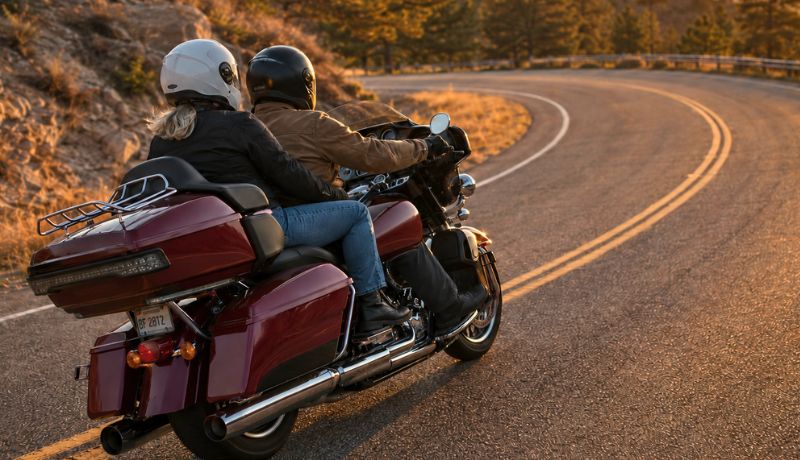
One of the most confusing parts of being a motorcycle passenger is working out what to do in corners.
You may have heard people say things like lean with the rider, stay still, don’t fight the bike, or just relax.
But is that helpful?
Not really.
If you’re new to riding pillion, corners can feel like one of the moments where everything suddenly gets scary.
The bike tips.
Your body notices the movement.
Your brain starts asking whether you’re meant to lean more, lean less, stay upright, or do absolutely nothing and hope for the best.
The good news is that motorcycle passengers don’t need to master some secret cornering technique.
Most of the time, a passenger simply needs to stay relaxed, balanced, and in step with the movement of the bike rather than resisting it.
You’re not trying to “perform” the corner.
You’re trying to avoid interfering with it.
That usually means leaning naturally with the rider and the bike, staying centred rather than shifting unpredictably, and avoiding the stiff, panicked reactions that make cornering feel harder than it needs to be.
Motorcycle cornering can feel much more dramatic from the passenger seat than it really is, especially when you’re new and unsure what your body is meant to do.
This article explains how passengers should lean in corners, the common mistakes that make bends feel harder, and how to become smoother, calmer, and more confident over time.
The short answer
A motorcycle passenger should usually lean naturally with the rider and the bike through corners, without trying to stay bolt upright or throwing their body around. What matters most is staying relaxed, centred, and predictable so the motorcycle can move naturally beneath you. When passengers tense up, resist the lean, or make sudden movements, corners often feel more awkward than they need to.
You don’t need to “do” as much as you think
This is one of the biggest mental shifts for new passengers.
Corners can feel dramatic from the back of a motorcycle, especially at first.
The bike leans, the scenery tilts, and your body instinctively wants to resist what’s happening.
That’s very normal.
In most everyday riding, being a good passenger in corners is mostly about not interfering.
You don’t need to throw your body around.
You don’t need to lean exaggeratedly.
What you do need is a calm, settled body that allows the bike to move underneath you without fighting it.
That’s why so much of good passenger cornering comes back to the same basic idea:
Stay relaxed.
Stay with the bike.
Don’t work against it.
Lean with the rider and the bike
For most passengers, this is the simplest and most useful way to think about corners.
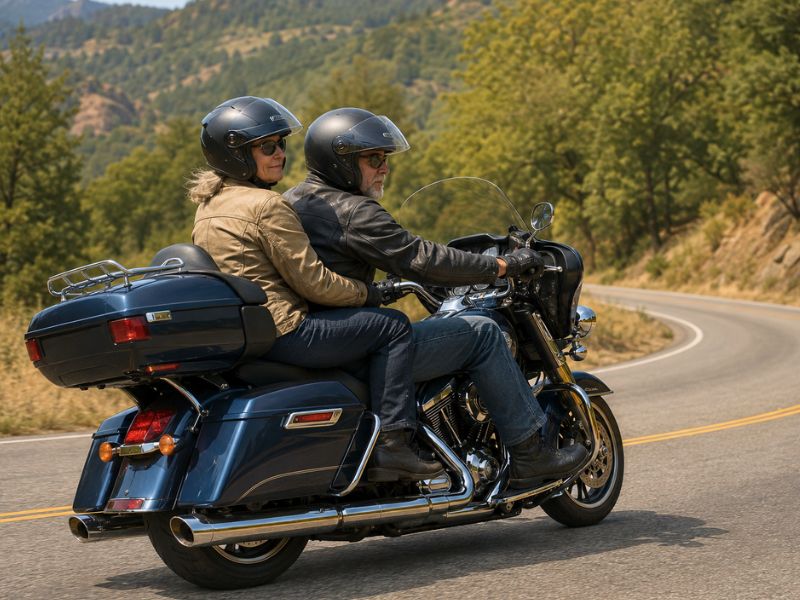
When the rider and motorcycle lean into a turn, you should usually lean with them in a natural, unforced way.
That doesn’t mean trying to copy racing body position or hanging off the side dramatically.
It just means letting your body stay in harmony with the bike instead of trying to remain upright while everything underneath you turns.
A lot of passenger awkwardness in corners comes from trying to stay too vertical.
That usually happens because the movement feels unfamiliar and your body interprets the lean as something to resist.
But when you resist the lean, you can end up feeling less stable, not more.
For most normal road riding, the easiest approach is this: let the bike lean, let your body go with it, and avoid making sudden independent movements.
Think with, not against.
Don’t stay bolt upright
This is one of the most common beginner mistakes.
Some new passengers think staying upright is the “safe” thing to do because it feels like staying more in control.
In reality, it often makes the corner feel stranger and less smooth.
If the motorcycle is leaning and you’re trying to stay vertically rigid on top of it, your body can end up working against the natural balance of the turn.
You don’t need to force a deep lean.
But you also don’t want to behave like a stiff pole attached to the back of the bike.
A relaxed passenger usually moves with the overall shape of the turn without overthinking every angle.
That tends to feel steadier for you and more predictable for the rider.
Don’t over-lean either
The opposite problem also happens.
Sometimes nervous passengers hear “lean with the bike” and interpret that as “I should actively throw myself into the corner.”
That’s not what you want either.
Over-leaning, shifting your weight dramatically, or trying to anticipate the corner too aggressively can make you feel less stable.
It also creates unnecessary movement on the bike.
Most of the time, less is more.
You’re not trying to help the rider corner by adding extra movement.
You’re simply staying aligned with the movement that’s already happening.
Natural, calm, and slightly boring is usually the goal.
That’s good news, because it means you don’t need to be brilliant at corners.
You just need to be steady.
Keep your body calm and connected
Passengers usually corner more smoothly when the rest of their body is settled too.
If your hands, knees, and core are doing their job gently, you’re less likely to panic in a turn.
That doesn’t mean tightening every muscle in your body until you go stiff.
It means staying connected enough that the movement of the motorcycle doesn’t surprise you every time it changes direction.
For many passengers, that includes:
- holding the rider or the bike in a calm, supportive way
- staying reasonably settled through the lower body
- avoiding sudden posture changes mid-corner, and
- keeping the upper body relaxed rather than tense and braced.
If your whole body feels loose, corners can feel chaotic.
If your whole body feels rigid, corners can feel exhausting.
What you’re aiming for is something in between: calm support.
If holding on still feels uncertain, how a motorcycle passenger should hold on can help you build that foundation first.
Look where the bike is going, not down at the road
This helps more than many passengers realise.
When people feel nervous in corners, they often look down, freeze, or fixate on the wrong thing.
That can make the whole moment feel more intense.
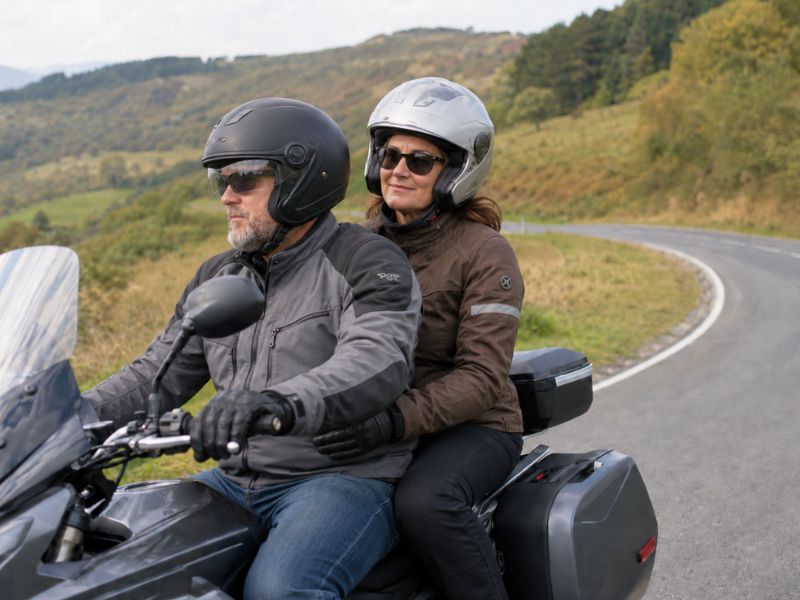
You don’t need to study the road like a rider does, but it usually helps to keep your gaze soft and forward rather than dropping your head or staring tensely at the ground beside the bike.
Looking generally where the ride is going can help your body stay calmer and more in sync with the motion.
It’s a bit like walking down uneven steps: if you panic and tense up, everything feels worse. If you stay oriented and let your body follow the movement, it usually feels more manageable.
What if corners make you nervous?
For many passengers, this is the real issue underneath the technique question.
You may understand the basic advice.
But corners make you feel vulnerable.
You may worry about leaning too much.
You may worry about doing the wrong thing and affecting the bike.
You may worry that the rider can feel your fear and that you’re somehow making the whole experience worse.
That anxiety is very common, especially in the early rides.
The answer is usually to simply build familiarity.
The more often you feel the bike corner smoothly without anything bad happening, the more your body starts to trust the movement.
What feels dramatic early on often starts to feel surprisingly normal later.
I was thinking about this on the weekend when I was on the back of my husband’s bike.
We were riding through a part of the countryside with lots of corners and turns.
I realised how far I’ve come from feeling tense and wondering what to do, to just naturally flowing with the bike.
This definitely gets easier with practice.
If the nerves around corners are part of a bigger confidence issue for you, how to feel more confident on a motorcycle for passengers may help too.
Let the rider lead the corner
This can be reassuring to remember:
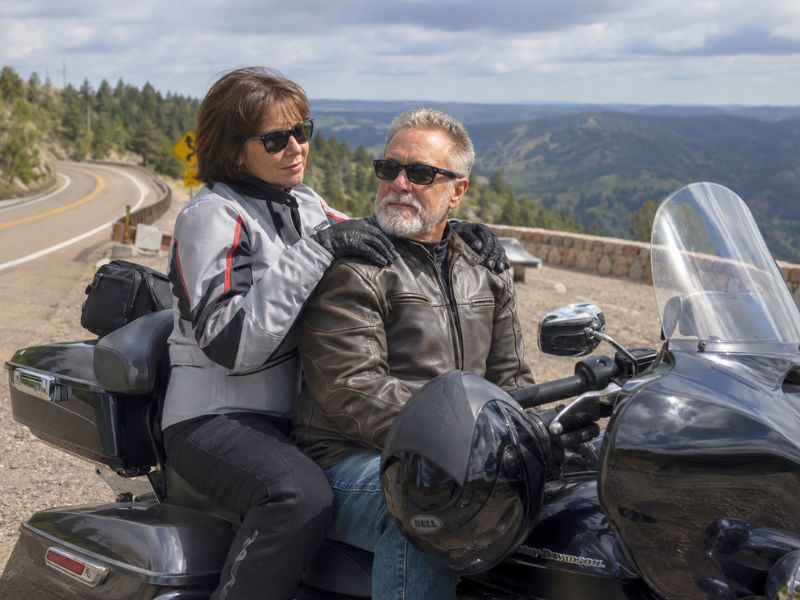
The rider is responsible for the corner.
You’re not steering the bike.
You’re not choosing the line.
You’re not managing the throttle or brakes.
Your job is not to become a second rider from the back seat.
Your job is to be a calm, cooperative passenger.
That means letting the rider lead the turn and allowing your body to move with what the motorcycle is already doing.
For many new passengers, this takes pressure off.
You don’t have to solve the corner.
You just have to avoid fighting it.
Try not to make sudden movements mid-corner
If there’s one thing that unsettles both passenger and rider, it’s sudden movement in the middle of a turn.
That might mean:
- shifting position abruptly
- sitting up quickly because the lean feels strange
- re-gripping in a startled way
- twisting to look somewhere else suddenly, or
- trying to “correct” your body halfway through the bend.
Smooth corners usually feel best when the passenger stays predictable.
You don’t need to be frozen.
But you do want to avoid sudden changes once the bike is committed to the corner.
If you need to adjust something, it’s better to do it before or after the turn rather than right in the middle of it.
Practice on gentler corners first
You don’t need to conquer every kind of bend immediately.
For beginners, it helps to build comfort on slower, gentler roads before worrying about sharper or faster corners.
Stay away from hairpin bends and mountain passes for now.
That gives your body time to learn what leaning actually feels like in a calmer setting.
Many passengers discover that the mystery of corners shrinks quite quickly once they’ve experienced enough ordinary turns to realise that leaning with the bike is not the same as losing control.
If you can, it helps to begin with:
- shorter rides
- familiar roads
- smoother conditions
- a rider you trust, and
- no pressure to be perfect.
That matters more than people think.
Confidence in corners often grows from repetition, not from theory alone.
If you’re tense, everything feels bigger
This is true of a lot of pillion riding, but especially corners.
When you’re tense, the lean feels bigger.
The speed feels faster.
The turn feels sharper.
Your body interprets normal movement as something more dramatic than it really is.
Tension also makes it harder to move naturally with the bike.
That’s why passengers often find corners easier once they improve the basics around comfort, trust, posture, and holding on.
The corner itself hasn’t changed at all.
What changed is that the passenger stopped bracing against every sensation.
If you often feel physically unsettled on the bike, how to make a motorcycle passenger seat WAY more comfortable may help with the comfort side of that.
What not to do in corners
Sometimes it helps just as much to know what not to do.
Let’s break that down.
Don’t lean the opposite way
Trying to stay upright while the bike leans underneath you usually makes things feel less natural, not more.
Don’t throw yourself into the corner
Exaggerated body movement is rarely helpful for normal pillion riding.
Don’t panic-grab or sit up suddenly
Sharp, startled movements in mid-corner can make the turn feel more awkward for both of you.
Don’t hold your breath
Many nervous passengers tense more simply because they stop breathing normally.
Don’t assume you’re failing because it feels strange at first
Corners often feel unfamiliar before they feel intuitive.
That learning curve is normal.
It gets more natural surprisingly quickly
This is one of those skills that feels abstract until your body starts to recognise it.
At first, you may think about every single corner.
Am I leaning enough?
Too much?
Too little?
Am I fighting the bike?
Can the rider tell I feel weird?
But after a while, many passengers stop having a running internal commentary about corners altogether.
The motorcycle leans.
You go with it.
The bike comes back up.
And your body no longer treats that as a major event.
That’s when cornering starts to feel less like a test and more like a normal part of the ride.
That kind of overthinking is very common for new passengers, and what first-time motorcycle passengers are afraid to say out loud explores that stage more honestly.

Final thoughts
So, how should a motorcycle passenger lean in corners?
Usually by staying relaxed, leaning naturally with the rider and the bike, and avoiding the urge to resist, over-correct, or make sudden movements.
You don’t need a dramatic technique.
You don’t need to “help” the corner happen.
And you don’t need to get it perfect straight away.
Most of the time, smoother passenger cornering comes from staying calm, staying connected, and letting the motorcycle do what it is designed to do.
Like many parts of riding pillion, this usually gets easier once your body stops interpreting every lean as a problem.
And as trust grows, corners often stop feeling like something to survive and start feeling like just another part of the ride.
If that part matters to you, you may also like when a motorcycle passenger starts to trust the rider.
FAQs
Should a motorcycle passenger lean in corners?
Yes.
In most normal road riding, a passenger should lean naturally with the rider and the bike rather than trying to stay bolt upright.
How much should a motorcycle passenger lean?
Usually only as much as the bike and rider are already leaning in ordinary riding.
There’s no need to exaggerate the movement or try to hang off the side.
What happens if a passenger leans the wrong way?
If a passenger resists the lean or suddenly shifts the wrong way, the corner can feel more awkward and less smooth for both rider and passenger.
Should a motorcycle passenger stay still in corners?
Not completely still in a rigid sense.
A passenger should stay calm and predictable, but still move naturally with the motorcycle.
Why do corners feel so strange as a passenger at first?
Because the lean is unfamiliar, and your body often wants to resist movements it doesn’t yet trust.
This usually improves quite quickly with experience.
Do passengers need special cornering technique?
Not usually.
For most everyday road riding, the main goal is to stay relaxed, aligned with the bike, and free from sudden movements.
Further Reading
If you’re still figuring out how to feel steady, relaxed, and predictable on the back of a motorcycle, these articles are the best next step:
How a Motorcycle Passenger Should Hold On
If corners feel awkward because you are not quite sure what to do with your hands or upper body, this article will help.
It explains how to hold on in a way that feels secure without becoming tense, clingy, or unstable through bends and changes of speed.
How to Feel More Confident on a Motorcycle (For Passengers)
If cornering feels more emotional than technical right now, read this next.
It’s designed for passengers who feel nervous, vulnerable, or mentally overloaded on the bike, and it helps build the kind of trust and calm that makes corners feel much easier.
How to Make a Motorcycle Passenger Seat WAY More Comfortable
Sometimes cornering feels harder simply because your body is uncomfortable and already bracing.
This article covers the practical comfort fixes that help passengers feel more stable, less tense, and better able to move naturally with the motorcycle.


Corners can feel like one of the strangest parts of being a passenger at first — not because you’re doing anything wrong, but because your body is still learning to trust the lean. If that’s where you are, you may also like How to Feel More Confident on a Motorcycle (For Passengers) — it speaks to that exact early stage when the bike’s movement still feels bigger than it really is.