

A lot of motorcycle passenger advice tells you what to do.
Sit still.
Lean with the bike.
Hold on properly.
Don’t fight the rider’s movements.
Yes, that all matters.
But it still leaves many motorcycle passengers with the same quiet question:
What is riding on the back of the bike actually supposed to feel like when you’re doing it right?
Because good passenger body position isn’t just a list of rules.
It’s a feeling of confidence and relaxation.
It’s the difference between feeling loose, awkward, over-alert, and as if you’re constantly trying to correct yourself — and feeling settled enough that your body starts to move with the bike instead of bracing against it.
For most passengers, good body position doesn’t feel dramatic.
It doesn’t feel like perfect posture.
And it doesn’t feel like clinging on for dear life while trying not to make a mistake.
It usually feels calmer, steadier, and more natural than nervous beginners expect.
In this guide, we’ll look at what good motorcycle passenger body position actually feels like, what often feels wrong, and how to recognise when your body is starting to settle into the ride instead of fighting it.
The short answer
A motorcycle passenger should usually sit in a way that feels stable, connected, and surprisingly calm. You’re not rigid, but you’re not floppy either. Your body feels settled on the bike, your grip feels supportive rather than desperate, and you move with the rider and the motorcycle instead of bracing against every change in speed or direction. If you feel balanced, reasonably relaxed, and less like you’re constantly correcting yourself, you’re probably much closer to good body position than you think.
First: good body position doesn’t feel “perfect”
This matters, because a lot of new passengers imagine that good position must feel neat, precise, and obviously correct.
Usually it doesn’t.
At least not at first.
Good passenger body position often feels much more ordinary than people expect.
There’s no magical moment where your body suddenly announces that you’ve mastered pillion riding.
It’s usually more subtle than that.
It may simply feel like:
- less flopping around
- less need to grip too hard
- less feeling of being left behind when the bike moves
- less tension in your shoulders or arms, and
- less panic when the bike accelerates, brakes, or corners
In other words, good body position often shows up first as less struggle.
That’s one reason some passengers miss it.
You may be watching for a big “aha” moment, when often the real sign is that riding has simply started to feel more natural.
You feel settled, not stiff
This is probably the clearest place to start.
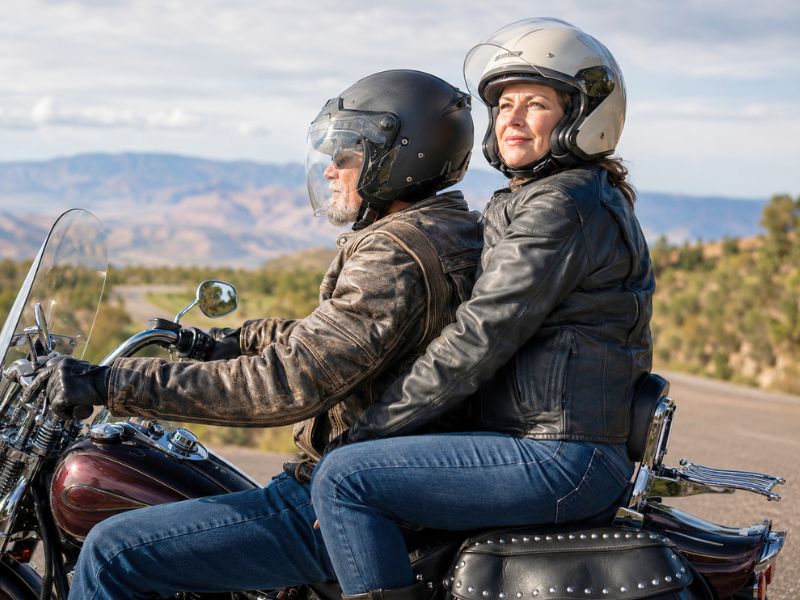
Good motorcycle passenger body position usually feels settled.
Not frozen.
Not ramrod straight.
Not like you’re trying to hold yourself in place through sheer effort.
Settled means your body feels placed on the bike rather than perched on top of it.
You’re not constantly readjusting.
You’re not clenching every muscle.
And you’re not trying to protect yourself from every tiny movement.
At the same time, settled doesn’t mean floppy.
If your body feels loose in an anxious, unanchored way, that doesn’t usually feel good either.
It can make you feel disconnected, as if you’re being moved around by the bike instead of moving with it.
Good body position sits somewhere in the middle: calm, supported, and ready to move naturally.
You feel connected, not clingy
This is another important distinction.
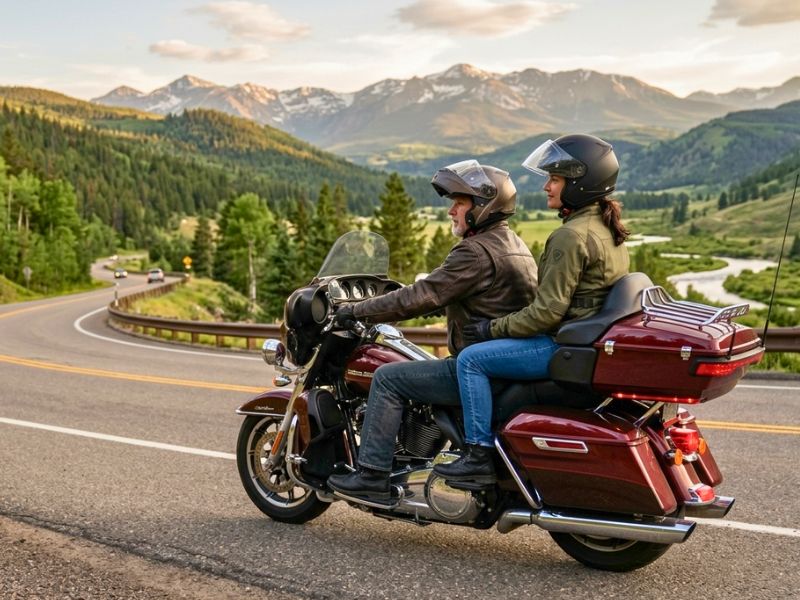
A well-positioned passenger usually feels connected to the rider and the bike.
That connection might come through your hands, your knees, your lower body, your overall posture, or a combination of all of them.
But you feel closer to being with the motorcycle rather than separate from it.
That doesn’t mean clinging.
Clingy body position often feels panicked.
It can show up as gripping too hard, collapsing into the rider, hanging heavily in corners, or trying to create security through force.
Connected body position feels calmer than that.
You’re close enough to move with the rider naturally, but not so tense that all your energy goes into hanging on.
If holding on still feels uncertain, how a motorcycle passenger should hold on can help you build that part first.
You feel balanced, not like you’re constantly catching up
When body position is off, one common feeling is that you’re always just slightly behind the bike.
The rider accelerates and you feel tugged backward.
The bike slows and you lurch forward.
The motorcycle tips into a bend and your body feels late to the movement.
That “catching up” feeling usually means your body isn’t as settled or well-supported as it could be.
Good body position often feels more balanced than that.
Not because you stop moving, but because your body starts moving with better timing and less drama.
You begin to feel more in step with what the motorcycle is doing.
That’s one reason good position makes riding pillion easier rather than harder.
You’re not spending the whole ride reacting half a second late to everything.
You’re breathing more easily
This is such an underrated sign.
When you’re tense, awkward, or over-braced, you often breathe badly without even realising it.
Your chest feels tight.
Your shoulders creep up.
You hold your breath in corners.
You grip harder than you need to.
Good body position usually makes breathing easier.
Not because body position magically fixes anxiety, but because a more settled body tends to breathe more naturally.
If your shoulders soften, your jaw unclenches, and you realise you’re no longer holding your breath every time the bike changes direction, that’s often a very good sign.
It feels like your hands are helping, not doing all the work
Many new passengers assume body position is mostly about what their hands are doing.
But good passenger position usually feels more whole-body than that.
Your hands matter, of course.
But when your body is positioned well, your hands aren’t desperately trying to solve everything by themselves.
They’re part of your support system, not the entire support system.
That usually means:
- your upper body isn’t slumping
- your lower body is helping you stay settled
- your grip feels calm rather than panicked, and
- your hands are supporting your position, not rescuing it.
When you feel stable through the rest of your body, you usually stop overworking your arms and shoulders so much.
If that foundation still feels shaky, how motorcycle passengers should lean in corners may help too, because leaning and body position affect each other more than people think.
You feel calmer in corners
Corners often reveal body position problems very quickly.
If your position is tense or awkward, corners can feel much bigger than they are.
You may feel as if you’re hanging on, resisting the lean, or trying not to do the wrong thing.
When your body position is better, corners usually start to feel smoother.
Not necessarily easy straight away.
Not necessarily effortless.
But less like a fight.
Your body begins to go with the motorcycle more naturally.
You stop trying to stay upright while the bike leans beneath you.
And the whole experience usually feels less dramatic.
You don’t feel like you’re performing for the rider
This matters more than people say.
Some passengers become very self-conscious about body position.
You may worry about looking awkward, leaning wrong, holding on wrong, being too tense, being too clingy, or somehow making life harder for the rider.
That pressure can make everything feel more artificial.
Good body position isn’t about trying to “look correct.”
It feels more private than that.
More internal.
More like your body has quietly found a way to settle that works.
If you’re overthinking every movement, what first-time motorcycle passengers are afraid to say out loud may feel very familiar.
It gets easier with practice
This is one of the most reassuring parts.
Good passenger body position isn’t usually something people understand instantly.
It’s something you grow into.
At first, you may have to think about everything:
- where your hands go
- how close to sit
- what to do in corners
- whether your body feels too tense, and
- whether you’re helping or making things worse.
But later on, a lot of those thoughts begin to fade.
The position that once felt awkward starts to feel normal.
Your body starts recognising the rhythm of riding.
And what once felt like “trying to do it right” begins to feel more like “this is just how I sit now.”
That learning curve is very normal.
What often feels wrong
Sometimes it helps to name the feelings that usually signal something is off.
Passenger body position often feels wrong when:
- you feel perched, loose, or disconnected
- your hands are working far too hard
- your shoulders and jaw stay tense the whole time
- you feel delayed to every movement of the bike
- corners feel more dramatic than they probably are
- you keep readjusting because nothing feels settled, and
- you feel as if you’re trying to survive the ride rather than move with it.
That doesn’t mean you’re failing.
It usually just means something needs refining.
That might be confidence.
It might be comfort.
It might be posture.
It might be the motorcycle setup.
It might simply be lack of experience.
If discomfort is making it harder to stay settled, how to make a motorcycle passenger seat WAY more comfortable may help with the physical side of that.

What helps good body position come more naturally
You can’t force good body position by sheer willpower.
Believe me, I tried when I first started riding on the back of motorcycles 34 years ago.
But you can make it easier.
Things that often help include:
- sitting close enough to feel connected to the rider
- using a calm, supportive hold rather than a panicked one
- staying reasonably engaged through your lower body
- relaxing your shoulders and jaw
- breathing normally
- letting the rider lead the bike, and
- allowing experience to teach your body what riding feels like.
This is one reason good body position isn’t just about posture.
It’s also about trust, comfort, confidence, and familiarity.
If the emotional side of that feels bigger than the practical side right now, how to feel more confident on a motorcycle (for passengers) may help too.
Quick tip: Practice while the bike is parked
You don’t have to figure all of this out while roaring down the highway.
In fact, it often helps to sit on the bike while it’s parked and notice how your body feels.
Do you feel perched or settled?
Too far back or reasonably connected?
Awkward through the shoulders?
Too dependent on your hands?
More supported when you soften your arms and engage your lower body a little?
Sitting in the driveway on the passenger seat can be really helpful.
You’re giving your body a low-pressure chance to notice what different positions feel like.
That kind of parked practice can make a surprising difference once the ride actually starts.

What NOT to do when sitting on the passenger seat
It also helps to know what good body position is not.
It’s not rigid perfection
You don’t need flawless posture every second of the ride.
It’s not clinging as hard as possible
Brute force isn’t the same as stability.
It’s not exaggerated leaning or dramatic movement
Good passenger position usually looks and feels natural and easy.
It’s not constant self-correction
If you’re micromanaging every body part, you’ll probably feel worse, not better.
It’s not immediate mastery
Most passengers need time before good body position starts to feel natural.
It usually feels quieter than expected
This may be the best summary of all.
Good motorcycle passenger body position often feels quieter in the body.
Less scrambling.
Less bracing.
Less overthinking.
Less of a feeling of being thrown around.
More steadiness.
More support.
More connection.
More trust in the movement.
And because it feels quieter, you may not even realise right away that you’re improving.
You just notice that riding feels less tiring, less awkward, and less like a thing you’re constantly trying to manage.
That is often what “better” feels like first.
Final thoughts
So what does good motorcycle passenger body position actually feel like?
Usually calm, settled, connected, and more natural than you might expect.
It doesn’t feel perfect.
It doesn’t feel dramatic.
And it doesn’t usually feel like you’re doing some advanced technique.
It feels more like your body has stopped arguing with the bike.
That’s a big shift.
And like so many parts of being a passenger, it often happens gradually rather than all at once.
If you’re still in the stage where everything feels slightly awkward, that’s normal. Body position gets easier as your confidence grows, your comfort improves, and your body starts trusting the ride more.
If that part resonates, you may also like when a motorcycle passenger starts to trust the rider.
FAQs
What should good motorcycle passenger body position feel like?
Good passenger body position usually feels settled, balanced, and calm.
You’re not rigid, but you’re not loose and flopping around either.
Your body feels connected to the bike and rider instead of constantly reacting late to movement.
How do I know if my body position is wrong as a motorcycle passenger?
It often feels wrong if you’re tense, constantly readjusting, gripping far too hard, or feeling as if you’re always catching up with what the bike is doing.
Should a motorcycle passenger sit stiffly?
No.
Good body position is usually supported and settled, not stiff.
Going rigid often makes riding feel harder and more tiring.
Is body position just about where you put your hands?
No.
Your hands matter, but good body position is usually a whole-body feeling.
Your lower body, shoulders, breathing, and general sense of balance all play a part.
Why do corners feel worse when my body position is off?
Because awkward or tense body position makes it harder to move naturally with the bike.
That often makes corners feel bigger and less smooth than they really are.
Does good passenger body position get easier with practice?
Yes.
For most passengers, body position becomes much more natural over time as the body learns the rhythm of riding and stops bracing against every movement.
Further reading
If you’re still working out how to feel secure, settled, and natural on the back of a bike, these are good next reads:
How a Motorcycle Passenger Should Hold On
A helpful next step if your body position still feels awkward because you’re not sure what to do with your hands.
How Motorcycle Passengers Should Lean in Corners
Useful if sitting well feels easiest on straight roads, but suddenly harder once the bike starts turning.
How to Feel More Confident on a Motorcycle (For Passengers)
A good one if some of the tension in your body is really coming from nerves, uncertainty, or not quite trusting the ride yet.


A lot of passenger advice tells you what to do, but not what it’s supposed to feel like when your body finally starts settling into the ride. If that’s where you are right now, you may also like How to Feel More Confident on a Motorcycle (For Passengers) — because sometimes what feels like a posture problem is really a confidence problem in disguise.