

Updated for 2026 to reflect current motorcycle passenger safety advice, comfort guidance, and best practice for riding more confidently on the back of a bike.
When you tell people you ride on the back of a motorcycle, there’s always a reaction.
Often it’s negative.
“Motorcycles are death traps!”
“You’d never get ME on one of those terrifying machines!”
The negative comments might come from a worried relative.
A friend who saw an accident on the news.
Or a stranger who felt compelled to share a horror story the moment they spotted your helmet.
And if you’re honest?
Part of you wonders if they might be right.
Because sitting on the back of a motorcycle feels very different from sitting inside a car.
There’s no metal frame around you.
No airbags.
No reassuring separation from the road moving beneath your feet.
So let’s talk about motorcycle safety properly.
Not with bravado.
Not with denial.
Just the truth.
The Honest Answer
Motorcycles are riskier for passengers than cars because passengers are more exposed and don’t have the same structural protection.
But risk varies enormously depending on the rider, the speed, the gear, the road conditions, and the choices being made.
A passenger riding with an experienced, safety-focused rider in full gear at sensible speeds faces a very different level of risk from someone riding with an inexperienced, reckless, or impaired rider.
Many people arrive here because they’re trying to make a decision — not prove a point.
Maybe you’re thinking about riding for the first time as a passenger.
Riding on the Back of a Motorcycle: What’s It Really Like? can help you picture what that experience often feels like.
Maybe someone you love wants you to join them.
Or maybe you’re trying to work out whether what you’re feeling is genuine concern, or simply unfamiliar nerves.
This guide isn’t here to convince you to ride.
It’s here to help you understand the risks clearly enough to make the right decision for you.
First: How Dangerous Are Motorcycles, Really?
Statistically, motorcycles have a higher injury and fatality rate per mile travelled compared to cars.
That can sound frightening at first.
But statistics don’t explain context.
Motorcycle accidents are strongly linked to:
- Inexperience
- Speeding
- Alcohol use
- Poor protective gear
- Risk-taking behaviour, and
- Unsafe road conditions.
Remove or reduce those factors, and the risk profile changes dramatically.
The danger is not evenly distributed across all riding situations.
And that matters enormously for passengers.
Is It More Dangerous to Be a Passenger Than a Rider?
In most crashes, passengers face similar exposure to riders.
You’re both on the same machine.
However:
- The rider controls the bike.
- The passenger does not.
That lack of control can make things feel more dangerous.
But feeling vulnerable and being statistically doomed are not the same thing.
If you’re riding with:
- A mature, experienced rider
- A properly maintained motorcycle
- Full protective gear, and of course
- Sensible speeds…
Your real-world risk drops significantly compared to high-risk riding scenarios.
The biggest safety factor is not whether you are a passenger – it’s who you are riding with, and knowing when not to ride on the back of a motorcycle.

What Actually Makes Motorcycling Dangerous?
Let’s strip away drama and talk about where the real risks come from.
1. Inexperienced Riders
New riders are statistically more likely to be involved in accidents.
Riding with someone newly licensed — especially someone riding beyond their skill level — increases risk.
Because riding with a passenger on the back is very different from riding solo.
You want to ride with someone who knows that – and knows how to adjust accordingly.
I’ve been offered rides with people who are excited about getting their first motorcycle.
I’ve always – politely – said “No, thanks – maybe another time”.
There’s no way in the world I’d ride with someone new to motorcycles.
2. Speed
Excessive speed dramatically increases severity of injury.
Most fatal crashes involve speed as a contributing factor.
You remove the margin for error, and tiny mistakes can have major consequences.
I’m very vocal about asking my husband to slow down if the speed is making me nervous.
I’m part of the journey too, and my preferences matter.
So do yours.
3. Alcohol or Impairment
This one is non-negotiable.
If a rider is drunk, you don’t ride.
This is not a complicated decision.
4. No Protective Gear
If you ride wearing shorts, sneakers, an open-face helmet, and bare skin, you have zero protection in a potential accident.
That’s not bravery.
That’s exposure.
Proper gear doesn’t prevent crashes — but it massively reduces injury severity.
Choosing what to wear as a motorcycle passenger makes a significant difference.
That’s why you need to cover the basics, like:
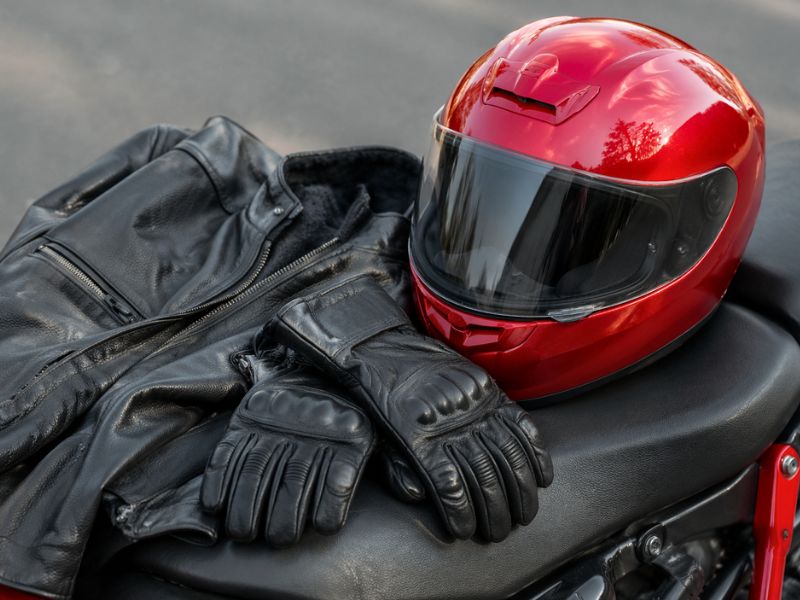
- Full-face helmet
- Armoured jacket
- Protective pants
- Gloves, and
- Over-the-ankle boots.
For passengers especially, choosing the right helmet can make a significant difference to both protection and comfort on longer rides.
5. Aggressive Riding Style
If you’re riding with someone who rides like a stunt man, you’re also putting yourself directly in harm’s way.
If he:
- Accelerates so hard he takes off like a rocket
- Weaves through traffic with no margin for error, and
- Makes rash, dangerous choices…
Then your potential for accidents just went through the roof.
That behaviour increases risk far more than strategic, defensive riding.
So… Are Motorcycles Dangerous for Calm, Mature Riders?
The answer depends less on the machine – and more on the mindset.
Here’s the nuanced answer:
Motorcycling carries inherent risk.
That’s a reality.
But the level of risk depends heavily on behaviour.
A defensive rider on a maintained bike, travelling at sensible speeds, wearing full gear, on dry roads with manageable traffic, in daylight — is not operating in the same risk category as:
- A 19-year-old doing 200km/h
- Someone riding impaired, or
- Someone weaving quickly through angry rush hour traffic.
Context changes everything.
Why Do Motorcycles Feel So Dangerous?
It’s not surprising that you feel so vulnerable on a motorcycle.
Especially if you’re not used to it.
You don’t have a protective framework around you.
And so you’re much more aware of:
- The wind
- The lean in corners
- The movement of the bike beneath you, and
- The closeness to the road.
In a car, sensation is muted.
On a motorcycle, sensation is amplified.
But amplified sensation doesn’t have to equal amplified danger.
It often just means you’re more aware – of your surroundings, and of potential danger.
Many first-time passengers confuse intensity with risk.
They aren’t the same thing.
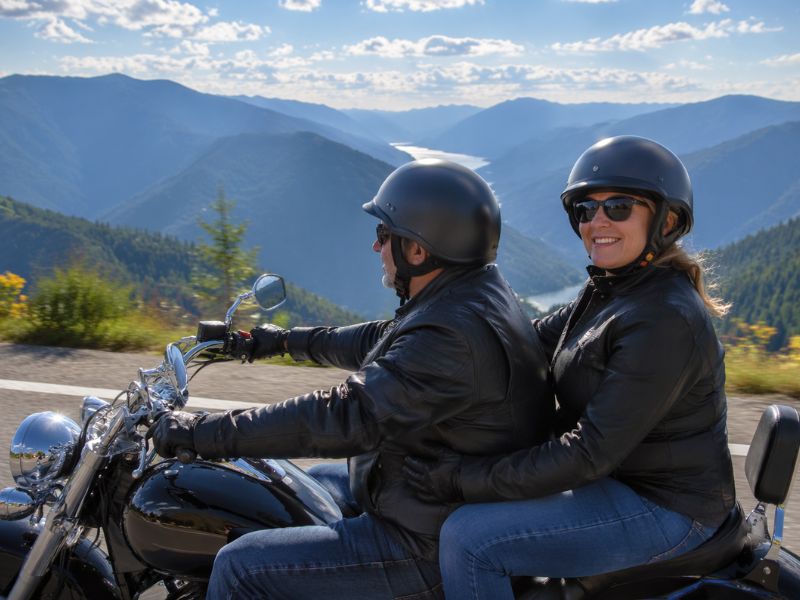
If you’ve ever sat on the back of a motorcycle and suddenly felt your stomach tighten in a corner, or found yourself gripping the rider harder than you meant to, you’re not alone.
Many passengers don’t talk about those moments.
They worry they’re overreacting.
But uncertainty is often just unfamiliarity shouting in a loud voice.
And understanding what’s happening — physically and emotionally — is usually the first step toward feeling calmer on the bike.
How Passengers Can Reduce Their Own Risk
Even though you don’t control the throttle, you are not powerless.
You can:
Choose the Right Rider
This is the single biggest safety decision you make.
Ride with someone who:
- Values your comfort
- Doesn’t show off
- Has real riding experience
- Maintains their bike properly, and
- Listens when you say you’re uncomfortable.
If a rider dismisses your concerns, that’s a bigger red flag than the motorcycle itself.
It’s one of the clearest signs it might be better not to ride.

Wear Proper Gear
Full protective gear changes outcomes.
Your helmet matters (here are the best helmets for motorcycle passengers).
Your jacket matters.
Your boots matter.
Good gear is not about looking hardcore.
It’s about absorbing impact and preventing catastrophic skin injuries.
Learn How to Ride as a Passenger
Surprisingly, passenger behaviour affects the overall stability of the motorcycle.
You can increase your safety, by:
- Going with the rider’s lines rather than leaning the other way
- Looking through corners, and
- Not making sudden movements that he has to quickly compensate for.
Confidence improves safety.
Comfort matters too — because pain and fatigue reduce concentration over time.
If you’re constantly shifting position or bracing against discomfort, it’s worth looking at ways to improve motorcycle passenger seat comfort before longer rides.
The Myth of “Death Machines”
Motorcycles are often described as “death traps.”
But here’s something interesting:
Millions of people ride every year.
Millions of trips happen without incident.
Many riders go decades without a serious accident.
I’ve been riding on the back of my husband’s motorcycle for 34 years.
We’ve had one accident in that time – a relatively minor step-off that resulted in sprained wrists for him and road gravel in my knee (ouch).
That was also the last time I rode in standard jeans rather than proper motorcycle riding jeans.
Motorcycles are not automatically catastrophe machines.
They are machines that require:
- Skill
- Attention, and
- Respect.
Just like many other activities people accept without dramatic commentary.
Comparing Risk Honestly
Driving a car carries risk.
Cycling carries risk.
Horse riding carries risk.
Skiing carries risk.
The difference is that motorcycle accidents tend to make the news more often.
Motorcycle accidents are dramatic.
They make compelling headlines.
But a calm rider commuting responsibly does not make the news.
Risk perception is often shaped by what we see — not by probability alone.
Should You Ride as a Passenger?
That’s a personal decision.
Ask yourself:
- Do I trust this rider?
- Does this rider respect safety?
- Am I wearing proper gear?
- Do I feel pressured, or am I genuinely willing?
Learning what a healthy passenger-rider relationship looks like can help enormously.
If you feel coerced, don’t ride.
If you feel calmly informed and prepared, that’s different.
There is strength in choosing to ride.
There is also strength in choosing not to.
The Emotional Side (That No One Talks About)
For many passengers, fear isn’t about statistics.
It’s about:
- Loss of control
- Vulnerability
- Trust, and
- Letting go.
And that’s human.
The right rider understands this.
The wrong rider mocks it.
Again, so much comes down to who you’re riding with, and under what kind of conditions.
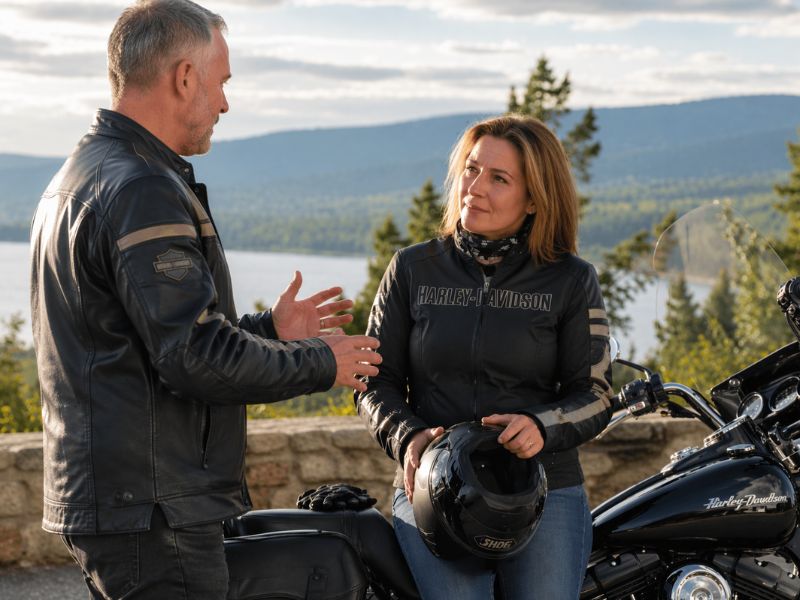
The right rider makes space for that.
So… Are Motorcycles Dangerous?
Yes.
They carry more exposure than cars.
But danger is not destiny.
Motorcycle passenger safety comes down to five core variables.
Risk changes dramatically depending on:
- the rider
- the behaviour
- the gear
- the conditions, and
- the maturity involved.
For passengers riding with experienced, safety-focused riders in proper gear, the risk is real — but it is also managed.
And that distinction matters.
Because fear often grows in the absence of information.
When you understand what increases risk — and what reduces it — you stop relying on other people’s horror stories.
You start making decisions based on knowledge instead.
Some passengers decide riding isn’t for them.
That’s a completely valid choice.
Others discover that once they understand the realities, the fear softens into awareness — and awareness becomes confidence.
Either way, the goal isn’t bravery.
It’s clarity.
Because riding on the back of a motorcycle should never feel like surrendering control.
It should feel like making an informed choice.
Final Thoughts
You don’t need to roll your eyes at people who say motorcycles are dangerous.
They’re not wrong.
They just don’t have the full picture.
Motorcycling demands respect.
It demands awareness.
It demands responsibility.
And when those are present, what remains isn’t recklessness.
It’s clarity.
It’s presence.
It’s connection.
It’s feeling vividly alive — with your eyes open.
And if you choose to ride, you deserve to enjoy it safely.
Frequently Asked Questions About Motorcycle Passenger Safety
Are motorcycles more dangerous for passengers than riders?
Passengers face similar physical exposure to riders in an accident.
However, the rider controls the motorcycle, which can make passengers feel more vulnerable.
In most cases, overall risk depends more on rider behaviour, experience, and road conditions than simply being a passenger.
Is riding as a motorcycle passenger safe?
Motorcycling carries inherent risk, but riding with an experienced, safety-focused rider, wearing full protective gear, and travelling at sensible speeds significantly reduces that risk.
What makes motorcycle riding dangerous?
The biggest risk factors include inexperience, excessive speed, alcohol use, aggressive riding, poor road conditions, and lack of protective gear.
How can a passenger reduce their risk?
Passengers can reduce risk by:
- Choosing an experienced rider
- Wearing proper protective gear
- Avoiding riding with impaired riders
- Communicating clearly about comfort and speed, and
- Learning correct passenger posture.
Should I ride as a motorcycle passenger if I feel nervous?
Feeling nervous is normal, especially at first.
The important question is whether your concern comes from unfamiliarity — or from genuine red flags about the rider or situation.
Trust your instincts.
Further Reading for Motorcycle Passengers
If this topic has brought up questions about safety, trust, or whether riding feels right for you at all, these next guides may help:
How to Feel More Confident on a Motorcycle (For Passengers)
If fear, nerves, or hesitation are getting in the way, this article explains how confidence usually builds step by step, not all at once.
When NOT to Ride on the Back of a Motorcycle
Sometimes the real issue isn’t the bike. It’s the rider, the conditions, or the feeling that something just isn’t right.
This guide helps you recognise those red flags.
What to Wear as a Motorcycle Passenger
If you do decide to ride, proper gear makes a real difference.
This article explains what passengers should wear to feel safer, more comfortable, and better prepared.
Motorcycling isn’t about ignoring risk.
It’s about understanding it — and choosing wisely.
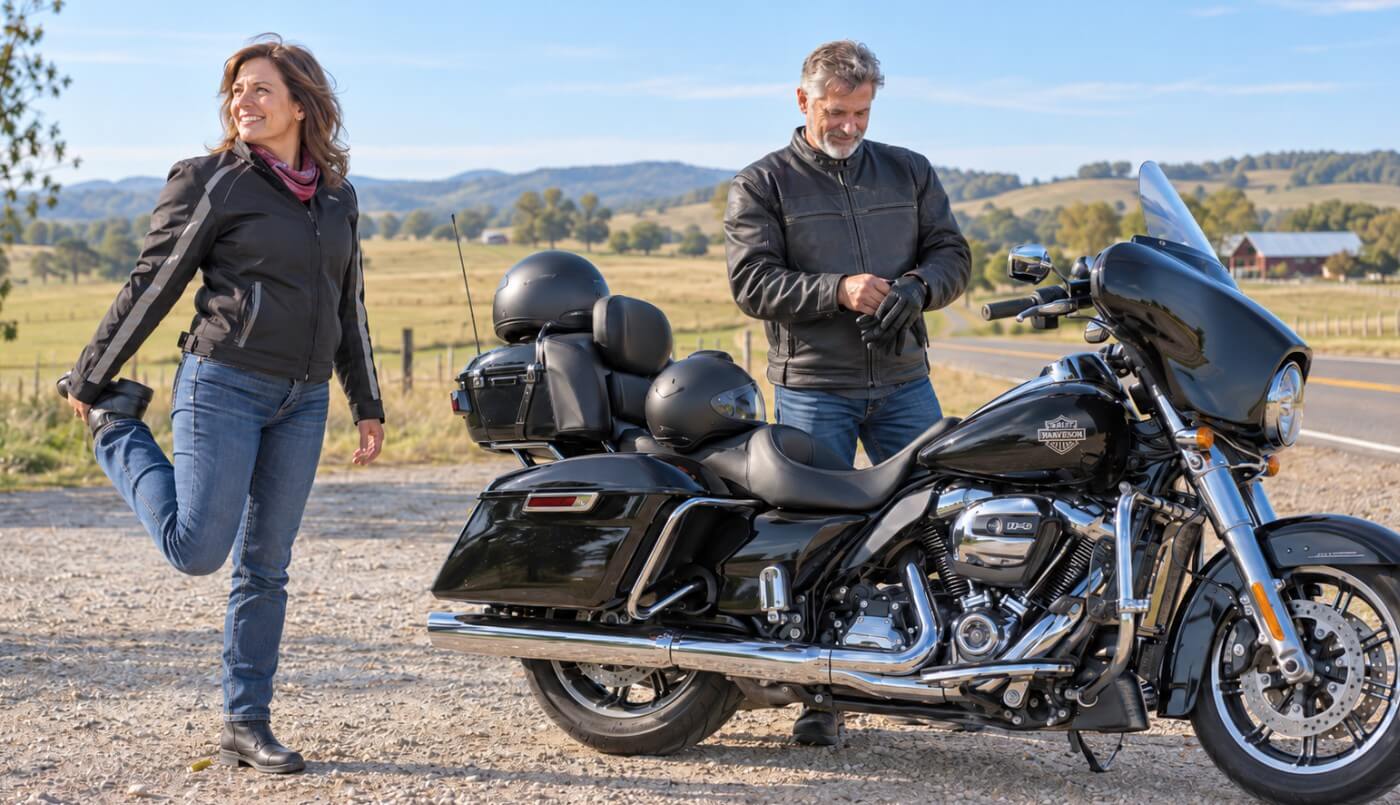
Still wondering whether riding on the back of a motorcycle is a risk worth taking? How to Feel More Confident on a Motorcycle (For Passengers) is a good next read if you want a calmer, more grounded place to start.
Perhaps not as common as the “motorcycles are dangerous” lecture, but also annoying is the “the only way to really live life is to do something physically dangerous” lecture. Just because someone doesn’t skydive or ride motorcycles doesn’t mean they sit fearfully home with a teddy bear or are not doing exciting and interesting things with their lives.
Life would be more pleasant for everyone if people weren’t so eager to lecture each other on how they ought to be living it. (PS, I own a vintage Triumph Bonneville and have ridden motorcycles throughout my life, but I don’t tell everyone they ought to do it too.)
Fair enough, too, Guy!
Excellent article from an interesting viewoint steeped in logic; an enjoyable read.
Thanks, Kenneth! Glad you enjoyed it.
Had a crash on May 29 2016. Driver ran a stop sign looking at his Google Maps app and hit us. Lost part of my foot and a titanium bar is now in my leg.
Almost every time people ask why I limp and tell the story, I get “well, you shouldn’t have been on a motorcycle” (or some variation of that) instead of,”driver shouldn’t have been on his cellphone”.
And yes, I have A Yamaha VStar now and have been riding again 10 months later.
So sorry to hear that, Rory, and good on you for getting back on the horse. Your story is a great example of this really infuriating problem – blame the rider, no matter what! Obviously YOU were watching the road and doing everything right! It drives me crazy.
As a recently new rider I’ve lost count how many times someone has gave me this lecture. One guy even told me outright that everyone he knew that had a motorbike is dead!
Wow! That’s an extreme version of the boring lecture problem!