
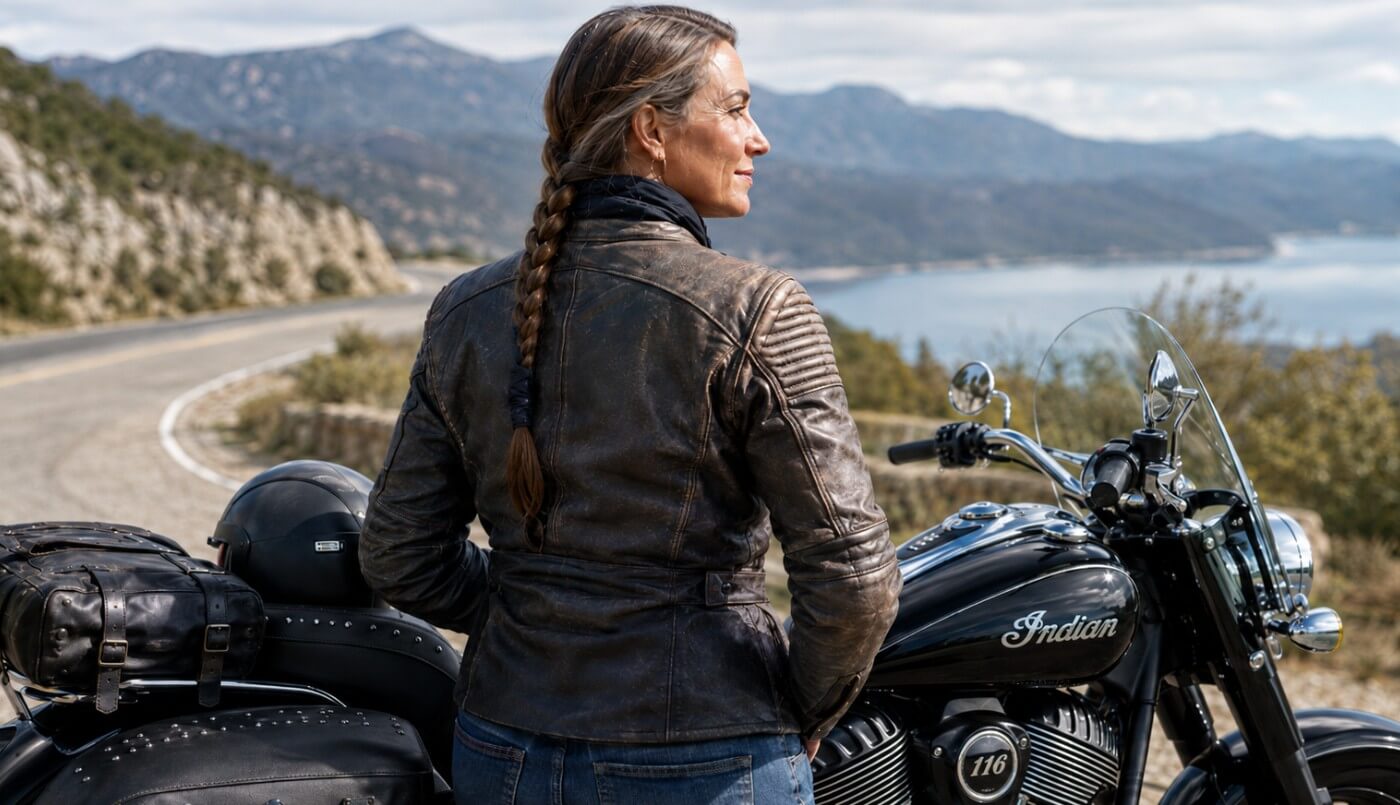
Long hair can seem perfectly manageable when you leave home on a motorcycle.
But by the time you stop for coffee, it may have developed knots, attitude and some serious issues with being brushed.
Even when it’s tied back, the exposed length can whip, twist and rub against your jacket for hours.
By the end of the ride, the hair may feel dry, rough or so thoroughly tangled that removing the hair tie becomes an exercise in patience.
Good motorcycle hair protection isn’t simply a matter of tying your hair back.
The exposed length also needs protection from wind, movement and repeated contact with your jacket.
Fortunately, protecting long hair on a motorcycle doesn’t require elaborate styling.
The most effective approach is usually quite simple: start with dry, detangled hair, keep the style low and flat, and protect as much of the exposed length as possible.
For practical styles that fit comfortably beneath a helmet, see 6 Simple Motorcycle Hairstyles.
The Short Answer
To protect long hair on a motorcycle, begin with completely dry, gently detangled hair and secure it in a low braid, two low braids or a segmented ponytail below the helmet line. Protect the exposed length with a braid wrap, fitted hair tube or careful jacket tucking. Use soft covered ties, avoid bulky accessories beneath the helmet and detangle gently after the ride.
Why motorcycle wind is so hard on long hair
Long hair faces two different kinds of friction on a motorcycle.
The upper part is held beneath the helmet, where it’s pressed against the lining and moved slightly each time your head turns.
The lower part is exposed to wind, movement and repeated rubbing against your jacket, collar or shoulders.
A single strand of hair is light, but several hours of repeated movement can leave thousands of strands twisted together.
The ends are usually the oldest and driest part of the hair, which makes them especially vulnerable to roughness, splitting and breakage.
Hair can therefore look reasonably controlled during the ride while still forming knots underneath or becoming progressively drier toward the ends.
I’ve had long hair forever, and over 34 years of riding on the back of a motorcycle, I’ve seen it go from controlled to completely wild more times than I can count.
Along the way, I’ve learned that prevention is much easier than cure.
Prevention means taking a few simple steps to protect your hair before the ride.
Cure can mean looking at the damage afterward and wondering whether it’s finally time for a short haircut.
Prepare your hair before the helmet goes on
What you do to your hair at the beginning of the ride can make a surprising difference to its condition at the end.
A few simple steps before you put your helmet on can help reduce tangles, dryness and unnecessary damage during the ride.
Start with completely dry hair
Avoid putting your helmet on while your hair is still damp from washing, rain or styling.
Damp hair can be more vulnerable to stretching and breakage.
It may also dry into the shape created by the helmet lining, leaving flattened roots, sharp bends or sections pointing in unexpected directions.
Starting with fully dry hair won’t prevent every post-helmet problem, but it gives you a much better foundation.
Gently remove existing tangles
It’s far easier to prevent a small knot from growing than to deal with it after several hours in the wind.
Before tying your hair back, gently brush or comb through the lengths.
Start at the ends and work upward rather than dragging a brush straight down from the roots.
Pay particular attention to the hair around the nape of your neck.
This area can become tangled from contact with your jacket collar even when the rest of the hair remains reasonably tidy.
Use a small amount of leave-in protection if needed
Dry, coloured, fine or fragile hair may benefit from a little leave-in conditioner, smoothing cream or lightweight hair oil on the middle lengths and ends.
The emphasis is on a little.
Too much product can leave your hair heavy, slippery or greasy beneath the helmet.
You only need enough to reduce friction and give the drier ends some protection.
Avoid applying rich oils or creams directly to the roots immediately before riding.
They can transfer to the helmet lining and make already-flattened hair look even flatter.
Choose a low hairstyle that controls the length
It’s easy to think your hair is securely tied back when it’s actually not.
A plain ponytail holds the hair together at one point, but the remaining length is still free to twist and whip in the wind.
That leads directly to split ends and breakage.
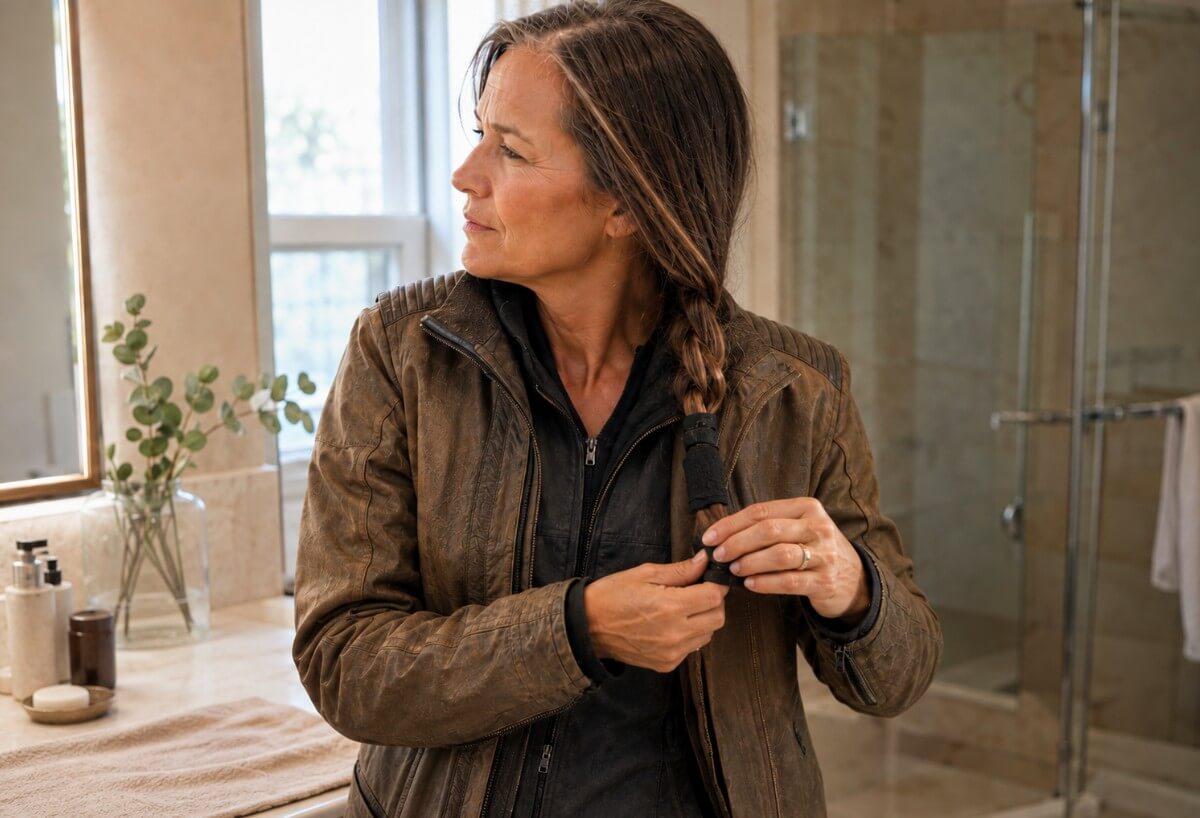
A low braid, two low braids or a low ponytail secured in several places controls far more of the hair.
Keep everything below the helmet line
Begin the braid, ponytail or bun at the nape of your neck rather than higher on your head.
A high ponytail or bulky bun can sit beneath the helmet padding, creating an uncomfortable pressure point.
It may also affect the way the helmet settles around your head.
Your motorcycle hairstyle should work with the helmet rather than require you to force the helmet over it.
Once your hair is arranged, put the helmet on normally and check that it still feels evenly fitted.
If you can feel a lump of hair pressing against your head, take the helmet off, and adjust the style.
A single low braid is simple and easy
A low braid is quick, relatively flat and helps to stop the hair from moving independently.
The braid should begin low at the nape and be firm enough to hold together without pulling tightly at the scalp.
The lower end may still need protection, especially if your hair is very long.
A braid controls the hair, but it doesn’t completely shield it from wind and friction.
Two low braids can help with thick or easily tangled hair
Dividing thick hair into two sections can create flatter, lighter braids that sit comfortably on either side of the neck.
Two low braids can also make the hair easier to tuck into a jacket or protect with fitted wraps. Keep them low and fairly flat rather than beginning high near the crown.
A segmented ponytail is quicker than braiding
A segmented ponytail begins with a soft tie at the nape, followed by one or more additional ties farther down the length.
It takes very little time and gives the hair more control than a single ponytail.
The sections should remain fairly straight rather than being pulled outward into exaggerated bubbles.
For instructions and other helmet-friendly options, see 6 Simple Motorcycle Hairstyles.
My personal favorite is a low bun – it’s quick, easy, and you can pull out the hair tie at your destination to reveal flattering waves.
Protect the exposed length, not just the roots
Choosing the right hairstyle is only half the job.
Even a beautifully neat braid can become dry and fuzzy if it spends several hours exposed to fast-moving air.
Protecting the lower length is particularly worthwhile for very long, coloured or naturally dry hair.
Can a motorcycle hair wrap protect long hair?
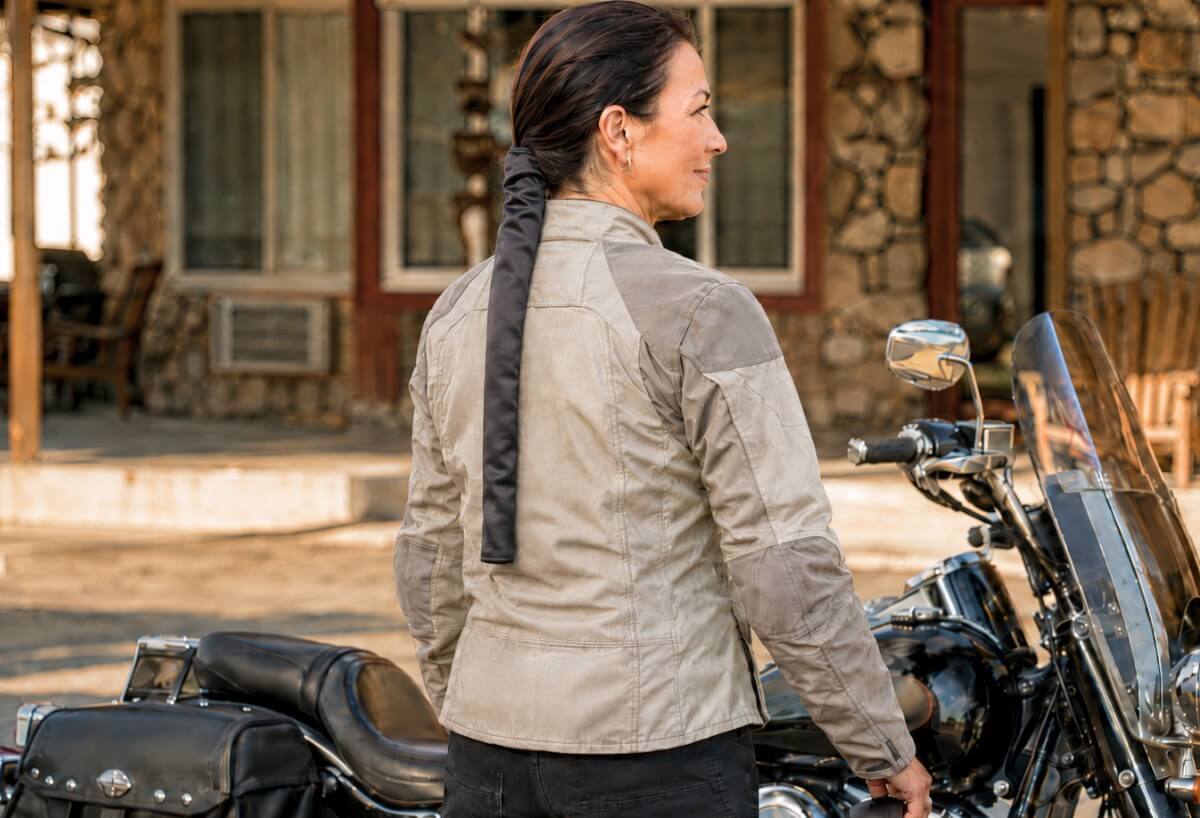
A braid wrap or hair glove encloses the braided length and prevents it from whipping around.
It can also reduce rubbing between the hair and the back of your jacket.
This may be especially useful on long-distance trips, where the same movement is repeated for hours.
Choose something fitted and secure, without long cords, decorative tassels or loose material that can flap behind you.
The wrap should protect the hair without creating bulk underneath the helmet.
It should begin below the helmet line rather than being tucked beneath the padding.
Use a close-fitting hair or neck tube
A fitted hair tube or neck tube can protect the lower portion of a braid or segmented ponytail from direct wind exposure.
The material should sit close to the body rather than billowing behind you.
The goal is containment, not adding another loose accessory to the ride.
A fitted tube may work particularly well for hair that’s long enough to reach the top of the jacket but not long enough to tuck securely inside it.
Avoid ordinary scarves with trailing ends.
Loose material can flap around, work free or become caught on something.
Tuck the end into your jacket carefully
Tucking the end of a braid or ponytail into the back of your motorcycle jacket can provide simple protection without requiring another accessory.
Do this before fully closing the jacket so you can see and feel where the hair is sitting.
Make sure it isn’t trapped in the zipper or pulled tightly when you turn your head.
The braid should lie comfortably against your back.
Don’t force a large bundle of hair into a small space or create a bulky lump near the base of the helmet.
Jacket tucking tends to work best with a braid because the hair remains contained when it’s removed again.
A loose ponytail may still twist and knot inside the jacket.
Use hair ties that won’t cause extra damage
Hair can be protected from the wind and still be damaged by the accessories holding it together.
Thin uncovered elastics can catch, pull and cut into the strands.
They may also leave a severe crease after several hours.
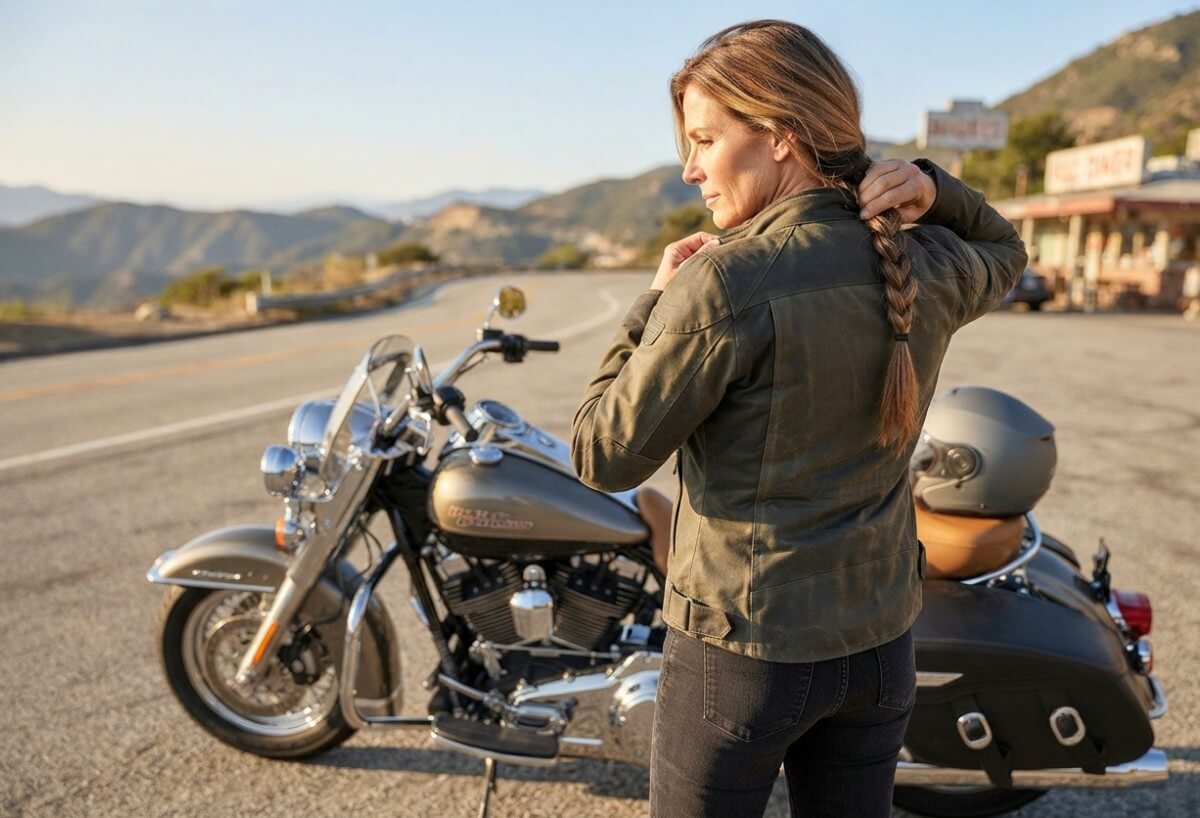
Soft covered hair ties are usually kinder.
They should hold the hair securely without needing to be wound so tightly that they pull at the scalp.
Carry several spares in your jacket or luggage.
Hair ties have a magical power to disappear just before they’re needed.
Avoid hard or bulky accessories beneath the helmet
Claw clips, barrettes, metal fasteners and large scrunchies shouldn’t sit beneath motorcycle helmet padding.
They can create pressure points and may interfere with the way the helmet fits.
Hard accessories could also press painfully into your head.
Keep any ties beneath the helmet line soft, compact and as flat as possible.
So what doesn’t protect long hair well?
Some approaches feel sensible while you’re standing still but don’t cope well once the motorcycle is moving.
Here’s what not to do…
Leaving the hair loose
This is the single worst thing you can do with long hair on a motorcycle.
Loose long hair has complete freedom to twist, whip and rub against itself.
I know that sinking feeling of riding through the sunshine, and suddenly noticing a kind of tugging feeling on my head.
That’s my hair that’s worked its way loose and is now whipping around in the wind, getting split and dry with every passing second.
You want to avoid this at all costs.
Loose hair billowing behind you looks amazing in the movies, but in real life, it’s a disaster that takes forever to fix – and sometimes can only be fixed with scissors.
Yikes.
Using one ordinary ponytail for an all-day trip
A ponytail controls the hair at the nape but leaves the remainder exposed.
The loose length can develop large knots, particularly where it repeatedly contacts the shoulders and jacket collar.
If a standard ponytail gets loose, it’s almost as bad as your whole hair being wild and free.
Adding extra soft ties or braiding the length gives it much better control.
Braiding damp hair
Damp hair may feel easier to braid neatly, but it can remain compressed and vulnerable for hours.
If possible, let the hair dry completely before arranging it for the ride.
Making the hairstyle too tight
A braid doesn’t need to pull against the scalp to be secure.
An overly tight style can become uncomfortable beneath the helmet, particularly as the hours pass.
It may also increase tension around the hairline.
Aim for controlled and secure rather than painfully tight.
Adjust the protection to the length of the ride
A quick trip across town doesn’t always require the same preparation as an entire day on the road.
For a short ride
A simple routine may be enough:
- start with dry, detangled hair
- use a low braid or segmented ponytail
- secure it with soft covered ties, and
- and tuck the end into your jacket if it’s long enough.
For a longer riding day
Longer exposure makes wind and friction more important.
For an all-day trip, consider:
- a low braid or two low braids
- a small amount of leave-in protection on dry end
- several soft ties
- a fitted braid wrap, hair glove or hair tube, and
- and a brush or wide-tooth comb packed in your luggage.
Hair protection is only one part of staying comfortable over a full riding day. For the wider practical picture, see How Motorcycle Passengers Stay Comfortable on Long Rides.
Be gentle when the helmet comes off
Even protected hair needs a little attention after a long ride.
The important thing is not to attack it immediately with a brush.
A gentle post-ride routine will make it much easier to get your hair back under control without causing extra breakage.
Remove the hair ties slowly
Ease each tie out rather than dragging it down the length of the hair.
If a tie has caught on a small knot, use your fingers to release the hair rather than pulling harder.
Detangle from the ends upward
Begin with your fingers or a wide-tooth comb at the bottom few inches of the hair.
Once that section is smooth, move slightly higher.
Working gradually upward prevents small tangles from being pushed together into one larger knot.
Add moisture only where it’s needed
If the ends feel dry, use a tiny amount of leave-in conditioner, smoothing serum or lightweight oil.
Concentrate on the lower lengths rather than the roots.
The crown may already look flatter than usual after being inside the helmet.
If your main problem is flattened roots, misplaced partings or hair that has dried into the shape of the helmet padding, see How to Fix Motorcycle Helmet Hair.
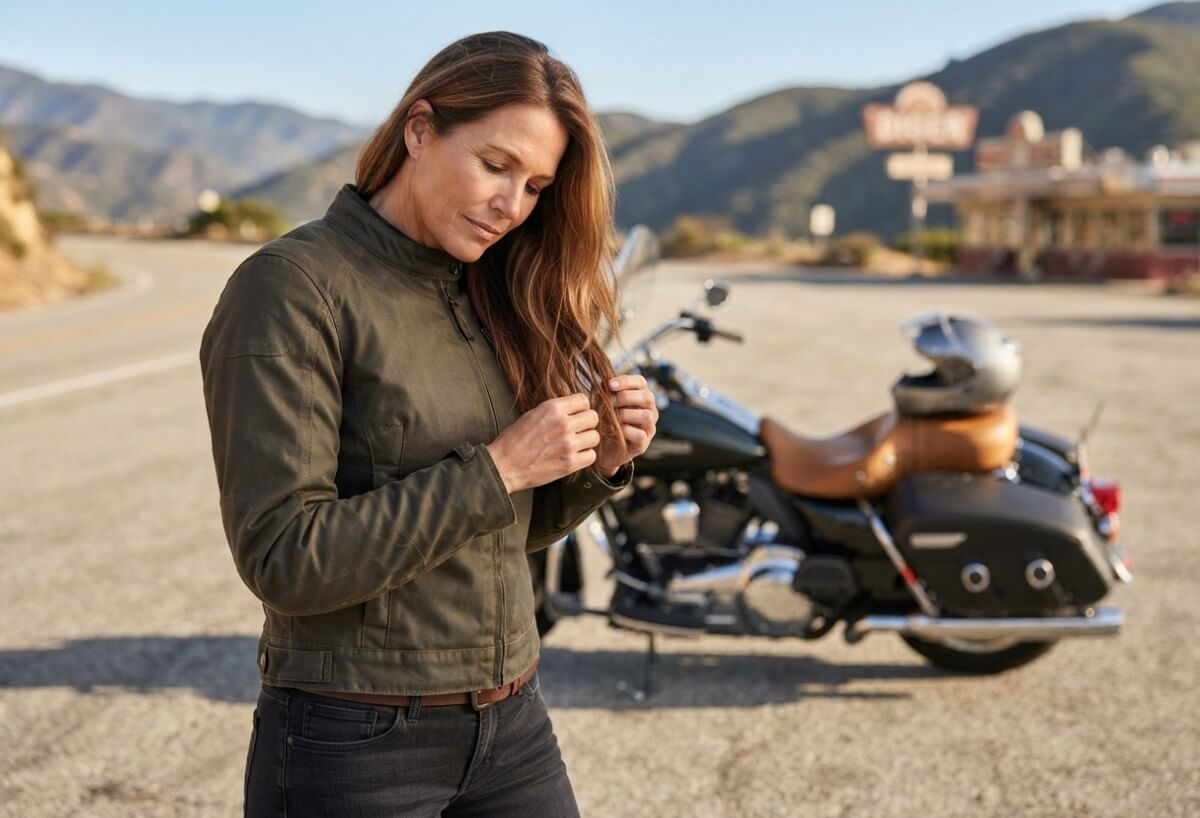
Protected hair doesn’t have to mean perfect hair
A good motorcycle hairstyle isn’t one that looks perfect at the end of the ride.
That standard belongs in movies and carefully staged photos.
A few flattened sections and flyaway strands are simply part of riding.
The real goal is to avoid painful knots, unnecessary breakage and half an hour of frustrated brushing afterward.
Start with dry hair, keep it low and secure, and protect the exposed length.
A little preparation before the ride means much less fighting with it afterward.
Frequently asked questions
How should you wear long hair with a motorcycle helmet?
Keep the hair low and flat beneath the helmet, using a low braid, two low braids or a segmented ponytail that begins at the nape.
Avoid high ponytails, bulky buns, clips and thick accessories beneath the helmet padding. Protect the exposed length with a fitted wrap, hair tube or careful jacket tucking.
What’s the best motorcycle hairstyle for very long hair?
A single low braid or two low braids usually gives very long hair good control without creating bulk beneath the helmet.
Protecting the braided length with a fitted wrap or careful jacket tucking can reduce wind damage further.
Is a ponytail enough for riding a motorcycle?
A plain ponytail may be adequate for a short ride, but it still leave some of the hair exposed.
For longer rides, a braid or ponytail secured in several sections generally controls the length more effectively.
Can I tuck long hair into my motorcycle jacket?
Yes.
A low braid can be tucked carefully into the back of a motorcycle jacket as long as the hair isn’t caught in the zipper, pulled tightly or formed into a bulky lump beneath the helmet line.
Should I put oil in my hair before a motorcycle ride?
A very small amount of lightweight oil or leave-in product on dry ends may reduce friction.
Avoid using too much or applying it heavily around the roots, where it can transfer to the helmet lining and make the hair look greasy.
Can long hair affect motorcycle helmet fit?
The hair itself usually isn’t the problem when it lies flat.
High ponytails, bulky buns, clips and thick accessories beneath the helmet can create pressure points or prevent the helmet from settling correctly.
How do I untangle motorcycle hair without breaking it?
Remove ties slowly, separate larger knots with your fingers and begin combing at the ends.
Work upward in small sections rather than brushing forcefully from the roots.
Further Reading
These related Pillioness articles can help you protect your hair, choose a helmet-friendly style and stay more comfortable on longer rides.
6 Simple Motorcycle Hairstyles
These practical styles are designed to sit low beneath a helmet while helping to keep your hair secure and manageable during the ride.
How to Fix Motorcycle Helmet Hair
This guide explains how to revive flattened roots, awkward bends and misplaced partings after your helmet comes off.
How Motorcycle Passengers Stay Comfortable on Long Rides
This article covers the wider comfort challenges of full-day motorcycle travel, including seating, clothing, breaks, hydration and fatigue.

Long hair can look securely tied back and still end up badly tangled after a ride. What’s worked best for you: a low braid, two braids, a segmented ponytail, a hair wrap or tucking it into your jacket? Share what you’ve learned — especially if you’ve found a good solution for long riding days.