
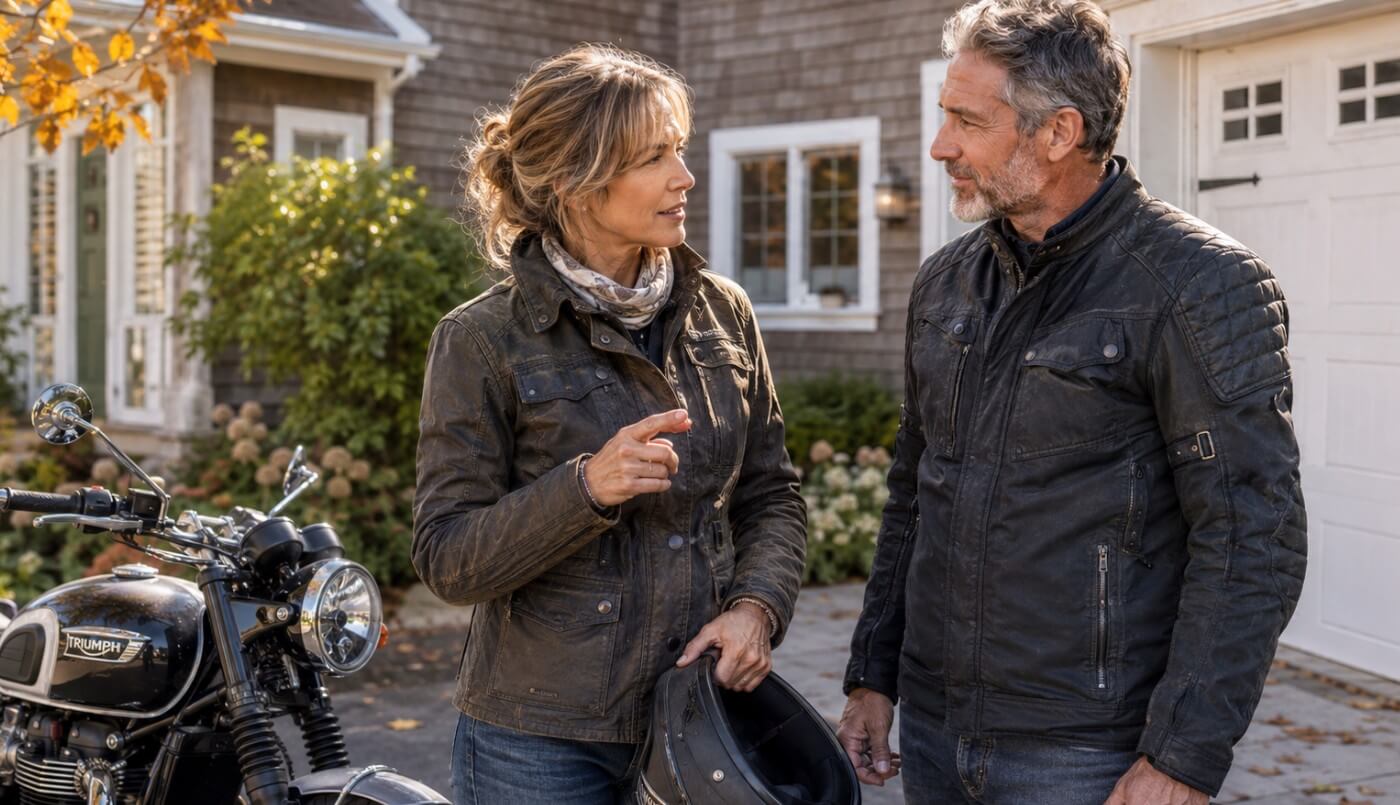
Do you ever climb onto the back of a motorcycle without saying a word, even though a dozen questions are swirling through your head?
You may be wondering whether the ride will be faster than you’re comfortable with, how long it will be before the first stop, what you should do if you need the rider’s attention, or whether that slight ache in your hip is going to become a serious problem an hour down the road.
Maybe you’re nervous but don’t want to dampen the rider’s excitement.
Or maybe your helmet doesn’t feel quite right, you’re colder or more tired than you expected, or you’re still not entirely sure what the rider wants you to do when the motorcycle leans or comes to a stop.
You get on, the engine starts, and everything that would have been easy to mention in the driveway suddenly becomes much harder to explain through helmets, wind noise, traffic, and a motorcycle moving beneath you.
The trouble is that the rider can’t respond to concerns they don’t know you have.
The Short Answer
Before riding, a motorcycle passenger should tell the rider anything that could affect their comfort, confidence, safety, or enjoyment. That includes feeling nervous, tired, cold, sore, distracted or unwell; being unsure how to hold on; worrying about speed, corners or the route; or expecting to need extra stops. The rider doesn’t need a long speech, but they do need useful information. A brief conversation before the motorcycle moves can prevent panic, discomfort, resentment and misunderstandings later in the ride.
Why passengers should speak up before the motorcycle moves
A motorcycle passenger is not just luggage with a helmet.
You’re part of the ride.
Your body position, comfort, confidence, tension, fatigue, and reactions all affect the experience.
That doesn’t mean you need to become a motorcycle expert before climbing on the back.
But it does mean the rider needs to know what’s going on with you.
If you’re freezing, stiff, distracted, anxious, overloaded, or unsure how to communicate, the rider may not realise it until things have already become uncomfortable.
And because motorcycle riding is so physical, small problems can grow quickly.
A slightly cold passenger can become a miserable passenger.
A slightly nervous passenger can become a rigid passenger.
A passenger who doesn’t know how to ask for a stop may sit there getting more and more tense until the whole ride feels awful.
If you already struggle with confidence, it may help to read How to Feel More Confident on a Motorcycle (For Passengers) before longer rides.
Confidence isn’t about pretending you’re fearless.
It’s about having enough information, trust, and control to relax into the experience.
A short conversation before the ride gives both of you a better chance of enjoying the day.
After more than 30 years and 250,000 kilometres as a motorcycle passenger, I’ve learned that the things you hesitate to mention in the driveway rarely disappear once you’re on the road.
Cold hands get colder, a sore hip becomes harder to ignore, and uncertainty tends to grow when you can’t easily explain what’s wrong.
Tell the rider if you’re nervous or unsure
This is probably the most important thing to say.
It can also be the hardest.
Many passengers feel pressure to act relaxed, especially if the rider is excited, experienced, or very comfortable on the bike.
But nervousness changes how your body behaves.
Nervousness can make you grip harder, sit stiffly upright, and overthink every lean, stop, and corner. You may also become unusually quiet, not because you’re relaxed, but because you’re concentrating on keeping your fear under control.
That matters, because the rider may interpret your silence as confidence when it’s actually fear.
You don’t need to make a big announcement.
You can simply say:
“I’m a bit nervous today, so can we take it gently at first?”
Or:
“I’m okay to ride, but I need a few minutes to settle in.”
Or:
“I’m excited, but I’m also a little anxious, so please don’t assume quiet means I’m fine.”
That last one is especially useful.
Some passengers go quiet when they’re relaxed.
Others go quiet when they’re overwhelmed.
The rider can’t always tell the difference.
If panic is something you worry about, What to Do if a Motorcycle Passenger Panics Mid-Ride is a good companion article to this one.
But ideally, you want to give the rider enough information before the ride starts so panic is less likely to build in the first place.
Tell the rider if you’re new, rusty, or still learning
A first-time passenger and an experienced passenger don’t need the same kind of ride.
Neither does a passenger who used to ride years ago but hasn’t been on the back of a motorcycle for a long time.
Your brain may remember the idea of riding.
Your body may not remember the feeling.
The first few minutes can feel strange.
The movement of the bike, the sound, the wind, the closeness, the lack of seatbelt, the leaning, the stops, the acceleration — it can all feel like a lot until your body catches up.
Tell the rider if you need an easy start.
You might say:
“It’s been a while, so can we treat the first part like a warm-up?”
Or:
“I haven’t done this before, so please talk me through what you want me to do before we leave.”
Or:
“I may need a short first ride rather than jumping straight into a long one.”
That isn’t being precious.
It’s being realistic.
A passenger who’s allowed to ease into riding is much more likely to enjoy it and want to do it again.
A passenger who’s thrown into the deep end may spend the whole ride silently planning how never to repeat the experience.
Tell the rider if anything already feels uncomfortable
If you’re uncomfortable while the bike is still parked, the ride probably won’t magically fix it.
If your helmet feels wrong, your jacket is digging in, your gloves are bunching up, your boots feel awkward, your back already hurts, or the seat feels like a medieval punishment device, say something before the ride starts.
Motorcycle discomfort tends to intensify.
Even a minor pressure point, stiff neck, or slightly awkward seating position can become surprisingly painful once you’ve been on the motorcycle for a while—and may eventually leave your whole body holding a grudge.
This is especially important if you’re sitting on a passenger seat that doesn’t give much support.
Passenger seats vary wildly, and some are far less comfortable than they look.
I’ve made the mistake of thinking a hard seat wouldn’t be a big problem.
I’m an experienced motorcycle passenger – surely I could just tough it out?
Um…NO.
Half an hour later on that ride, I was in increasing pain.
My backside was the only thing I could think about.
That taught me that speaking up about the hard seat while we were still in the driveway – and opening the garage door again to get out the trusty sheepskin which makes it much more tolerable – is far easier than gritting my teeth for the next 50 kilometres.
If comfort is already an issue for you too, How to Make a Motorcycle Passenger Seat WAY More Comfortable explains practical ways to improve it before longer rides.
You can say:
“This seat feels okay now, but I may need more stops than usual.”
Or:
“My lower back is already a bit tight, so I need you to check in with me.”
Or:
“My helmet/gloves/boots feel annoying already — can we sort that before we go?”
The rider may not be able to fix every comfort issue instantly.
But they can adjust the plan.
They can shorten the ride, avoid rough roads, stop earlier, or understand why you’re shifting around instead of assuming you’re restless or complaining for no reason.
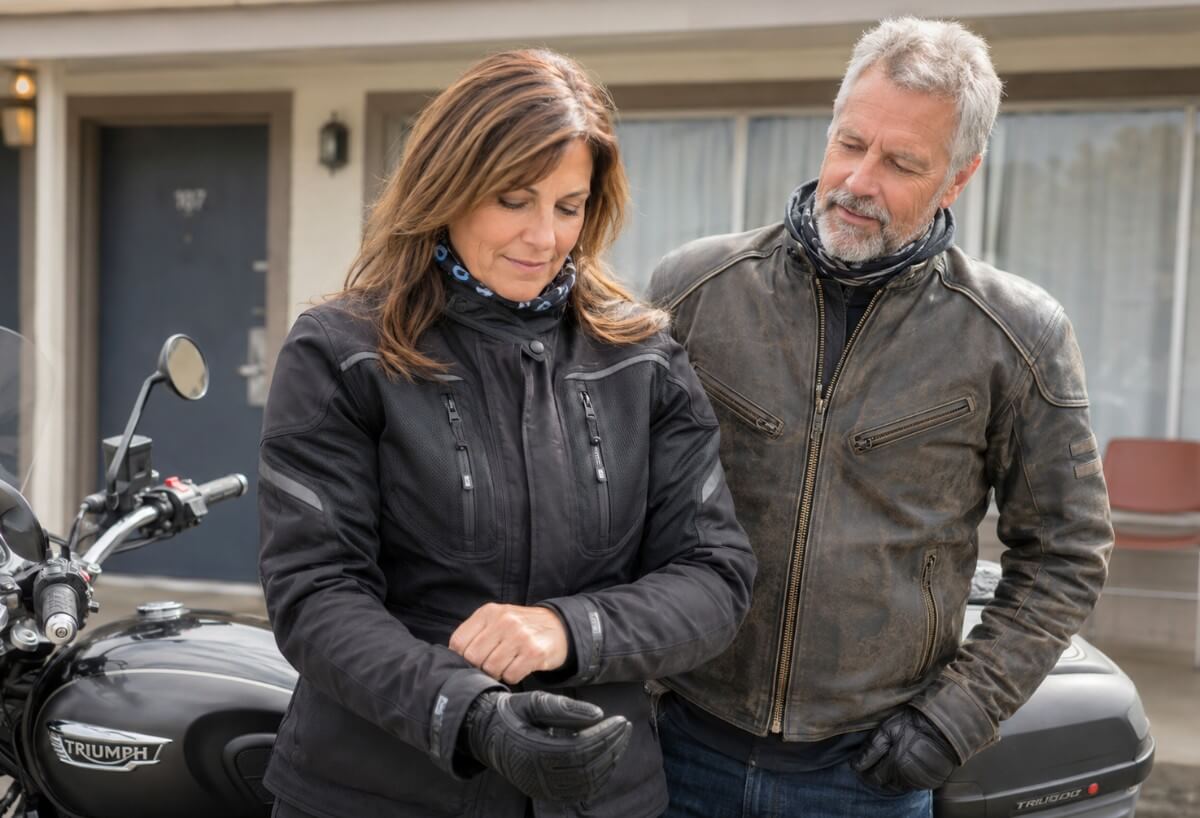
Tell the rider if you’re tired, cold, sore, or likely to need stops
Motorcycle passengers often underestimate how much their physical state matters.
Tiredness, cold, or a mild headache may be manageable in everyday life, but they can feel much harder to ignore on the back of a motorcycle.
But on the back of a motorcycle, those things can hit harder.
Cold air, wind pressure, noise, vibration, sun, dehydration, and concentration all take energy. If you’re already tired, sore, cold, unwell, emotionally drained, or starting the ride with a headache, the rider needs to know.
Not so they can fuss over you.
So they can make better decisions.
There’s a big difference between:
“She’s quiet because she’s enjoying the scenery.”
And:
“She’s quiet because she has a headache, feels cold, and is trying not to make a scene.”
If you know you’re not at your best, say it early.
“I’m okay to ride, but I’m tired today.”
“I’ve got a bit of a headache, so I may need a shorter ride.” LINK TO HEADACHE
“I’m colder than I expected, so can we stop if it gets worse?”
“I’m not feeling 100 percent, so let’s keep this easy.”
This also includes needing regular stops.
Some riders can go much longer than passengers.
That doesn’t always mean they’re tougher.
It often means they have a better seat, more control over their body position, more warning before manoeuvres, and more mental involvement in the ride.
Passengers can get stiff, cold, bored, sore, sleepy, or overwhelmed in a different way.
So if you know you’ll need breaks, tell the rider before the ride starts.
“I’ll probably need a stop every hour.”
“Can we do a short first stretch and then see how I feel?”
“I’d rather stop before I’m miserable, not after.”
That last sentence is a useful one.
Some passengers wait until discomfort becomes unbearable before saying anything.
By then, they may already be annoyed, stiff, or emotionally done with the ride.
Stopping earlier isn’t failure.
It’s maintenance.
A short stop can reset everything: your circulation, your mood, your confidence, your bladder, your neck, your hands, and your ability to keep being a pleasant human being.
If you know you sometimes get sleepy on longer rides, mention that too. It’s more common than many passengers expect, and Why Do Motorcycle Passengers Fall Asleep? (And How Not To!) goes into it properly.
Tell the rider what kind of ride worries you
Not all riding feels the same from the back of the motorcycle.
A passenger may be fine on open roads but nervous in traffic.
Or calm in town but anxious on highways.
Or happy on smooth roads but tense on gravel, bridges, fast sweepers, busy intersections, mountain passes, or tight bends.
The rider may love exactly the kind of road that makes you quietly reconsider your life choices.
So say something before the ride.
“I’m not great with fast roads yet.”
“I get nervous on tight corners.”
“I don’t like heavy traffic on the bike.”
“I’m okay with scenic riding, but I don’t want anything too technical today.”
This helps the rider choose a route that matches the passenger they actually have, not the imaginary passenger they wish had shown up.
It also gives the rider a chance to explain the plan.
Sometimes fear comes from not knowing what’s ahead.
If the rider says, “The first ten minutes are town traffic, then it opens out and gets much easier,” that can make a big difference.
If they say, “There’s one steep bit, but we can take it slowly,” you’re not blindsided.
And if they casually reveal, “There are twenty miles of gravel and a mountain road with no barriers,” you have the opportunity to get mysteriously busy elsewhere.
Ask what to do if you’re not sure
Passengers sometimes smile and nod because they don’t want to look clueless.
But motorcycle passenger instructions can be strangely vague if you’re new.
“Just relax.”
“Move with the bike.”
“Don’t fight it.”
“Hold on properly.”
“Don’t lean the wrong way.”
Those things may be true, but they’re not always clear.
If you don’t understand what the rider wants from you, ask before you leave.
You can say:
“Can you show me where you want my hands?”
“What should I do when we stop?”
“Do you want me to lean with you or just stay in line with your body?”
“Where should I put my feet?”
“What should I avoid doing?”
These aren’t silly questions.
They’re exactly the questions a rider should want you to ask.
A passenger who understands the basics is calmer, safer, and easier to ride with.
If you’re still working out the physical side of riding pillion, How Does a Motorcycle Passenger Hold On? is useful before this conversation.
It helps make the “where do I put my hands?” part feel less awkward and mysterious.
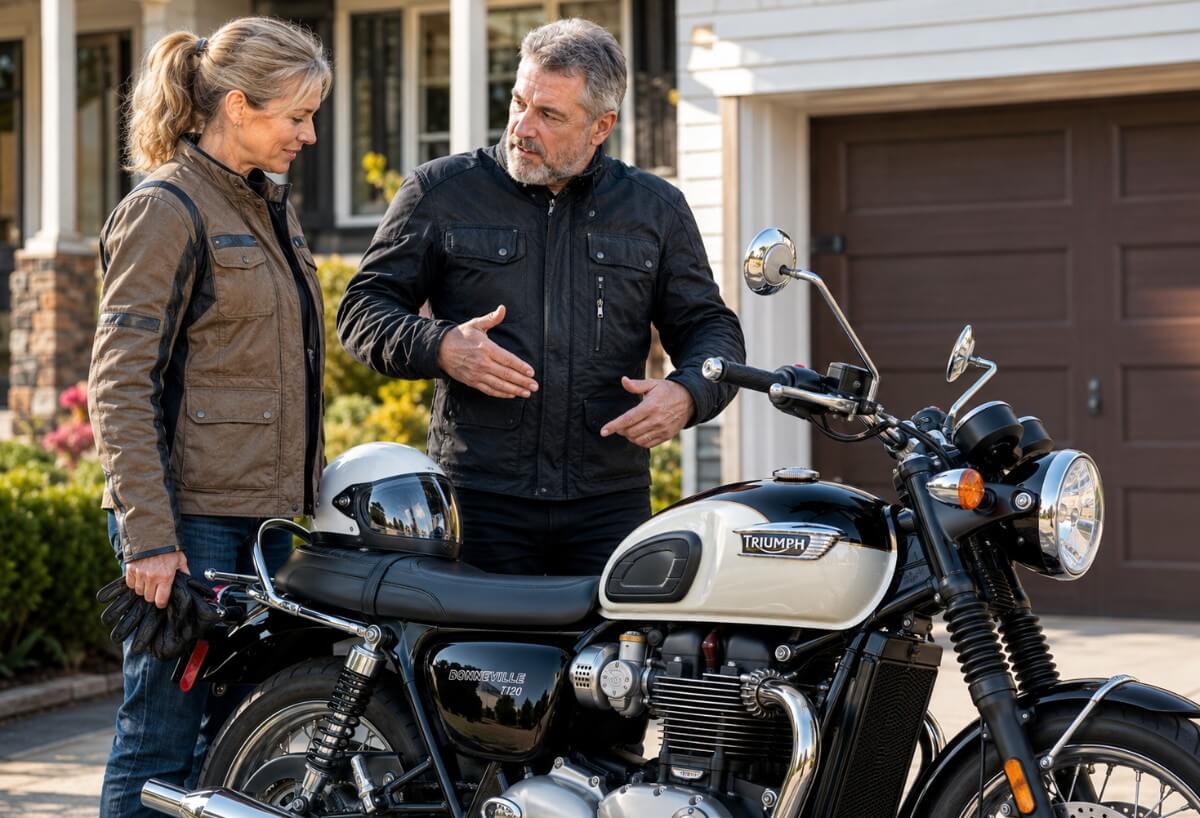
Agree on signals before you leave
This is one of the most practical conversations you can have before a ride.
Once you’re moving, normal conversation may be difficult or impossible.
Even with helmet intercoms, you still need simple backup signals.
Before you leave, agree on what you’ll do if you need to stop, slow down, adjust something, or tell the rider you’re not okay.
A simple system is enough.
For example:
One tap: I need your attention.
Two taps: Please slow down.
Three taps: I need to stop soon.
Firm repeated taps: Stop as soon as it’s safe.
You can choose whatever system makes sense for you, but it needs to be clear.
The worst signal system is the one you invent in a panic while the rider is trying to interpret random shoulder squeezing at speed.
Also, be honest about what “soon” means.
If you say, “I need to stop soon,” does that mean at the next safe pull-off?
The next gas station?
Within five minutes?
Before you start crying inside your helmet?
The rider can’t always know unless you agree beforehand.
I figured this out the hard way – opening up your helmet and shouting about your various needs just doesn’t work.
Say what you don’t want today
This isn’t about controlling the ride.
It’s about setting the tone.
There may be things you’re technically capable of doing, but don’t want to do today.
You might not be feeling like:
- a fast ride
- a long ride
- gravel roads
- riding with a group
- a road you already know makes you nervous
- riding in the rain.
Or you might not want to ride when you’re tired, distracted, or emotionally overloaded.
All of that’s allowed.
A passenger can be willing without being endlessly available for whatever the rider has in mind.
Try saying:
“I’m happy to ride today, but I don’t want anything intense.”
“I’d like this to be a gentle ride, not a big mission.”
“I don’t want to push myself today.”
“I’m okay with going out, but I’m not okay with riding in heavy rain.”
A good rider would rather know your limits before the ride than discover them halfway through when you’re miserable, angry, or silently composing a breakup speech in your helmet.
It took me a long time to feel OK about asking for a break.
Eventually I just ran out of patience and started asking for what I want.
And I figured out a passenger who speaks up while she is merely stiff or cold is much easier to help than one who has spent the previous hour becoming increasingly uncomfortable and resentful.
Tell the rider if you need them to check in
Some passengers are good at speaking up.
Others need the rider to ask how they’re doing.
If you know you tend to minimise discomfort, freeze when nervous, or stay quiet because you don’t want to interrupt the ride, tell the rider before you go.
You can say:
“If I go very quiet, please check whether I’m okay.”
“Can you ask me after the first ten minutes how I’m doing?”
“I might not speak up quickly enough, so please don’t assume I’m fine.”
This can be surprisingly reassuring.
It means you don’t have to carry the whole responsibility of communicating under pressure.
The rider is still responsible for riding.
But a thoughtful rider can also create space for the passenger to be honest.
That matters, especially for passengers who are still building trust.
If the emotional side of this feels familiar, When a Motorcycle Passenger Starts to Trust the Rider explores why trust often grows through small, repeated moments rather than grand gestures.
A simple pre-ride conversation checklist
You don’t need to turn this into a formal meeting in the driveway.
Nobody needs a clipboard.
But it helps if the rider takes the lead with a quick check-in and gives you the chance to answer honestly rather than waiting for you to raise every concern yourself.
The rider might ask:
How are you feeling today?
Nervous? Excited? Tired? Cold? Sore? Not quite right?
This gives the rider a realistic starting point.
Are you comfortable on the bike?
Check the seat, foot position, hand position, helmet, gloves, jacket, boots, and anything that already feels awkward.
What kind of ride are we doing?
Short or long?
Relaxed or challenging?
Scenic or practical?
Fast roads or back roads?
Stops planned or “we’ll see”?
Passengers often feel calmer when the ride has shape.
What are the signals?
Agree on how to ask for attention, slowing down, or stopping.
Don’t leave this vague.
When will we stop?
Even if the answer is flexible, it helps to have a rough plan.
The passenger shouldn’t feel trapped until the rider happens to want fuel.
Is there anything we should avoid today?
Weather, traffic, gravel, long highway stretches, group rides, fast corners, or anything that feels like too much.
That’s enough.
Five minutes before the ride can save a lot of discomfort later.
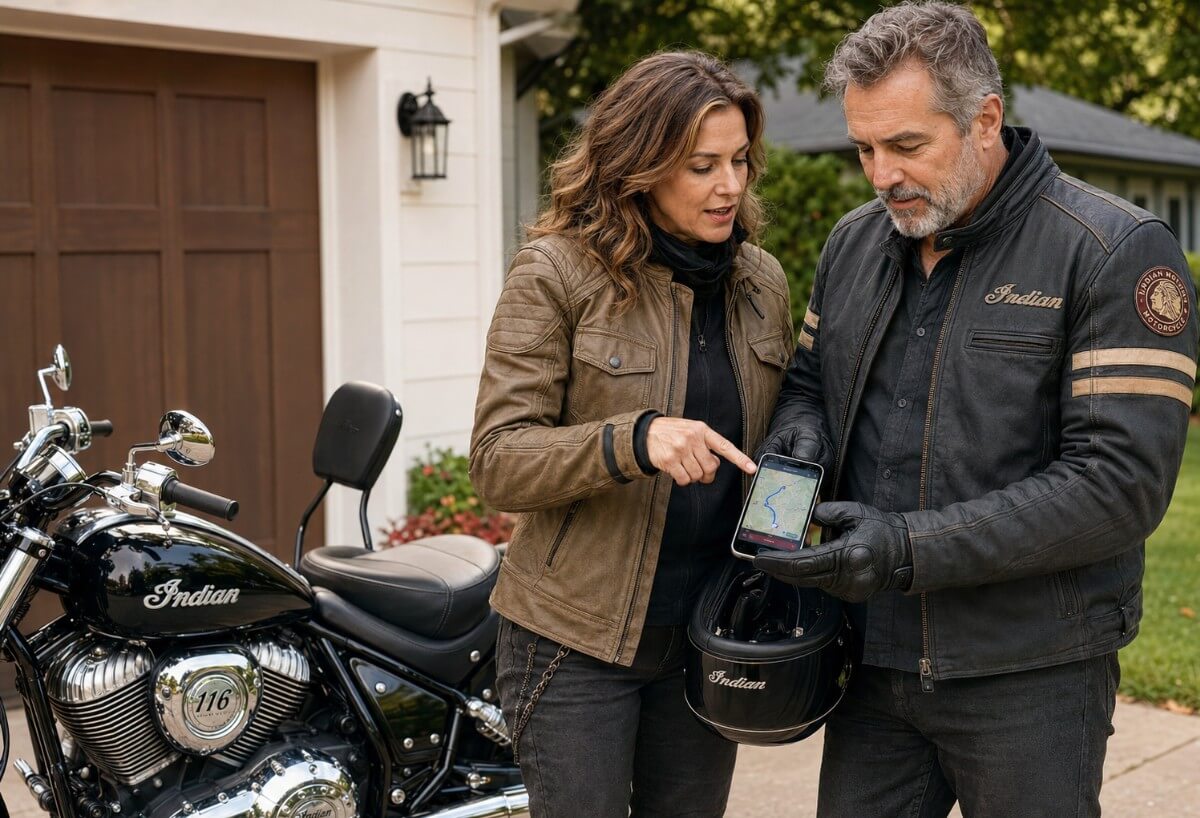
Easy scripts motorcycle passengers can use
Knowing that you should speak up doesn’t always make it easy to begin.
You may be worried about sounding demanding, dampening the rider’s enthusiasm, or making a minor concern seem more serious than it is.
Sometimes you know exactly what’s bothering you but can’t find a natural way to say it.
You don’t need a polished speech.
A straightforward sentence is often enough to open the conversation and give the rider the information they need.
Here are some simple ways to get started.
If you’re nervous
“I do want to come, but I’m nervous today. Can we start gently?”
If you need stops
“I’ll enjoy this more if we stop before I get uncomfortable. Can we plan a break after the first stretch?”
If you don’t understand what to do
“Can you quickly remind me where to put my hands and what you want me to do when we stop?”
If you’re not feeling your best
“I’m okay, but I’m not at full energy today. Let’s keep it easy.”
If you need reassurance
“If I go quiet, can you check on me? Sometimes I don’t speak up quickly enough.”
If you don’t want a challenging ride
“I’m happy to ride, but I don’t want anything intense today.”
If your gear feels wrong
“Something doesn’t feel quite right with my gear. Can we fix it before we leave?”
None of these sentences are dramatic.
They’re practical.
And practical is exactly what you want before a motorcycle ride.
What if the rider dismisses you?
This is worth saying plainly.
If you tell the rider something important before the ride and they mock you, ignore you, pressure you, or treat your comfort like a nuisance, that’s not a great sign.
A rider doesn’t have to understand every feeling you have.
But they should care that you feel safe and comfortable, listen without dismissing your concerns, and be willing to adjust the plan when necessary.
If you’re already unsure whether you should ride, When NOT to Ride on the Back of a Motorcycle may help you distinguish ordinary nerves from a situation where saying no is the wiser choice.
You’re allowed to decide a ride isn’t right for you today.
Even if the bike is ready.
Even if the rider is excited.
Even if you said yes earlier.
Better a disappointed rider in the driveway than a frightened passenger halfway through a ride they never should have taken.
Say It While the Motorcycle Is Still Parked
A motorcycle passenger doesn’t need to give the rider a dramatic pre-ride speech.
But you do need to say the things that matter.
Speak up about nerves, discomfort, or the need for more stops, and ask whenever you’re unsure what the rider expects you to do.
And if something about the ride worries you, mention it while the motorcycle is still parked and both of you can actually do something about it.
Some of our best rides haven’t started with perfect weather, perfect comfort or complete confidence.
They’ve started with an honest conversation about what one of us needed that day.
This isn’t about being difficult.
It’s about making the ride safer, calmer, and better for both of you.
The best passenger-rider communication often starts before the engine does.
FAQ
What should a motorcycle passenger tell the rider before riding?
A motorcycle passenger should tell the rider anything that could affect comfort, confidence, safety, or enjoyment before the motorcycle moves.
That includes feeling nervous, tired, cold, sore, unwell, unsure what to do, worried about the route, uncomfortable in the seat, or likely to need extra stops.
You don’t need a dramatic speech.
A short, honest conversation is enough.
Should I tell the rider if I’m nervous?
Yes.
If you’re nervous, the rider should know before the ride starts.
Nerves can change how you sit, hold on, move with the bike, and communicate.
You may go quiet, grip too hard, sit stiffly, or overthink every corner.
Try saying:
“I’m a bit nervous today. Can we take it gently at first?”
That’s useful information, not a complaint.
What should I say if I don’t know how to be a passenger?
Ask before you get on.
You can say:
“Can you show me where to put my hands?”
Or:
“What should I do when we stop?”
Or:
“Do you want me to lean with you or just stay in line with your body?”
These questions are completely normal, especially if you’re new, rusty, or riding with a different rider than usual.
How do I ask the rider to stop during a motorcycle ride?
Agree on a simple signal before you leave.
For example, you might use one tap for attention, two taps to slow down, three taps to stop soon, and repeated firm taps to stop as soon as it’s safe.
The exact signal doesn’t matter as much as both of you understanding it clearly before the motorcycle is moving.
Should I tell the rider if I need more stops?
Yes.
Tell the rider before the ride starts if you’re likely to need regular stops.
Passengers can get stiff, cold, sore, tired, or overwhelmed in a different way from riders.
Asking for stops isn’t weakness.
It’s part of making the ride work for both people.
Try saying:
“I’ll enjoy this more if we stop before I get uncomfortable.”
Is it okay to tell the rider I don’t want a long or fast ride?
Yes.
A passenger is allowed to set limits before riding.
You can be willing to go on the motorcycle without being willing to do every kind of ride.
It’s okay to say you want a short ride, a gentle ride, more stops, no gravel, no heavy traffic, or no bad-weather riding.
Try saying:
“I’m happy to ride today, but I don’t want anything intense.”
What if my gear feels uncomfortable before the ride?
Say something before you leave.
If your helmet, jacket, gloves, boots, or seat position already feels wrong while the motorcycle is parked, it will probably feel worse once you’re moving.
Small gear problems are much easier to fix before the ride than halfway through it.
What if I’m cold, tired, sore, or not feeling well?
Tell the rider before riding.
Cold, tiredness, soreness, headaches, and feeling unwell can all feel worse on the back of a motorcycle because of wind, vibration, noise, sun, concentration, and physical tension.
You don’t have to make a big deal of it. Just say:
“I’m okay to ride, but I’m not at full energy today. Let’s keep it easy.”
What should I do if I’m afraid of certain roads?
Tell the rider what kind of road worries you before the ride starts.
You might be fine on scenic open roads but nervous in traffic, on highways, on gravel, around tight corners, or over bridges.
A good rider would rather know this early so they can choose a better route, explain what’s coming, or adjust the ride.
What if the rider dismisses my concerns?
If the rider mocks you, ignores you, pressures you, or treats your comfort like a nuisance, that’s a warning sign.
A rider doesn’t have to understand every feeling you have, but they should care that you feel safe and comfortable.
You’re allowed to say no to a ride if the rider won’t listen before you even leave.
Further reading
If this topic feels familiar, these articles will help you build the same kind of calm, honest communication from different angles:
How to Feel More Confident on a Motorcycle (For Passengers)
This is a helpful next read if you’re struggling to speak up because you still feel nervous on the back of the bike.
When a Motorcycle Passenger Starts to Trust the Rider
Here we explain why small moments of listening, slowing down, and checking in can make such a difference.
When NOT to Ride on the Back of a Motorcycle
This may help if your concerns are more serious than ordinary nerves and you’re wondering whether saying no is the better choice.
Have you ever stayed quiet about something before a motorcycle ride and wished you’d spoken up sooner?
It might have been nerves, discomfort, needing more stops or simply not knowing what the rider expected you to do. Share your experience below—your comment may help another passenger feel more confident about saying what they need before the ride begins.