
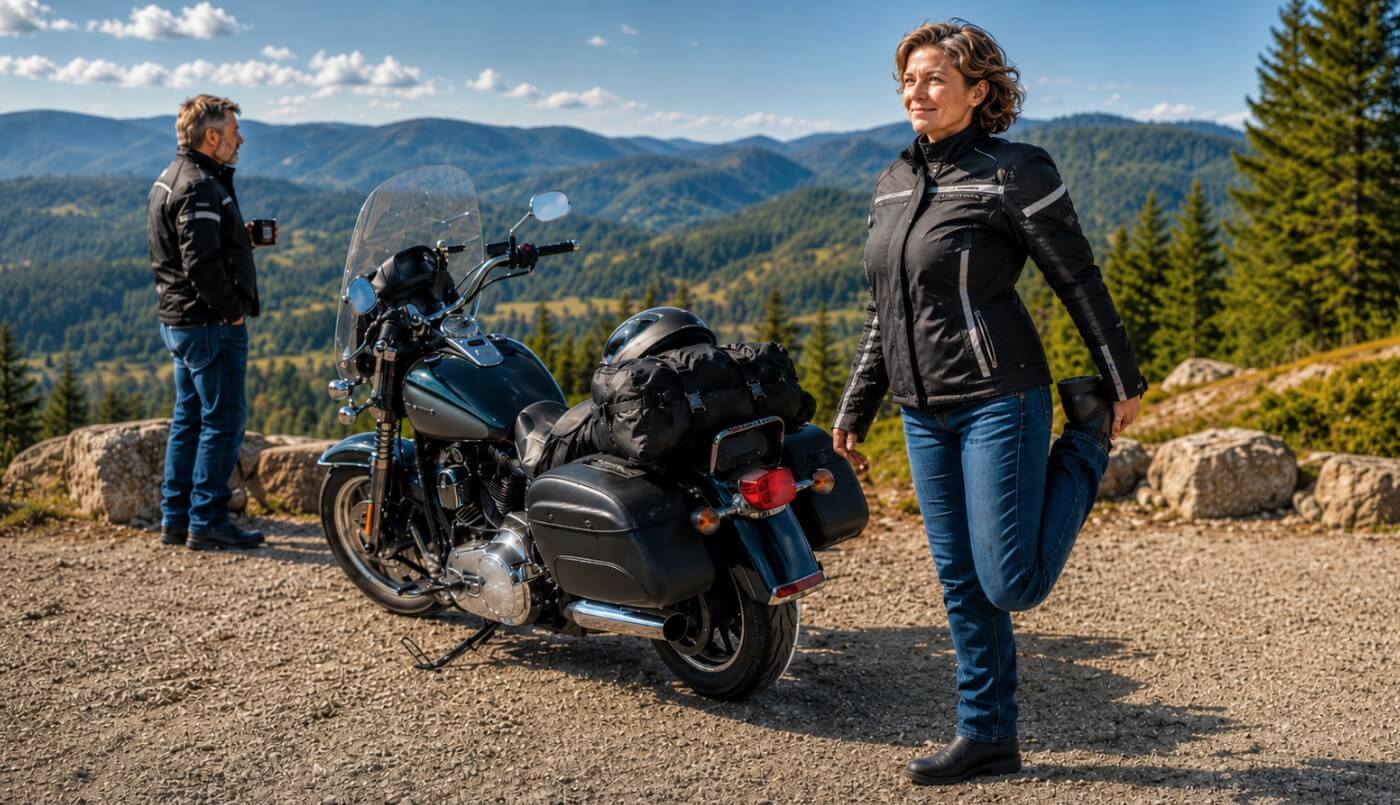
Long motorcycle rides can feel amazing.
The scenery unfolds little by little.
You notice smells and little flashes of detail.
The rhythm settles in.
And you roar along the road while the world opens up around you.
But long rides can also leave motorcycle passengers feeling stiff, sore, and quietly miserable.
Maybe your knees ache.
Maybe your hips tighten up.
Maybe your lower back starts to hurt.
Or maybe you climb off the bike and feel much older than you did when you got on.
If that sounds familiar, you’re not doing anything wrong.
Joint pain and stiffness are common for motorcycle passengers, especially on longer rides, colder rides, older bodies, tighter seats, and days with too few breaks.
The good news is that discomfort often improves when you change your position, pacing, gear, and expectations instead of just trying to “put up with it.”
For many passengers, the biggest breakthrough is realising this…
Comfort on a motorcycle is rarely about toughness.
It’s usually about setup, movement, and timing.
The Short Answer
Joint pain and stiffness on long motorcycle rides usually improve when passengers take more frequent breaks, change position regularly, stay warm, reduce tension, and improve seat comfort and body support. If pain keeps building during rides, it often means something about the setup or pacing needs to change.
Why long rides make stiffness worse for passengers
Joint pain on a motorcycle often has nothing to do with injury.
Often, it’s about stillness.
As a passenger, you don’t have as much freedom to shift around as you would in a car.
You may be holding a position for a long time, working around the rider’s movements, trying not to fidget too much, and staying braced without even realising it.
That creates a perfect recipe for stiffness:
- bent knees for long periods
- hips held in one angle
- reduced circulation
- tension in the lower back and shoulders
- cold muscles and joints, and
- very few chances to fully stretch out.
That feeling of stiffness can build slowly too.
You may feel fine for the first hour.
Then slightly cramped.
Then a bit sore.
Then suddenly the whole ride starts revolving around discomfort.
That gradual build-up is one reason passengers often miss the moment when they should have spoken up.
That moment might have been an hour ago.
If you’ve already noticed this pattern, you’re not alone.
In fact, it’s one reason how long is too long for a motorcycle passenger in one day becomes such an important question on longer rides.
The most common places passengers feel joint pain or stiffness
Different bodies complain in different ways, but these are the most common trouble spots.
Knees
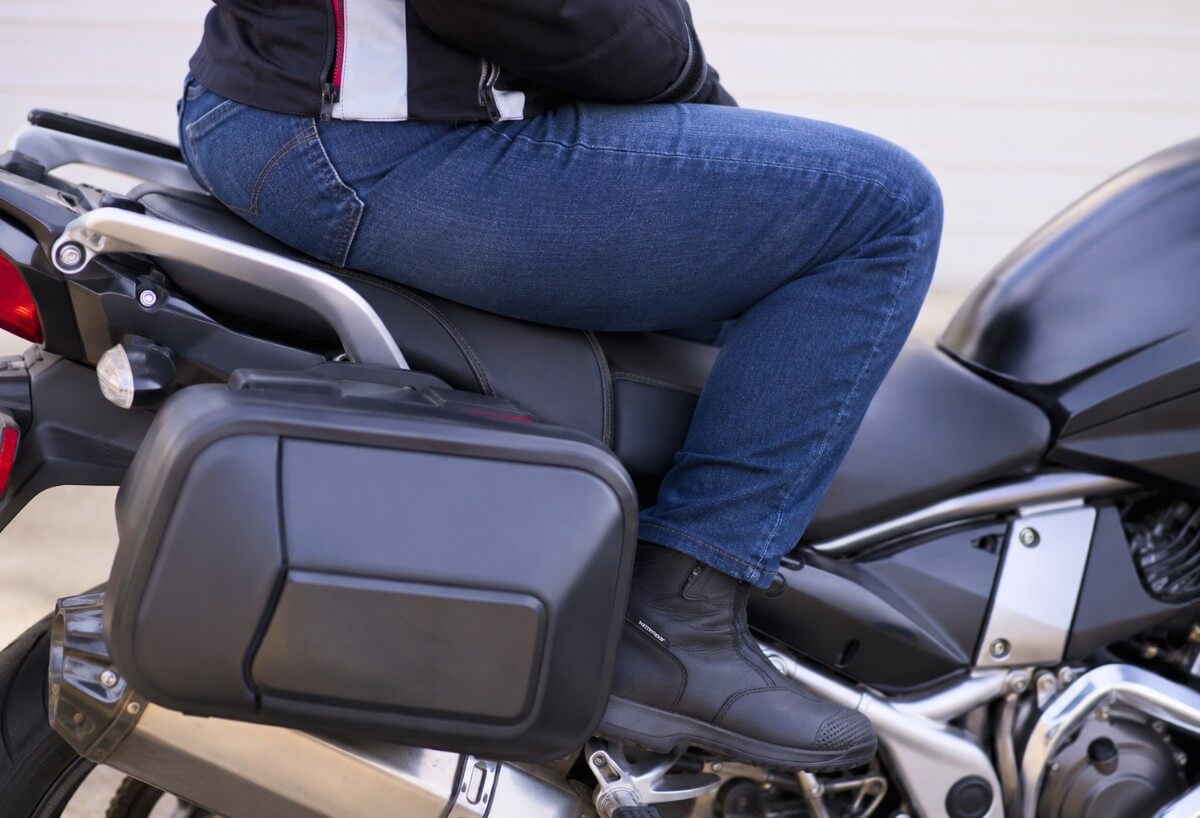
Knees often ache when they stay bent too tightly for too long, especially on smaller bikes, sportier passenger seats, or rides with very few stops.
Older passengers and passengers with previous knee issues often feel this first.
Hips
Hip stiffness can build when the seat angle, leg position, or general riding posture keeps the hips slightly compressed for hours.
Mounting and dismounting may also start feeling harder after a long day.
Lower back and pelvis
Sometimes what feels like “joint pain” is actually a mix of lower back tension, tight hips, and pressure through the seat.
If the passenger seat is small, sloped, hard, or unsupportive, this often gets worse as the day goes on.
Hands and wrists
Passengers who grip too hard or brace unnecessarily may end up sore through the wrists and hands, especially if the rider’s braking feels abrupt or the road is rough.
Neck and shoulders
These aren’t usually the first joints people think about, but tension here can become part of the whole-body stiffness picture surprisingly quickly.
If you’re already dealing with upper-body discomfort, neck pain as a motorcycle passenger may be playing a role too.
What makes joint pain worse on motorcycle rides
A lot of passengers assume pain is either the price of getting older, or the price of longer rides.
Or both.
But that isn’t always true.
Usually, discomfort gets worse because several smaller factors stack together.
Knowing where pain shows up is helpful.
But what usually matters even more is understanding what makes it build in the first place.
1. Staying in one position too long
This is the biggest one.
Even a position that feels fine at the start can become painful when held for too long.
2. Cold weather
Cold makes muscles tighten and joints feel less forgiving.
A ride that feels manageable in mild weather may feel much worse in wind or low temperatures.
That’s one reason discomfort often ramps up faster than expected on colder days.
3. A cramped or sloping passenger seat
If the seat pushes you forward, narrows your hip position, or gives you almost no room to adjust, your body has fewer ways to stay comfortable.
This is also why how to make a motorcycle passenger seat WAY more comfortable matters so much.
Better seat comfort doesn’t just make the ride feel nicer.
It often helps reduce the stiffness that builds over time.
4. Tension and bracing
Passengers often hold more tension than they realise.
You may be gripping with your thighs, clenching your jaw, tightening your shoulders, or bracing your knees against every change in speed.
5. Not speaking up early enough
This one matters more than people think.
Once discomfort becomes intense, it’s much harder to undo.
Small adjustments work best earlier, not later.
6. Trying to match the rider’s endurance
Riders and passengers don’t always hit their discomfort limits at the same time.
Passengers are often colder, stiffer, and less able to move around freely.
Your limit may simply be different.
A lot of joint pain prevention starts surprisingly early.
What you do before the ride can shape how your body copes later in the day.
What passengers can do before the ride
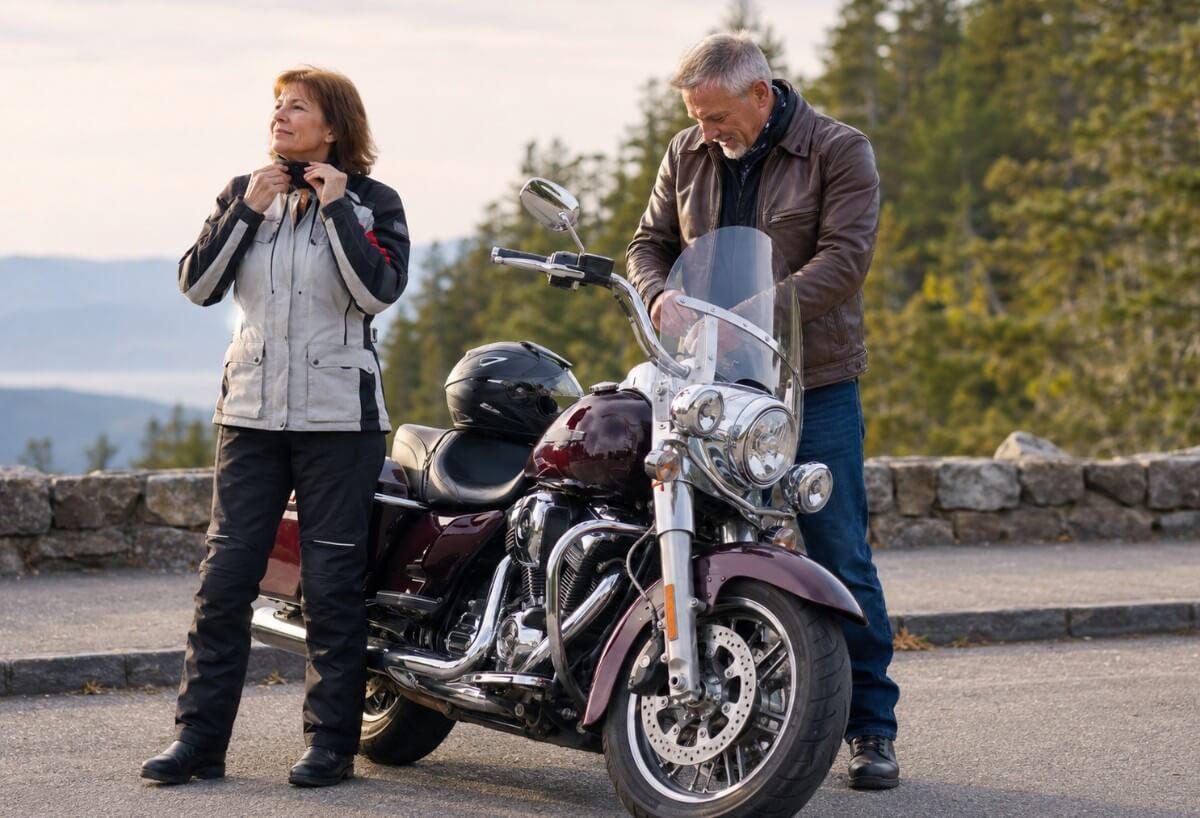
A more comfortable long ride often starts before the motorcycle even roars into life.
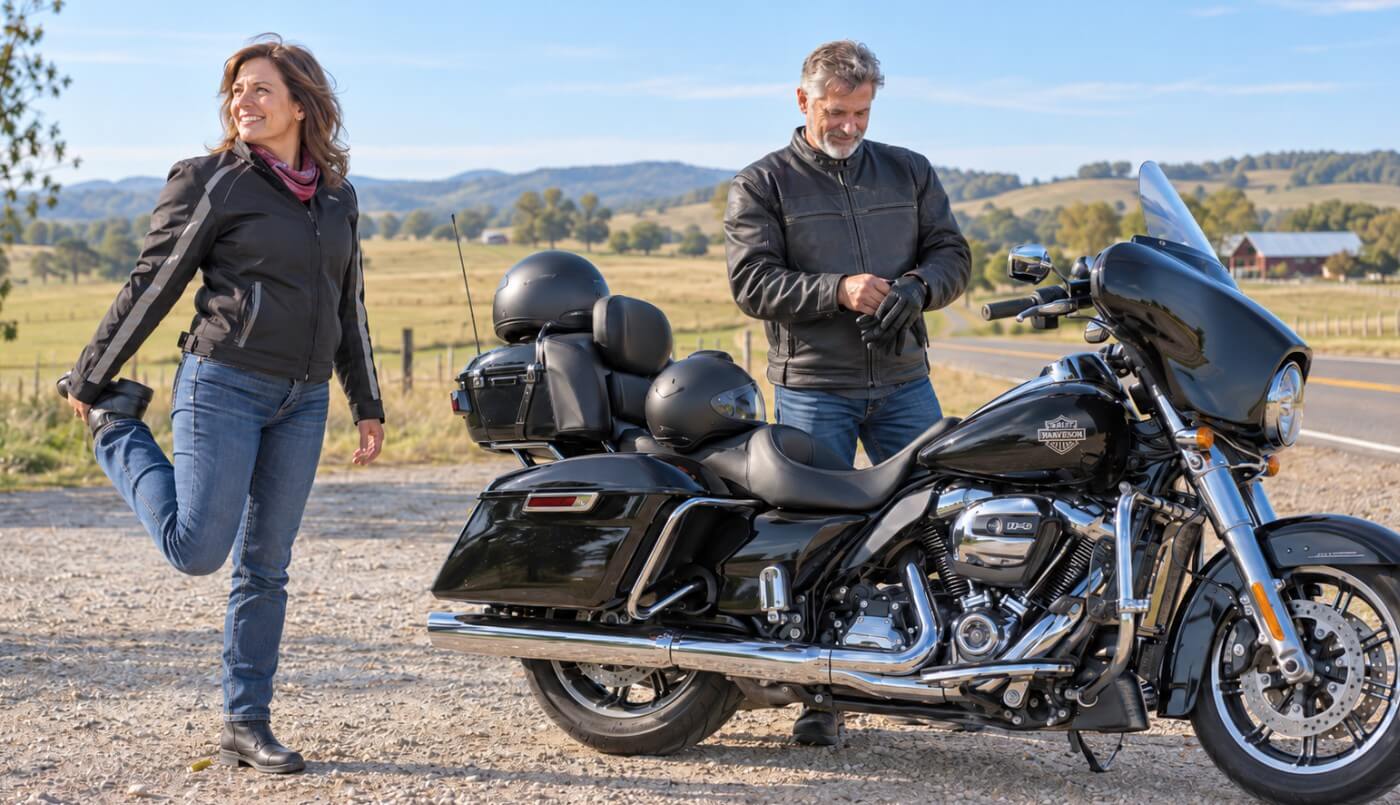
Warm up a little first
You don’t need to do a whole workout in the driveway.
But a few minutes of movement before you gear up can help a lot.
Think simple, gentle movement:
- easy hip circles
- a few knee bends
- light hamstring and calf stretches
- shoulder rolls, and
- walking around before mounting up.
This helps your body start the ride more limbered up than it would if you moved straight from chair to bike.
Dress for warmth, not just safety
Cold, tight muscles usually complain sooner.
Warmth matters for comfort just as much as impact protection matters for safety.
This is also why what to wear as a motorcycle passenger affects more than just safety.
Good gear helps you stay warmer, less tense, and more physically comfortable over time.
Be realistic about the ride plan
If you already know your knees hate long bent positions, or your hips seize up after an hour, plan the day around that truth.
That’s not weakness.
That’s good judgment.
A ride can still be beautiful without being endless.
Talk about break expectations before you leave
It’s much easier to say, “Can we stop every hour or so?” before the ride than after you’re already hurting.
Passengers often wait too long because they don’t want to interrupt the day.
But clear expectations early prevent a lot of quiet suffering later.
What helps during the ride
This is where a lot of joint pain either stays manageable or starts building fast.
Move before you desperately need to
Small position changes can help a lot:
- adjust your hips slightly
- change how firmly you’re holding on
- reset your shoulders
- relax your jaw
- recheck your knees and feet, and
- sit tall again instead of slumping forward.
The goal is not constant fidgeting.
It’s preventing your body from locking into one stressed position for too long.
Good passenger posture also makes those small resets much easier throughout the ride, which is one reason how to sit on the back of a motorcycle properly matters more than people think.
Ask for breaks sooner
Never wait until pain is sharp.
Early stops are usually more effective than late stops.
A quick break, a short walk, and a stretch can reset your body far more than you might expect.
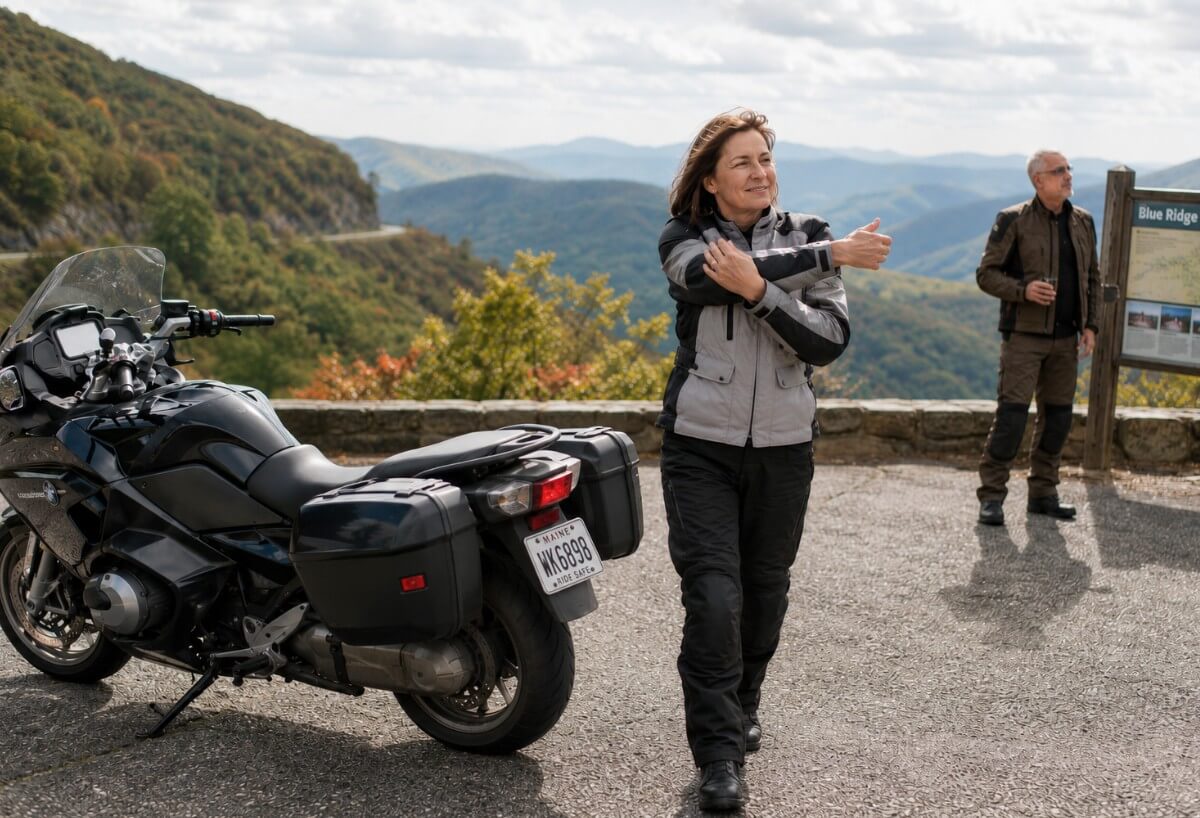
Get off and fully straighten up
When you stop, really stop.
Stand up properly.
Straighten your legs.
Roll your shoulders.
Walk a little.
Gently stretch whatever is tightening.
Even doing this for two or three minutes can help.
Stay warm and dry
If you’re getting cold, discomfort often increases faster.
Add a warmer layer, put on wet weather gear if rain is threatening.
Loosen your grip
Passengers often try to create stability by gripping too hard with their hands, knees, or hips. Usually that creates more tension, not more comfort.
If this sounds familiar, how a motorcycle passenger should hold on may help explain some of that strain — and how to reduce it.
If you’ve made pacing and posture changes already, a few comfort upgrades can help even more.
Small comfort upgrades that may help
You probably don’t need to replace the motorcycle to improve passenger comfort.
Even though the rider will always be open to buying more motorcycles.
Sometimes a few smaller changes help enough to make long rides far more manageable.
Better seat padding or seat redesign
A more supportive passenger seat can reduce pressure and help your hips and pelvis tolerate longer stretches.
A backrest or luggage support
Some passengers relax more when they feel better supported from behind, especially on longer touring days.
Different route pacing
A day with more scenic stops and shorter segments may feel far better than one long push.
Better passenger gear
Warmer gear, less restrictive clothing, and better overall comfort support can all make stiffness easier to manage.
Earplugs
This may sound unrelated, but reducing noise fatigue can reduce overall body tension too.
When people feel overwhelmed or overstimulated, they often tense their body more without noticing.
Hydration and food
Dehydration and fatigue make everything feel worse.
Not always dramatically, but enough to matter over a full day.
When the problem is really pacing, not pain tolerance
Some passengers keep asking, “How do I push through this better?”
Often the better question is:
“Why am I trying to push through it at all?”
Not every passenger enjoys the same ride length.
Not every body likes the same motorcycle setup.
And not every great riding day has to become an all-day endurance event.
There’s a real difference between:
- mild stiffness that eases at the next stop, and
- growing discomfort that makes you dread the next hour.
Once a ride starts feeling like something you must survive rather than enjoy, the pacing probably needs to change.
That doesn’t mean you’re bad at this.
It means your body is giving you useful feedback.
Listening earlier usually leads to a much better experience.
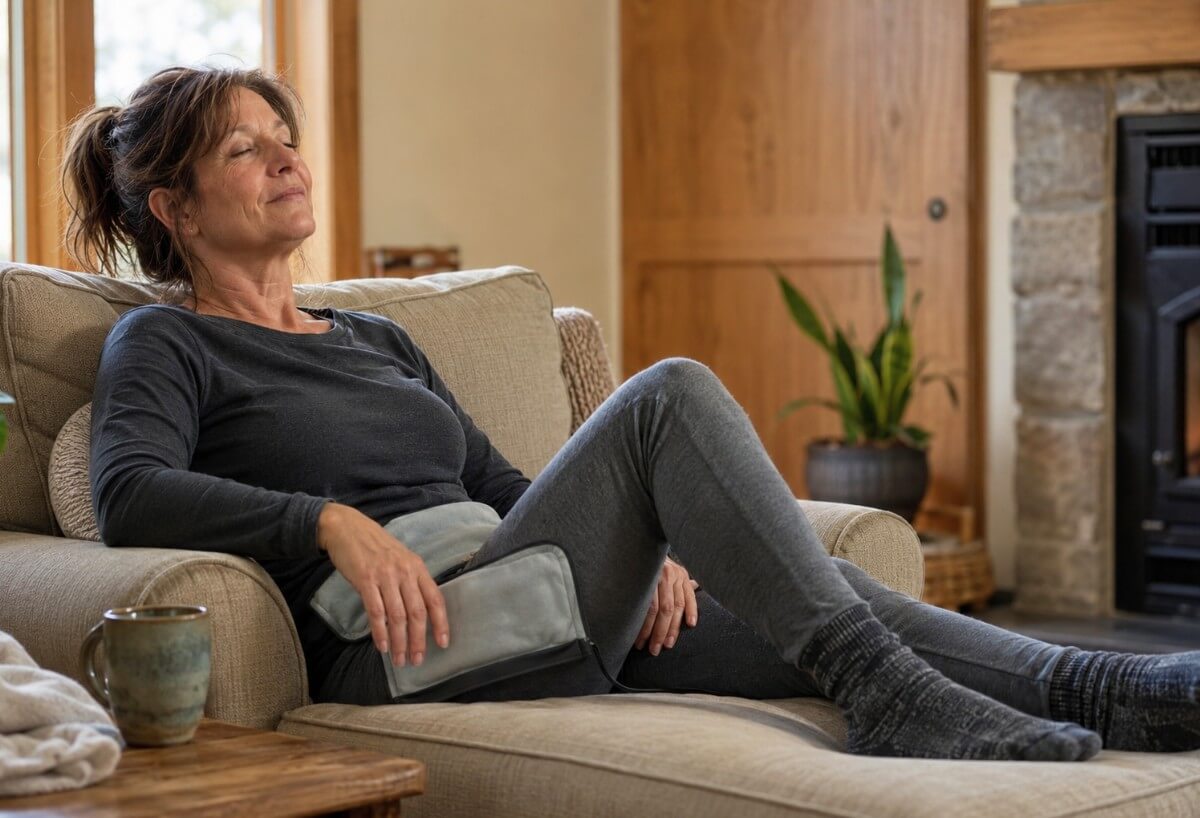
What to do after the ride
Sometimes the ride is over, but your body still isn’t happy.
A few simple things can help:
- walk around instead of sitting down immediately
- use gentle heat on the problem area
- stretch lightly, not aggressively
- drink some water, and
- rest before locking yourself into another stiff seated position.
If you find you’re always sore the next morning after longer rides, that’s worth noting too.
It may mean your current setup or distance limit needs adjusting.
When to take recurring pain more seriously
Occasional stiffness after a long ride is one thing.
Recurring pain that keeps happening, gets worse each time, or starts affecting your daily life is something else.
Pay more attention if:
- one joint is consistently much worse than the others
- pain becomes sharp rather than just stiff or achy
- symptoms linger for days
- swelling, weakness, or numbness shows up
- mounting and dismounting become noticeably harder, or
- you start dreading rides because of the aftermath.
At that point, it makes sense to stop treating it as “just one of those things.”
Sometimes the right answer is a comfort change.
Sometimes it’s worth having a medical or physio conversation.
Sometimes it is simply a more honest limit on ride length.
The emotional side of this matters too
A lot of passengers feel embarrassed by this topic.
You may worry you sound old.
Soft.
Fussy.
High-maintenance.
Like you’re ruining the ride.
But discomfort has a way of changing the emotional feel of riding too.
When your body hurts, it becomes harder to relax.
Harder to enjoy the scenery.
Harder to feel connected.
Harder to stay open and calm.
So this is not a trivial comfort issue.
Sometimes reducing stiffness is not just about feeling physically better.
It’s about protecting the part of riding that made you love it in the first place.
That matters.
Final thoughts
Joint pain and stiffness on long motorcycle rides are common, but they’re not something you simply have to endure forever.
For most passengers, things improve when they stop earlier, move more often, stay warmer, reduce unnecessary tension, and make the seat and pacing work better for their body.
You don’t need to prove anything by suffering through a ride that’s making you miserable.
Comfort is not cheating.
Breaks are not failure.
And adapting the ride to your body is often what makes riding sustainable in the first place.
Sometimes the best long-ride strategy is not becoming tougher.
It’s becoming wiser a little earlier.
FAQ
Why do my knees hurt as a motorcycle passenger?
Knees often hurt because they stay bent in the same position for too long, especially on bikes with a tighter passenger leg angle.
More frequent breaks, small position changes, and a more comfort-friendly setup often help.
How often should a motorcycle passenger stop on long rides?
Many passengers do better stopping at least every 60 to 90 minutes, sometimes sooner in cold weather or if stiffness builds quickly.
The best timing is before discomfort becomes intense.
Does cold weather make motorcycle passenger stiffness worse?
Yes.
Cold weather often makes muscles tighter and joints feel stiffer, which can make a long ride feel harder much faster.
Can a better passenger seat help with joint pain?
Often, yes.
Better seat support can reduce pressure through the hips, pelvis, and lower back, and may make it easier to tolerate longer rides comfortably.
Is it normal to feel stiff the day after a long motorcycle ride?
Mild stiffness can be normal after a long ride, especially if you stayed in one position for hours.
But recurring or worsening pain is a sign that something about the setup, distance, or body mechanics may need attention.
Should I stop riding as a passenger if I get joint pain?
Not necessarily.
Many passengers improve things a lot with better pacing, warmth, support, and comfort adjustments.
But if pain is severe, recurring, or affecting daily life, it’s worth taking more seriously.
Further Reading
If this article hit home, these may help next:
How to Make a Motorcycle Passenger Seat WAY More Comfortable
If your hips, lower back, or knees start complaining on longer rides, seat comfort is often a much bigger part of the problem than people realise.
This article walks through practical ways to make a passenger seat feel more supportive and less punishing over time.
How Long Is Too Long for a Motorcycle Passenger in One Day?
Sometimes the real issue is not just stiffness.
It’s that the ride has gone on longer than your body was comfortable with.
This article helps you recognise the signs, pace the day better, and work out what your own limit may be.
How to Stay Comfortable and Alert as a Motorcycle Passenger on Longer Rides
If you want a broader guide to feeling better on longer days out, this article covers comfort, fatigue, body tension, and simple ways to make longer rides feel much more manageable.


Long rides can be wonderful — but they can also leave you stiff, sore, and wondering whether you’re just supposed to put up with it. You’re not. If seat comfort is part of the problem, this may help too: How to Make a Motorcycle Passenger Seat WAY More Comfortable.