
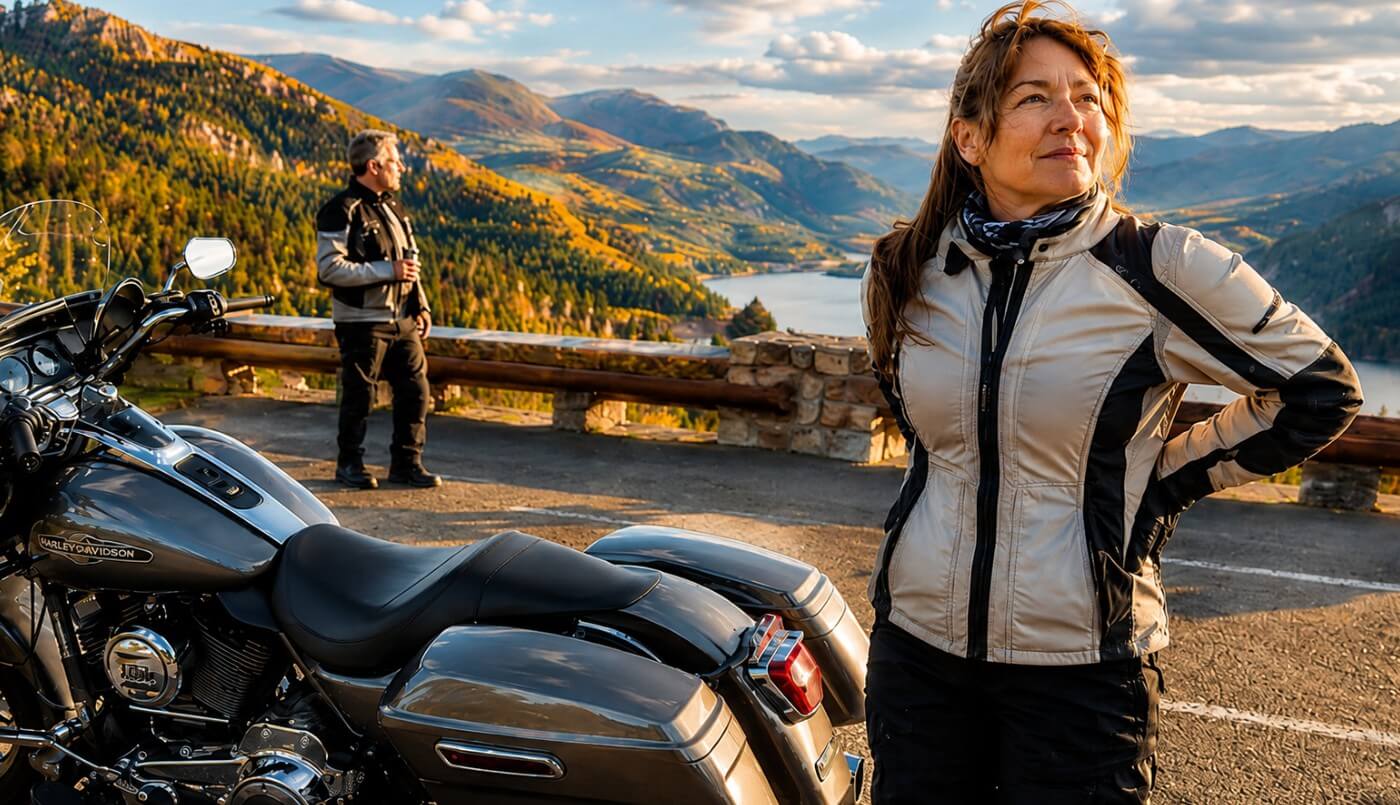
A long motorcycle day can feel very different from the passenger seat.
That’s what catches a lot of people off guard.
A route may sound completely reasonable when someone says it out loud.
A few hours here.
A scenic stop there.
Lunch in a quiet cafe.
And home by evening.
But once you’re the one actually sitting on the back of the bike for hours — exposed to wind, weather, posture strain, mental effort, and the slow build-up of stiffness — the day can feel a lot bigger than it sounded.
So how long is too long for a motorcycle passenger to ride in one day?
There’s no single number that applies to everyone.
For some passengers, two or three hours of actual riding already feels like a big day.
For others, five or six hours may be manageable with the right bike, the right rider, regular stops, and good comfort.
Some experienced passengers can happily handle even longer days than that.
But “possible” isn’t the same as “pleasant.”
A ride becomes too long when comfort, concentration, confidence, or enjoyment start dropping faster than the passenger can recover.
That’s the point that matters.
Not whether someone else once did a huge tour.
Not whether the rider still feels fine.
Not whether you technically could keep going.
The real question is whether the ride still feels manageable in your body and mind.
For most passengers, a day becomes too long because of accumulated discomfort, stiffness, wind pressure, weather exposure, boredom, fatigue, tension, or emotional strain.
A route can sound easy in theory and still feel like too much in real life.
If fatigue tends to be what limits your riding day, Motorcycle Passenger Fatigue: Why You Get Tired and What Helps explains why it builds and how to manage it before you reach the I’ve had enough stage.
And if you’ve ever wondered whether you should just put up with it because the rider seems okay, you’re definitely not the only one.
Passengers and riders aren’t experiencing the same day in the same way.
That matters more than many people realise.
The Short Answer
How long a motorcycle passenger can ride in one day depends on comfort, confidence, posture, weather, gear, and break frequency. For many passengers, around 3 to 5 hours of actual riding already feels like a long day. A ride becomes too long when fatigue, stiffness, discomfort, or emotional strain build too quickly.
How many hours is a long day for a motorcycle passenger?
There’s no fixed limit, but there are some rough patterns.
For many newer, less confident, or less comfortable passengers:
- 1 to 2 hours of actual riding often feels manageable
- 3 to 4 hours of actual riding often feels like a genuinely long day
- 5 to 6 hours of actual riding can start to feel physically and mentally demanding, and
- anything beyond that often shifts into endurance territory unless the setup is very good.
That doesn’t mean every passenger will feel the same.
It also doesn’t mean a rider should plan around the absolute maximum a passenger might tolerate.
The better benchmark is this:
Can the passenger still feel reasonably comfortable, calm, and positive by the end of the day?
If the answer is no, the riding day was probably too long.
One detail that matters here is actual riding time.
That’s usually more useful than total day length.
A nine-hour day with coffee stops, a proper lunch, stretching, and some off-bike recovery may feel easier than a shorter day with hardly any real breaks.
That distinction gets missed all the time.
What makes a motorcycle day feel too long for passengers?
Usually it isn’t one dramatic problem.
It’s build-up.
A slightly uncomfortable seat.
A bit too much wind.
A helmet that starts to feel heavy.
A body position that’s fine for 30 minutes but not for five hours.
A low level of tension that never quite switches off.
A rider who wants to keep going just when you really needed a proper stop.
Each one may sound minor on its own.
Together, they can make a ride feel much longer than the number of miles suggests.
The most common things that make a day feel too long are:
Seat discomfort and stiffness
Pressure points, tailbone pain, hip ache, numbness, and lower back discomfort tend to build gradually. That’s why learning how to make a motorcycle passenger seat more comfortable can change a longer ride so dramatically.
Neck, shoulders, and upper body tension
Passengers often hold more tension than they realise, especially when they’re still learning, the bike feels fast, or the conditions are tiring.
Mental fatigue
Passengers aren’t passive cargo.
Even though you’re not steering, you’re still balancing, reading movement, staying alert, processing corners, managing your body, and often monitoring your own emotions the whole time.
Weather exposure
Cold, wind, drizzle, heat, and sun wear passengers down quickly, especially on longer rides.
Emotional effort
A passenger who feels unsure, tense, or reluctant to speak up will usually tire much faster than one who feels secure and included. That’s part of why learning how to feel more confident on a motorcycle as a passenger can affect stamina just as much as fear. link
Restlessness or boredom
Sometimes the ride isn’t painful.
You’re just done.
Done sitting still.
Done being exposed.
Done having no real freedom to move.
That matters too, and finding ways to cure motorcycle pillion boredom can help on longer rides more than people expect.
Why riders and passengers often have different limits
This is one of the biggest sources of misunderstanding on longer rides.
Riders and passengers are sharing the same motorcycle, but they aren’t having the same physical experience.
The rider has:
- more movement
- more control
- more mental engagement
- more influence over pace and route, and
- more natural opportunities to adjust body position.
The passenger has:
- less control
- fewer ways to move
- more time sitting still
- more exposure to discomfort building quietly, and
- more pressure to endure without interrupting the plan.
That’s why a rider may feel fine while the passenger is fading fast.
It doesn’t mean the passenger is weak.
It means the roles are different.
This is also one reason why understanding when a motorcycle passenger starts to trust the rider matters so much. Trust reduces tension, and lower tension usually means better endurance.
Is 300 miles or 500 km too much for a motorcycle passenger in one day?
Sometimes it is.
Sometimes it isn’t.
That answer depends less on the number itself and more on how the day is structured.
For some experienced passengers on a comfortable bike with sensible pacing, that may be entirely manageable.
For others, especially newer passengers, that could feel like far too much.
A distance like that may become too much when:
- the seat is uncomfortable
- stops are too infrequent
- the weather is draining
- the rider is pushing on too hard
- the passenger is tense, or
- the route leaves little room for recovery.
So the better question isn’t whether a certain distance is universally too much.
It’s whether that distance suits this passenger, on this bike, in these conditions, on this day.
That’s a much more honest way to judge it.
Distance alone doesn’t tell you whether the day is too much
A lot of people ask how many miles are too many.
But that isn’t always the most useful measure.
A shorter ride in bad weather, heavy traffic, rough roads, or constant stop-start conditions can feel far more tiring than a longer scenic ride with smooth pacing and good breaks.
For passengers, the better question isn’t just:
How far are we going?
It’s:
What kind of day will this feel like in the body?
That includes:
- wind exposure
- road type
- traffic
- speed
- weather
- bike comfort
- break quality
- emotional pressure, and
- whether the plan can change if needed.
A flexible day usually feels safer and more enjoyable than a rigid one.
That’s especially true for newer passengers.
Signs the ride is becoming too long for you
Passengers often wait too long to admit this because they think they need a “good enough” reason to ask for a break.
Usually your body tells you before you fully admit it.
Common signs include:
- you stop enjoying the scenery
- you start counting the minutes instead of being present
- your hips, tailbone, neck, or shoulders feel locked up
- you feel relieved every time the bike slows down
- you dread getting back on after a stop
- your focus starts fading
- you feel cold, flat, irritated, or emotionally done, or
- you know you could continue, but you no longer really want to.
That last one matters.
A ride can be too long before it becomes dramatic.
If discomfort, emotional strain, or fatigue are building steadily, pay attention.
It isn’t weakness.
It’s one reason what first-time motorcycle passengers are afraid to say out loud resonates with so many people.
A lot of passengers stay quiet long after the day has stopped feeling good.

How often should motorcycle passengers stop?
Many passengers do best when they stop before they’re desperate for a break.
As a rough guide, a brief stretch or reset every 60 to 90 minutes works well for a lot of people, with longer stops as needed when comfort or energy start dropping.
That doesn’t mean every stop has to be long.
But it does mean stopping for more than fuel.
The most useful passenger stops usually involve:
- getting fully off the bike
- walking around
- stretching
- drinking water
- checking comfort honestly
- changing layers if needed, and
- mentally resetting, not just physically pausing.
This matters because once discomfort really builds up, it’s harder to reverse.
Regular stops also give you a chance to walk around and loosen up, and a few easy stretches for motorcycle passengers can make a noticeable difference as the day goes on.
A ride that still feels fine at 90 minutes can suddenly feel miserable 20 minutes later.
Passengers usually do better with preventative stops than heroic endurance.
Is it normal for passengers to want to stop sooner than the rider?
Yes. Completely normal.
Passengers often feel guilty about this because riders may be more enthusiastic about continuing, and because passenger discomfort can look less “serious” from the outside.
But being uncomfortable, stiff, emotionally tired, or no longer okay is still valid.
You don’t need to wait until you’re in obvious pain.
And you don’t need to prove that you can push through.
This is part of why knowing [when not to ride on the back of a motorcycle] matters. Sometimes the issue isn’t attitude at all. The conditions, pacing, or timing simply aren’t right for that passenger on that day.
How to build up to longer motorcycle rides as a passenger
The best way isn’t to force huge days too early.
That usually just teaches your body to dread them.
A better approach is:
Fix comfort issues early
Seat comfort, layers, posture, hydration, helmet fit, and communication matter more than people think.
Improve your body position
When your body is sitting and moving better on the bike, long rides feel less draining. That’s where learning how to sit on the back of a motorcycle properly helps.
Speak up sooner
A passenger who can confidently ask for a stop early usually ends up coping better overall.
Build up gradually
A series of good shorter rides often creates more real endurance than one miserable long one.
That’s one reason understanding what it’s really like to ride on the back of a motorcycle can be reassuring for newer passengers. It helps normalise the fact that comfort and confidence usually grow over time.
Get the gear right
Longer days are much harder when your clothing is cold, tight, bulky, awkward, or distracting. That’s where knowing what to wear as a motorcycle passenger makes a real difference.
If you feel guilty saying the day is too long
A lot of passengers are really asking a different question:
How uncomfortable do I have to be before I’m allowed to say something?
The honest answer is: not that uncomfortable.
You’re allowed to say you need a stop before you hit your absolute limit.
You’re allowed to say the day is becoming too much before it becomes a disaster.
You’re allowed to want a ride to stay enjoyable.
And you’re allowed to have a shorter limit than the rider.
Passenger comfort isn’t a bonus.
It’s part of planning a joyful riding day.
So how long is too long for a motorcycle passenger in one day?
A day becomes too long when the passenger stops recovering properly between stops and starts losing comfort, focus, confidence, or enjoyment.
For many passengers, that point may arrive somewhere around 3 to 5 hours of actual riding in a day.
For others it may be shorter or longer depending on experience, trust, posture, weather, gear, the motorcycle, and break frequency.
The exact number matters less than the pattern.
If the passenger ends the day stiff, flat, resentful, shut down, or unwilling to do it again, the day was probably too long.
That doesn’t mean the passenger failed.
It means the ride needs better pacing, better comfort, or lower expectations.
FAQ
How long can a motorcycle passenger ride in one day?
It depends on comfort, experience, weather, posture, and break frequency. For many passengers, 3 to 5 hours of actual riding already feels like a long day.
How often should a motorcycle passenger stop on a long ride?
Many passengers do best with a break every 60 to 90 minutes, plus longer stops when needed for recovery, stretching, food, water, or warmth.
Is a full day of motorcycle riding too much for a passenger?
It can be.
Some passengers enjoy full-day rides, while others find them exhausting.
It depends on the bike, the rider, the passenger’s confidence, comfort, weather, and how well the day is paced.
Why do passengers get tired faster than riders?
Passengers usually have fewer ways to move, less control over the ride, and more time quietly absorbing discomfort, wind, cold, tension, or boredom.
Is it normal to want more breaks as a motorcycle passenger?
Yes. That’s very normal.
Passengers often need more recovery breaks than riders, especially on longer or more exposed rides.
How do you build up tolerance for longer motorcycle rides?
Start with shorter successful rides, improve comfort and posture, wear the right gear, communicate early, and increase ride length gradually rather than forcing big endurance days.
Further Reading
If longer rides are starting to feel like too much, these are the three most useful next reads.
How to Make a Motorcycle Passenger Seat WAY More Comfortable
If long days leave you sore, numb, or constantly wriggling around on the bike, start here.
Small comfort improvements often change passenger stamina far more than people expect.
How to Sit on the Back of a Motorcycle Properly
Posture affects fatigue, tension, balance, and how hard your body has to work over time.
This one helps longer rides feel less physically draining.
What to Wear as a Motorcycle Passenger
Cold, bulky, awkward, or distracting gear can make a ride feel much longer than it really is.
This article helps passengers build a setup that supports comfort as well as safety.
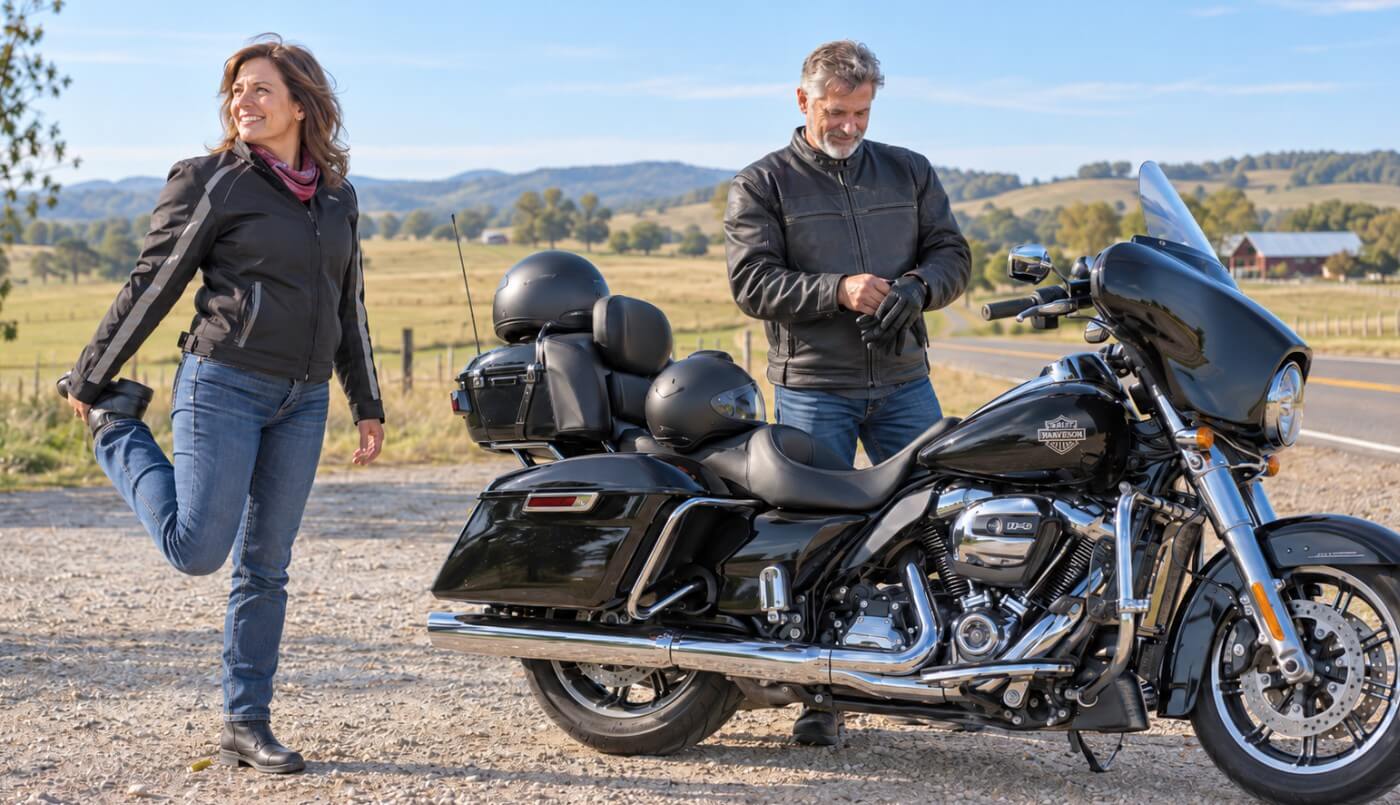

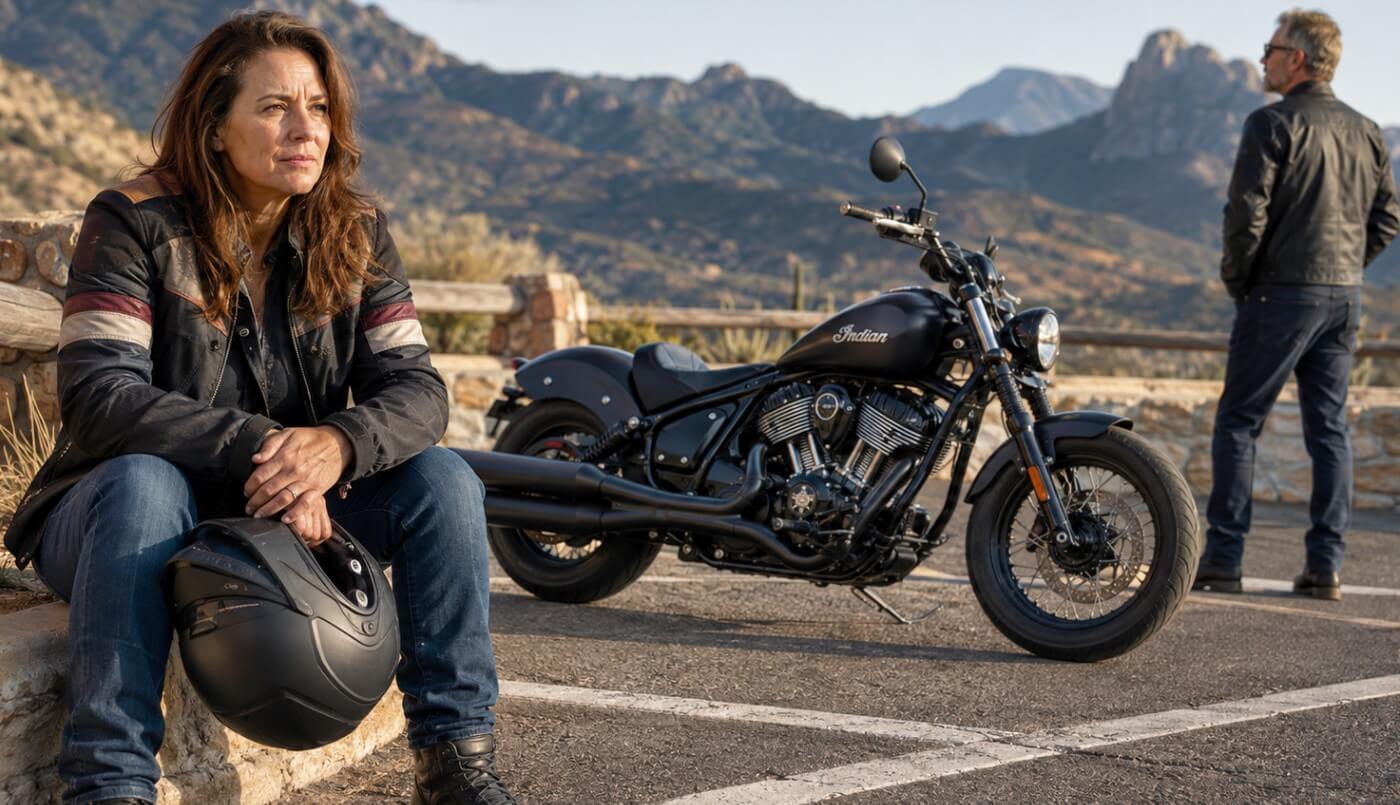
Long rides don’t usually become “too long” because of distance alone. More often, they become too long because discomfort builds quietly for hours. If that sounds familiar, read How to Make a Motorcycle Passenger Seat WAY More Comfortable — it’s one of the most practical ways to make longer days feel better.