
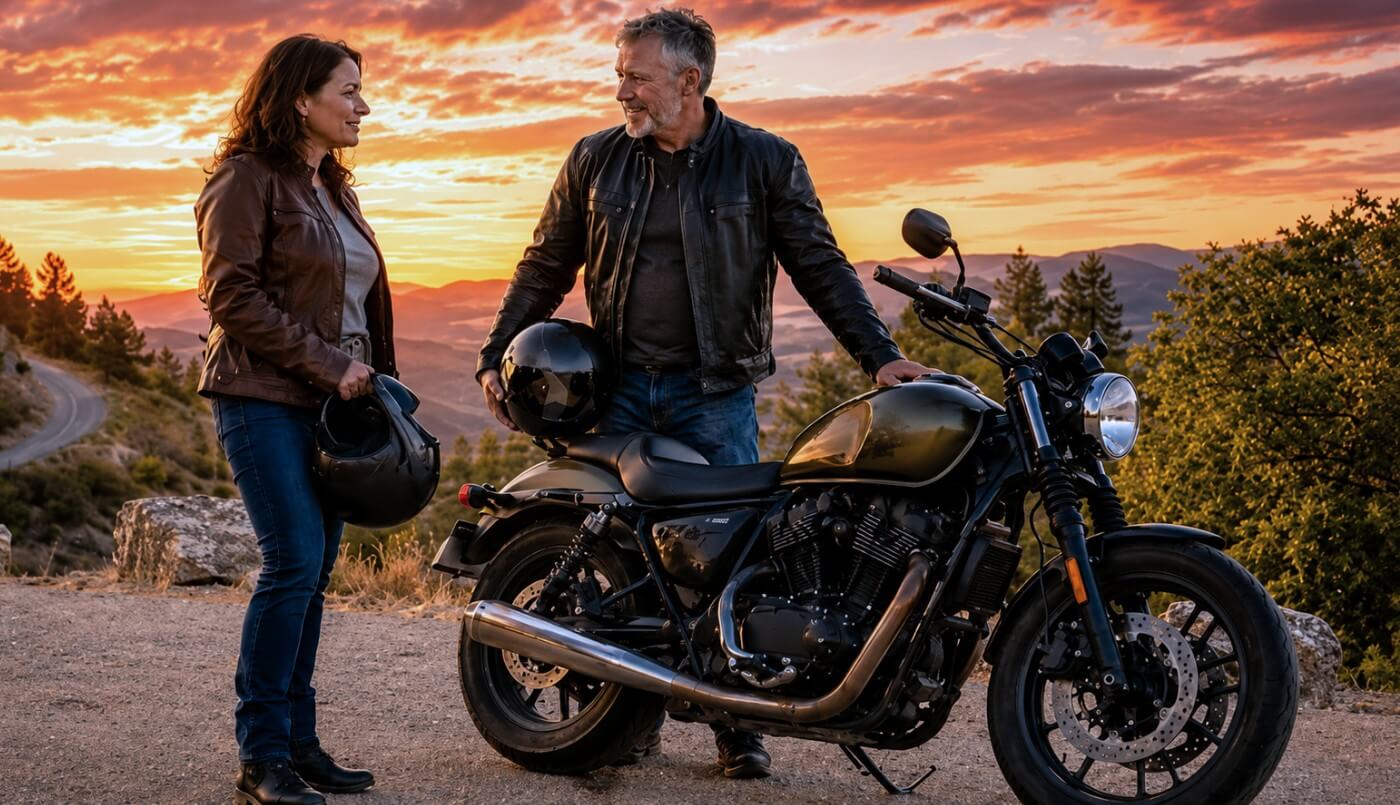
Motorcycle passengers often feel scared before their first ride.
But that doesn’t automatically mean they shouldn’t do it.
In many cases, those nerves settle when the rider is trustworthy, the pace is gentle, the gear feels right, and the first ride is approached slowly without pressure.
The key isn’t to force confidence.
It’s to build it carefully, notice what your body is telling you, and decide from there whether riding on the back feels manageable, enjoyable, or simply not for you.
If you feel scared to ride on the back of a motorcycle, you’re not strange, weak, dramatic, or overthinking it.
You’re human.
Motorcycles look exposed because they are exposed.
You can see the road.
You can feel the movement.
You can imagine everything that might go wrong before you’ve even put a helmet on.
That’s why so many would-be passengers feel torn.
Part of you wants to share the experience.
Part of you is curious.
Part of you may even think it looks amazing.
And another part of you is thinking… absolutely not.
That tension is more common than people admit.
Sometimes the feeling eases once you understand what to expect.
Sometimes it softens when you ride with the right person.
And sometimes it stays strong because your instincts are telling you this isn’t the right time, or not the right rider, or not the right thing for you at all.
All of that is useful information.
You don’t need to become instantly brave or prove anything.
You don’t need to go from hesitant to enthusiastic overnight.
You just need a gentler place to start.
The Short Answer
If you feel scared to ride on the back of a motorcycle, start small and remove as much pressure as possible. Talk honestly with the rider, wear proper gear, choose a calm first ride in easy conditions, and give yourself permission to stop at any point. Feeling uneasy before a first ride is normal, but you should never feel pushed, rushed, or shamed into getting on the bike. The right beginning usually feels gradual, respectful, and manageable — not like forcing yourself through panic.
Being scared doesn’t mean you’re not meant to do it
This is probably the most important thing to understand first.
Feeling afraid isn’t always a stop sign.
Sometimes it’s just your nervous system reacting to something unfamiliar and exposed.
That’s very different from a clear inner no.
A lot of potential passengers assume they need to feel naturally excited before they try riding.
But many people don’t.
Many start from caution, nerves, hesitation, or flat-out dread.
Then, with the right rider and the right pace, they discover that the experience feels less intense than they imagined.
Not always.
But often.
The goal isn’t to pretend those feelings aren’t there.
The goal is to make the first steps small enough that your body has a chance to settle.
That might mean standing near the bike first, sitting on it while parked, or going for a very short slow ride around the block or on quiet roads.
You’re allowed to build up gradually.
You’re also allowed to decide that riding on the back isn’t for you.
Both are valid.
If you haven’t yet read What First-Time Motorcycle Passengers Are Afraid to Say Out Loud, it can help because it puts a lot of these hidden feelings into words.
Work out what’s underneath the fear
Scared can mean a lot of different things.
It might mean:
- you think you’ll panic once the bike starts moving
- you don’t trust the rider enough
- you’re worried you’ll do something wrong, or
- you hate the idea of speed.
Sometimes it means you’re not even sure you want this — you just feel you should.
Those aren’t the same problem.
And they don’t have the same solution.
So before you even think about a first ride, ask yourself what’s actually underneath your fear.
Is it:
Fear of falling off?
Fear of looking stupid?
Fear of not being in control?
Fear of trusting someone else with your body?
Fear of disappointing a partner?
Fear of saying yes to something you secretly don’t want?
Getting specific helps you pinpoint the real issue.
It stops the whole thing becoming one giant foggy blur.
And once you know what you’re dealing with, you can respond more honestly.
For example, if it’s mostly about not knowing what to do, a practical article like How a Motorcycle Passenger Should Hold On may help you feel less lost.
If it’s more about emotional trust, When a Motorcycle Passenger Starts to Trust the Rider may feel more relevant.
If your whole body resists the idea, that matters too.
You don’t need to argue yourself out of it.
The right rider changes everything
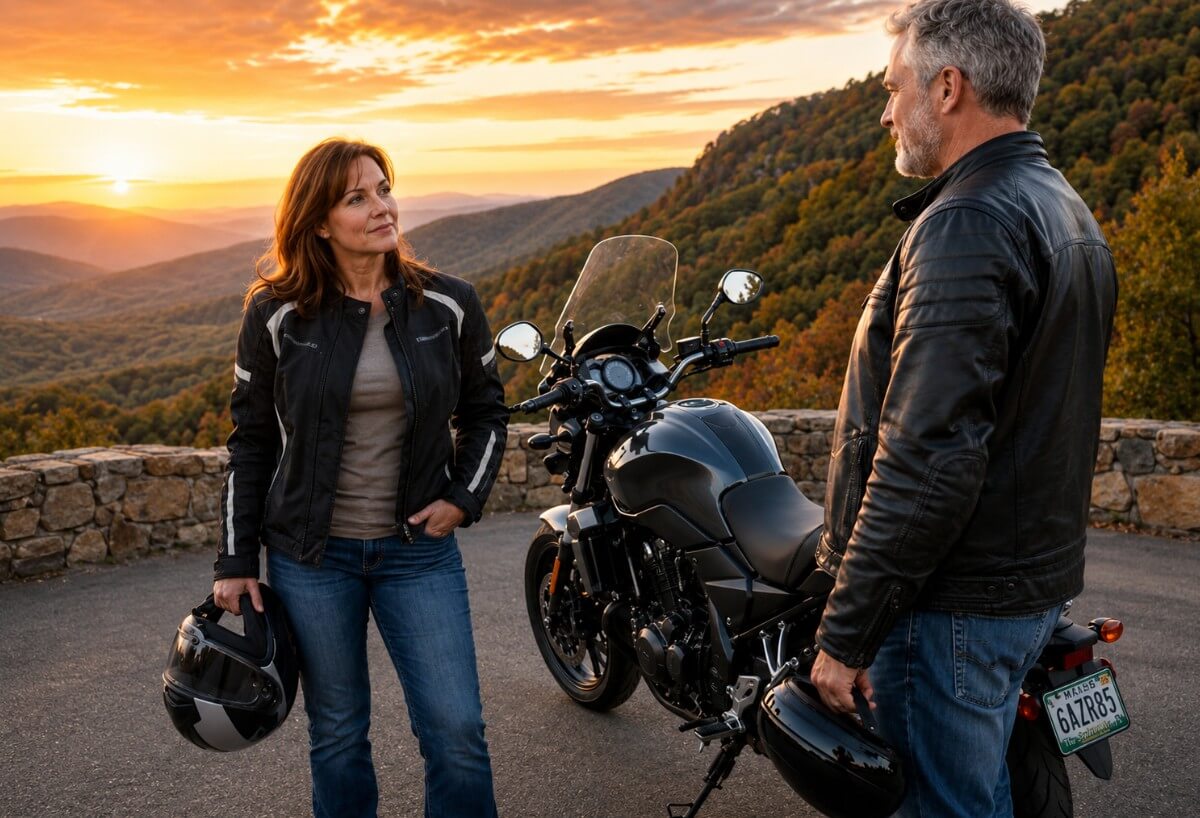
A calm first experience usually depends less on the motorcycle and more on the person in front.
This part matters enormously.
The right rider for a hesitant passenger is patient.
They won’t be offended if you’re unsure.
They don’t laugh at you for asking basic questions.
They don’t pressure you to “just relax”.
They don’t suddenly show off because they’re excited to have a passenger.
They understand that your comfort matters.
So they ride smoothly.
They explain things clearly.
Most importantly, they treat your feelings as real, not silly.
That kind of rider makes it much easier for trust to grow.
The wrong rider does the opposite.
They rush you.
They minimise your fears.
They push you because this is what THEY want.
They make it about their ego.
They act as though getting on the bike is a test of loyalty or courage.
That isn’t a safe foundation.
If you feel unsure about riding on the back, the quality of the rider matters so much that it can be the difference between a manageable first ride and one that confirms every worry you had.
Start before the ride starts
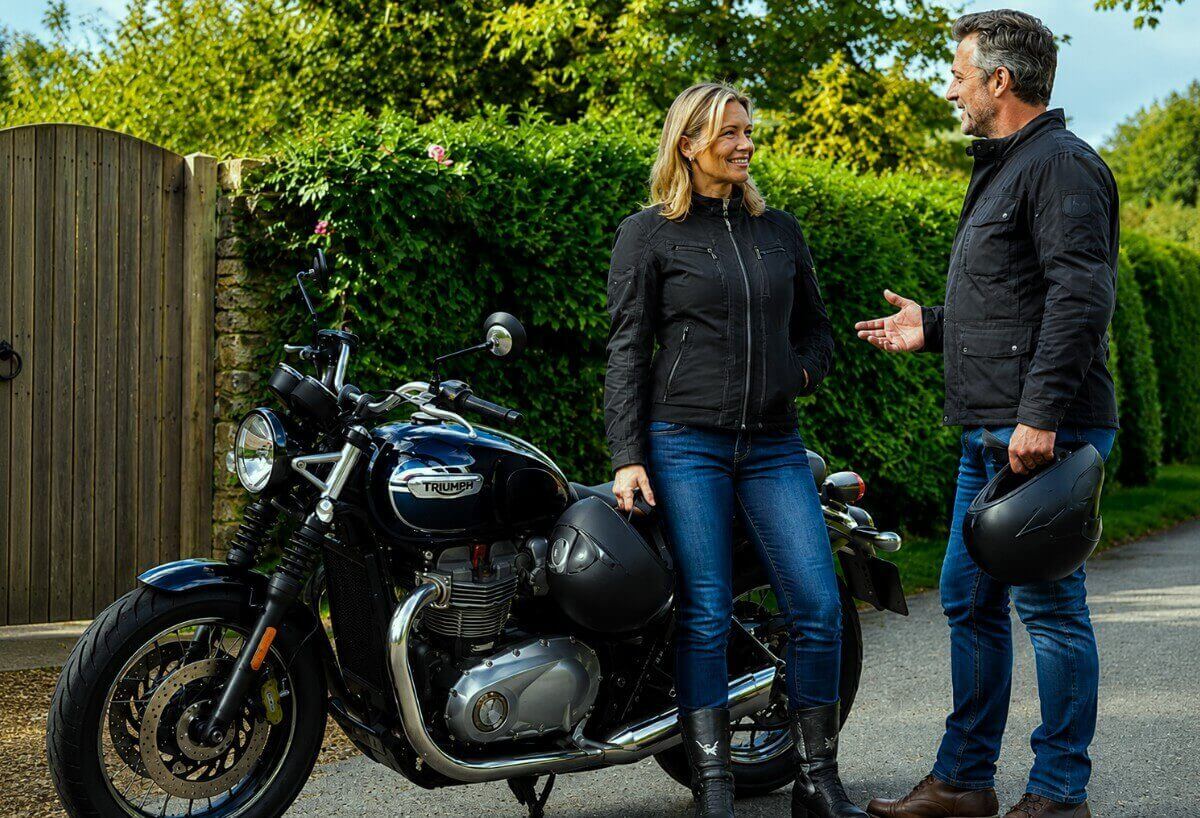
One of the best ways to reduce anxiety is to make the experience more familiar before the bike even moves.
That sounds simple, but it helps.
So try this:
- Take a good look around the bike.
- Climb on and off while it’s parked.
- Sit in the passenger seat.
- Figure out where your feet go.
- Notice how high the seat feels.
- See where you might hold on.
Above all, just get used to the idea of being there.
That alone can remove some of the shock, because the unknown often feels worse than the reality.
This is also a good moment to ask practical questions.
Talk to the rider, and ask key questions like these:
How do I get on?
When do I get off?
What do I do at traffic lights?
Can I talk to you while we ride?
How should I lean?
What happens if I need to stop?
You’re not being difficult by asking these things.
You’re preparing.
And preparation is one of the kindest things you can do for your own nervous system.
Don’t make your first ride harder than it needs to be
A bad first ride setup can create stress that didn’t need to be there.
If someone suggests your first passenger ride should involve traffic, cold weather, high speed, unfamiliar roads, or a long distance, that isn’t a beginner-friendly plan.
The easiest first ride is usually short, slow, dry, in daylight, familiar, and low-pressure.
Not a big event.
Not a dramatic challenge.
Not an all-day trip.
Just enough to let you feel what riding on the back of a motorcycle is actually like.
That might be ten minutes.
It might be around the block.
It might be a ride to a nearby café.
The point isn’t to impress anyone.
The point is to give yourself a fair first experience.
If you later want to ride further, wonderful.
But first rides go better when they’re deliberately boring and uneventful.
Wear proper gear so you feel more secure
Feeling physically exposed can make your nerves much worse.
This is where the right gear helps.
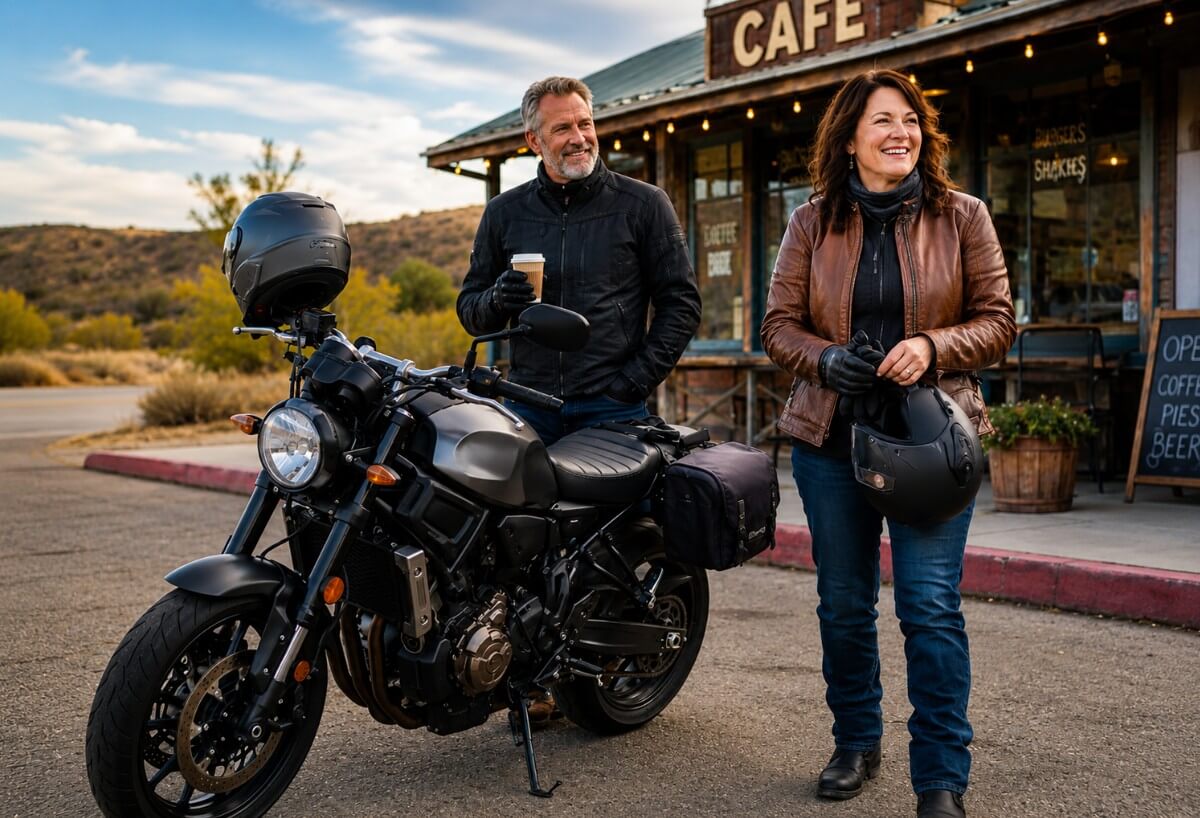
Good gear won’t magically erase anxiety, but it can help you feel more held together, more protected, and less vulnerable.
And of course, it doesn’t just help you feel safer — it does make you safer too.
What you wear on the motorcycle matters.
At a minimum, a first ride should involve a proper helmet and sensible protective clothing.
Borrowed gear is fine if it fits properly and is safe.
What you want to avoid is the classic just hop on approach where you’re underdressed, uncomfortable, and already feeling foolish before the bike even starts.
That does nothing for your confidence.
If you want a fuller guide, What to Wear as a Motorcycle Passenger walks through the basics in a practical way.
Sometimes your body settles a little simply because you feel less exposed to the world.
Give yourself permission to do this in stages
This is where many beginners get stuck.
They think the choice is either ride hard, or don’t ride at all.
But there’s no rule that says you have to ride all day, or in the rain, the first few times you try this.
In reality, there are plenty of middle steps.
You can sit on the bike without moving.
You can wear the gear and get used to it.
You can go for a five minute ride.
You can stop and talk.
You can try again later.
You can build up slowly.
That’s still real progress.
The difference is it’s on your terms, and reflects your growing comfort levels.
In fact, that kind of gradual beginning often works better than forcing yourself into a full experience you’re not ready for.
You don’t get bonus points for overwhelming yourself.
You’re allowed to ease in.
It’s OK to stop after one short ride and think about it.
You’re allowed to say, that was enough for today.
That isn’t failure.
That’s a sensible way to build trust, and get used to this entirely new experience.
Even after 34 years on the back of my husband’s motorcycle, I still have the odd day when I’m just not feeling it.
So I speak up and skip the ride.
Then next time, when I’m in the mood, I can enjoy it properly.
So next time I get the opportunity to be a motorcycle passenger, and I’m more in the mood, I grab the chance, and have an amazing time.
Fear gets louder when you feel trapped
One reason some people panic as passengers is that they feel they’ve lost control.
Once the bike is moving, you can’t steer, you can’t brake, you can’t step off, and you can’t easily pause the situation.
That feeling can be intense if you’re already anxious.
So talk about it with the rider beforehand.
Agree on what you’ll do if you need to stop.
Create a shared signal.
Make sure the rider understands that “I need to pull over” is not negotiable.
That knowledge alone can make the ride feel less claustrophobic.
You’re not asking for special treatment.
You’re making the experience safer and more manageable.
And that’s exactly what a beginner needs.
You don’t have to be into speed to enjoy being a passenger
This is another helpful distinction.
Some people assume motorcycles are only for people who love speed and thrill.
That’s not true.
Many passengers enjoy slower scenic rides, local trips, gentle day rides, or simply being part of the experience with someone they trust.
You may not be looking for an adrenaline experience.
You might prefer to avoid twisty mountain roads.
You might find aggressive riding too much.
That’s perfectly fine.
You’re allowed to like the idea of closeness, fresh air, scenery, and shared adventure without wanting the ride to feel extreme.
In fact, understanding that can change everything.
Because you may not be reacting to motorcycles in general.
You may just be reacting to the version of riding you imagine you’ll be expected to tolerate.
Those are very different things.
Watch for pressure disguised as encouragement
Sometimes the hardest part isn’t the motorcycle.
It’s the emotional pressure around the ride.
A partner may mean well and still push too hard.
They may say things like:
“You’ll love it once you try.”
“Stop overthinking it.”
“Don’t you trust me?”
“Come on, don’t be boring.”
That kind of pressure can make you feel guilty for having normal hesitation.
Not to mention quickly develop into a Saturday afternoon screaming match.
But guilt isn’t a good reason to get on a bike.
Encouragement should feel make you feel calm and supported as you try something new.
It should leave room for your actual feelings.
It should sound more like this.
“We can do this slowly.”
“We don’t have to do it today.”
“We can stop any time.”
“It’s okay if this isn’t for you.”
That’s what real support sounds like.
You don’t have to say yes to anything more forceful than that.
If this part resonates, When NOT to Ride on the Back of a Motorcycle may help you sort out the difference between ordinary nerves and a genuine reason to say no.
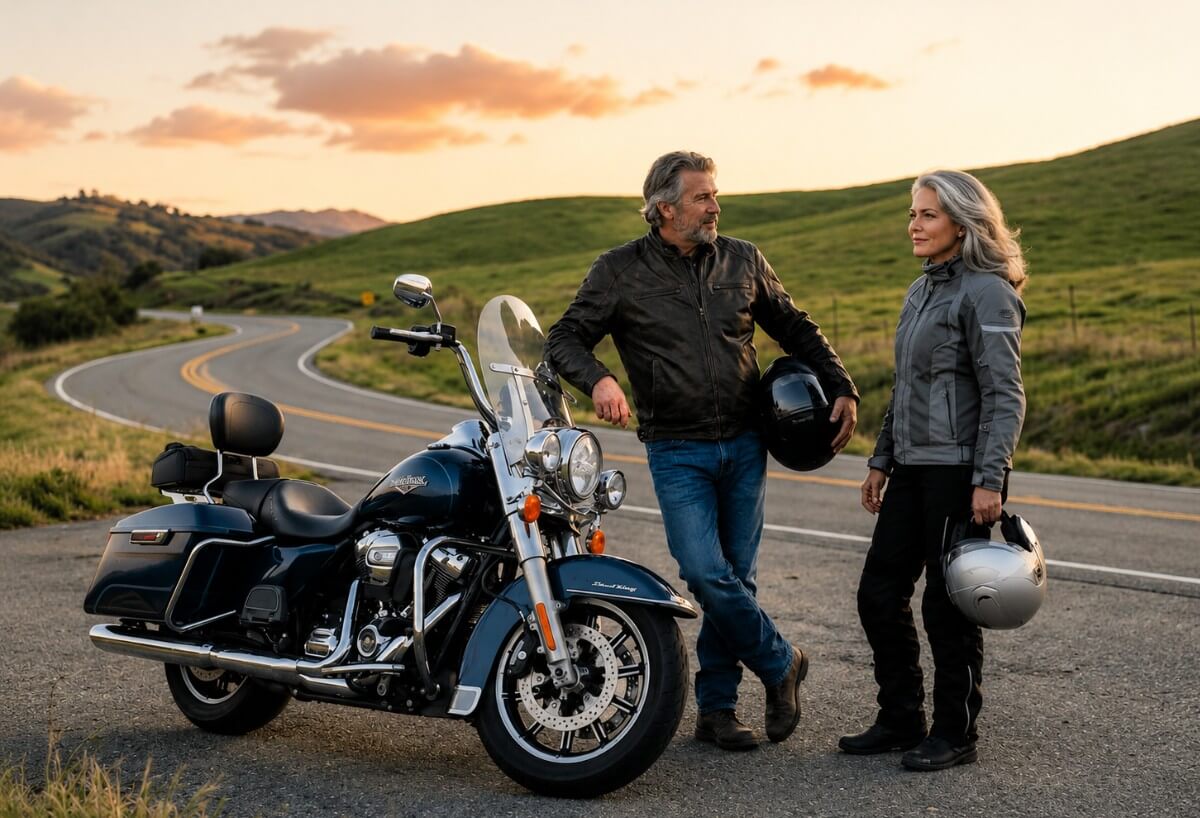
The first goal is not confidence
This might sound odd, but confidence doesn’t need to be the first goal.
The first goal is usually something smaller, like feeling:
- safe
- calm
- able to trust the rider, or
- ready to give it a try.
Confidence often grows afterwards.
Quietly.
Naturally.
As a result of a few decent experiences.
It’s more reliable that way.
If you aim straight for confidence, you may end up feeling frustrated with yourself.
If you aim for simply managing your experience and feelings, you give your body a much fairer chance.
When a ride feels more manageable, confidence naturally follows.
If you’re ready for the next step after that, How to Feel More Confident on a Motorcycle (For Passengers) is the article to read next.
It’s OK if the answer is still no
This matters too.
Riding on the back of a motorcycle is not for everyone.
You might try it, and find that it turns into enjoyment.
Or you might find the experience simply doesn’t suit you.
That’s OK.
You don’t need a dramatic reason not to want to ride.
You don’t need to become a motorcycle person.
You don’t need to keep trying forever just because your partner loves bikes.
If you give it an honest try and decide it’s not for you, that’s useful information.
And if you never try it because every part of you says no, that’s also fine.
There are many ways to love someone without sharing every passion they have.
Pillioness isn’t here to persuade every woman to get on the back of a bike.
It’s here to help you understand what you feel, what your options are, and what might help if you do want to try.
Final thoughts
If you feel scared to ride on the back of a motorcycle, start by removing pressure rather than adding bravery.
You don’t need to force yourself into a huge leap.
You need a calm rider, a short ride, proper gear, clear communication, and permission to stop.
That’s often enough to tell you much more than anxious overthinking ever will.
Sometimes the unknown softens once it becomes familiar.
Sometimes it doesn’t.
Either way, you’ll learn more from a gentle honest approach than from pushing yourself too hard or pretending you’re not scared.
And that, in itself, is a good place to begin.
FAQ
Is it normal to be scared to ride on the back of a motorcycle?
Yes.
It’s very normal.
Riding as a passenger can feel exposed, unfamiliar, and out of your control at first, so nerves before a first ride are extremely common.
Should I force myself to try riding on the back of a motorcycle?
No.
Gentle stretching outside your comfort zone is one thing.
Forcing yourself through dread, panic, or pressure from someone else is another.
A first ride should feel respectful and manageable, not coercive.
How do I make my first ride as a motorcycle passenger less scary?
Keep it short, slow, and simple.
Choose dry weather, daylight, a calm rider, proper gear, and easy roads.
Agree beforehand that you can stop at any time.
What if I trust the rider but still feel scared?
That can still happen.
Trust helps, but it doesn’t erase the nervous system’s reaction to something new.
Often those feelings settle through familiarity, preparation, and small first steps.
What if I try it and still don’t like it?
Then you’ve learned something useful.
Not everyone enjoys riding as a motorcycle passenger, and you’re allowed to decide it isn’t for you.
Further Reading
If you’re scared to ride on the back of a motorcycle and still working out whether it feels possible, these next articles may help from different angles.
What First-Time Motorcycle Passengers Are Afraid to Say Out Loud
This puts common hidden feelings into words, which can be a relief when you’re nervous and not sure how to explain why.
How to Feel More Confident on a Motorcycle (For Passengers)
This is the next step if you do want to keep going and start building confidence more deliberately.
When NOT to Ride on the Back of a Motorcycle
This helps you tell the difference between ordinary nerves and a genuine reason to say no.
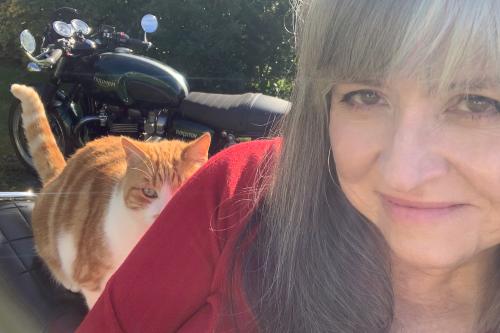
Scared to try your first ride on the back of a motorcycle? You’re definitely not the only one. If you’ve felt this too, I’d love to hear what helped — or what still worries you.